Why Are My Gutters Leaking? Seams, Corners, End Caps & Fixes
Local seamless gutter company in Lehigh Acres, FL · Owner: Carlos Garcia
Short Answer
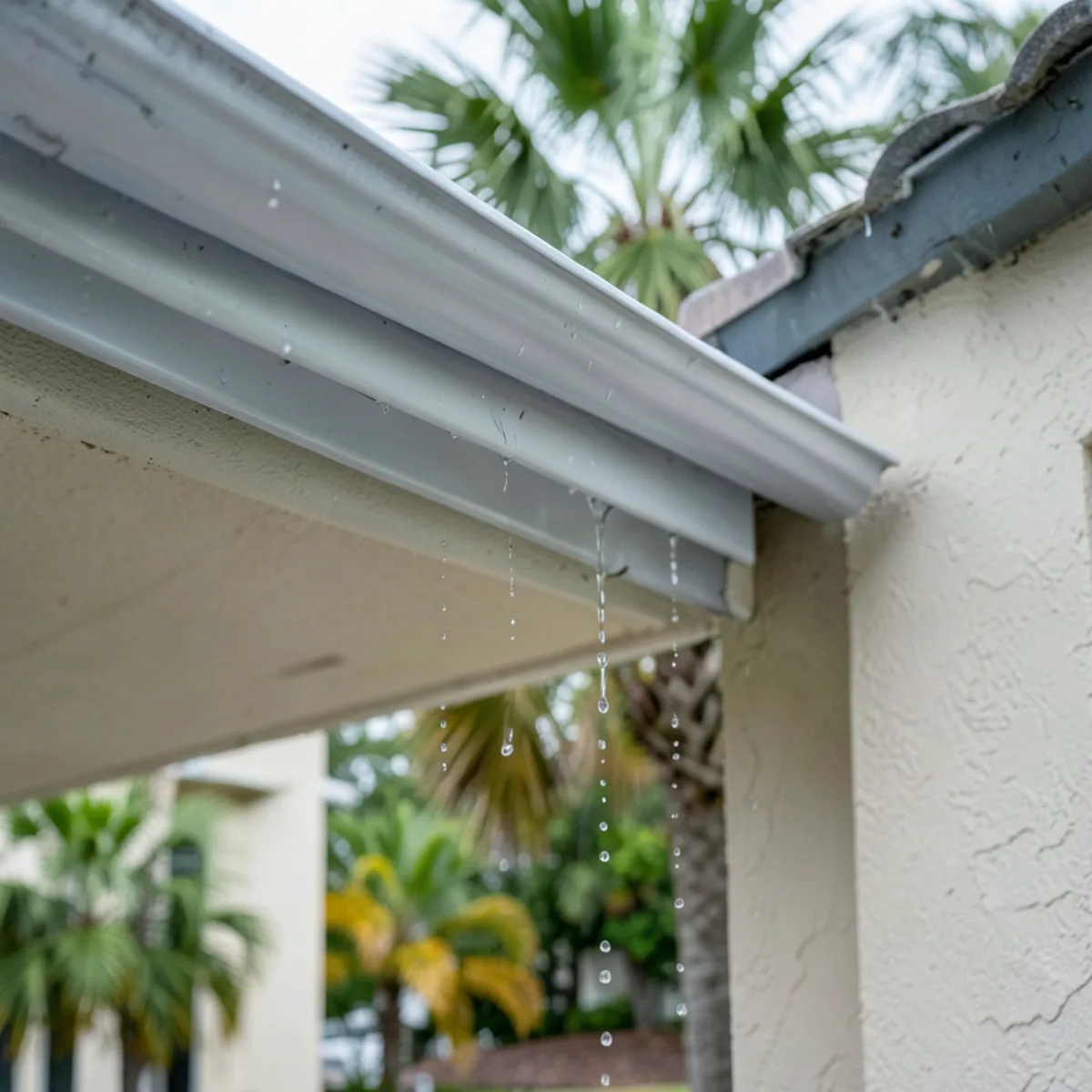
Gutters usually leak at seams, corners, end caps or the downspout outlet, where sealant breaks down from daily heating and cooling. Water running down the fascia behind the gutter means the gutter has pulled away or there's no drip edge. Most single leaks can be resealed; leaks at many joints call for seamless replacement.
A gutter that drips at a seam or a corner looks like a small problem. In Southwest Florida it rarely stays small: every afternoon storm sends water through the same gap, onto the same strip of fascia and the same spot on the slab. Here's how to find where your gutters are leaking, why it's happening, and which fixes actually last.
First, Find Exactly Where It's Leaking
Leaks are easiest to trace while it's raining, or with a garden hose run into the gutter from a ladder. Watch for water coming from:
- Seams where two sections of a sectional gutter join
- Corners (miters), inside or outside
- End caps at the end of each run
- The outlet where the downspout connects
- Behind the gutter, running down the fascia rather than dripping off the front
Each one points to a different cause.
Why Gutters Leak at the Seams
Seams are the classic failure on sectional gutters. Aluminum expands in the midday sun and contracts in an evening storm, every day, and that movement slowly breaks down the sealant in the joint. Florida heat and UV speed it up. Once the sealant cracks, every rain finds the gap.
The fix: clean the joint down to bare metal, dry it, and reseal it with a gutter-grade sealant, sometimes with a new rivet or seam strap. That can buy years on a sound gutter. If several seams are failing, though, the joints are the problem, and replacing the run with seamless gutters removes them entirely.
Corners and End Caps
Corners take more water than straight runs, especially below a roof valley, and miters are joints too. End caps loosen when a gutter flexes or sags. Both are usually resealable. A corner that leaks every storm even after resealing often means too much water is arriving there: a sign the gutter is undersized or a downspout is needed closer to the corner.
Water Running Behind the Gutter
If water is running down the fascia behind the gutter instead of dripping from a joint, the gutter may have pulled away from the house, or roof water is getting behind the back edge because there's no drip edge or the gutter is mounted too low. This is the leak that rots fascia and stains soffits. See how gutter problems damage soffit and fascia.
Is It a Leak or an Overflow?
Water pouring over the front edge isn't a leak. It's overflow, and it usually means a clog, an undersized gutter, or poor pitch. Dripping a little in a very heavy downpour can be normal. Steady dripping from one spot in every rain is not. Our guide to why gutters overflow covers the overflow side.
What You Can Fix Yourself (and What You Shouldn't)
On a single-story home, resealing a seam or end cap from a stable ladder is a reasonable DIY job: clean, dry, seal, and let it cure before the next rain. Call a pro when the gutter is pulling away from the fascia, the fascia feels soft, several joints leak at once, or the work is on a second story or tile roof.
Not sure whether you're looking at a leak or a bigger problem? Our checklist on how to know if your gutters need repair covers the other warning signs.
How a Gutter Joint Is Resealed Properly
- Remove old sealant and debris from the joint completely.
- Clean the metal and let it dry fully; sealant won't bond to wet or dirty aluminum.
- Replace any loose rivets or screws holding the joint together.
- Apply gutter-grade sealant to the inside of the joint, working it into the seam.
- Let it cure before the next rain, then water-test.
Skipping the cleaning step is the reason most quick reseals fail within a few months.
Why Seamless Gutters Leak Less
A sectional gutter on a typical home can have a joint every ten feet, plus corners and end caps. A seamless system formed on site has joints only at the corners, end caps and outlets. Fewer joints means fewer places for heat cycling to break the seal. If your current gutters leak at several mid-run seams, replacing them with seamless gutters removes the problem rather than patching it.
Is It the Gutter or the Roof?
Interior stains near an exterior wall get blamed on the roof, but gutters cause many of them. If the stain sits right below a gutter and gets worse in heavy rain, check whether that gutter overflows or leaks behind itself during a storm. Water that runs down inside the wall cavity shows up as a ceiling or wall stain. If the gutter drains cleanly and the stain still grows, it's time for a roofer.
Leaks That Start After a Storm
If gutters that were dry suddenly leak after a tropical storm, look for damage rather than worn sealant: a corner miter knocked open by a falling frond, a run twisted slightly so the joint no longer lines up, or hangers pulled partly loose so the gutter tilts and spills behind itself. These leaks need the gutter re-aligned and re-fastened before any resealing will hold. Photograph the damage first if you plan to include it in an insurance claim.
Repair or Replace?
One or two leaking joints on otherwise solid gutters: repair. Leaks at most seams, corrosion, sagging, or recurring leaks after resealing: replacement usually costs less over a few years than repeated repairs. We explain the decision in our gutter repair and gutter replacement pages. For a free inspection, call (239) 350-9997.
From the Crew: What We See on Real Jobs
Before resealing anything, we clean the joint down to bare metal and let it dry. Most failed reseals we see were applied over old, dirty sealant, which never bonds. That's also why a homeowner's tube of caulk from the hardware store often lasts one season.
The other common miss is the outlet: water leaking where the downspout meets the gutter is often a cracked or loose outlet, not a seam.
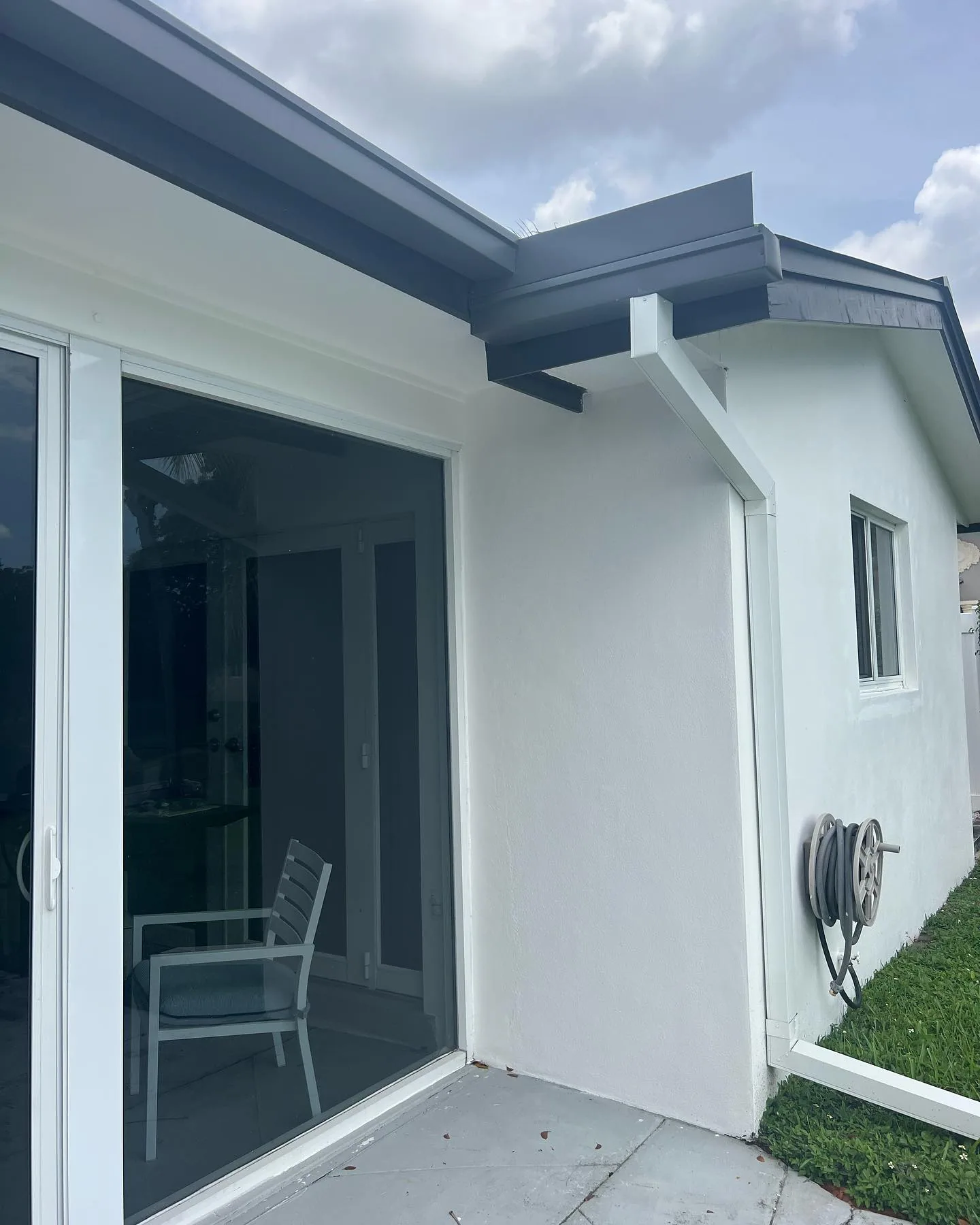
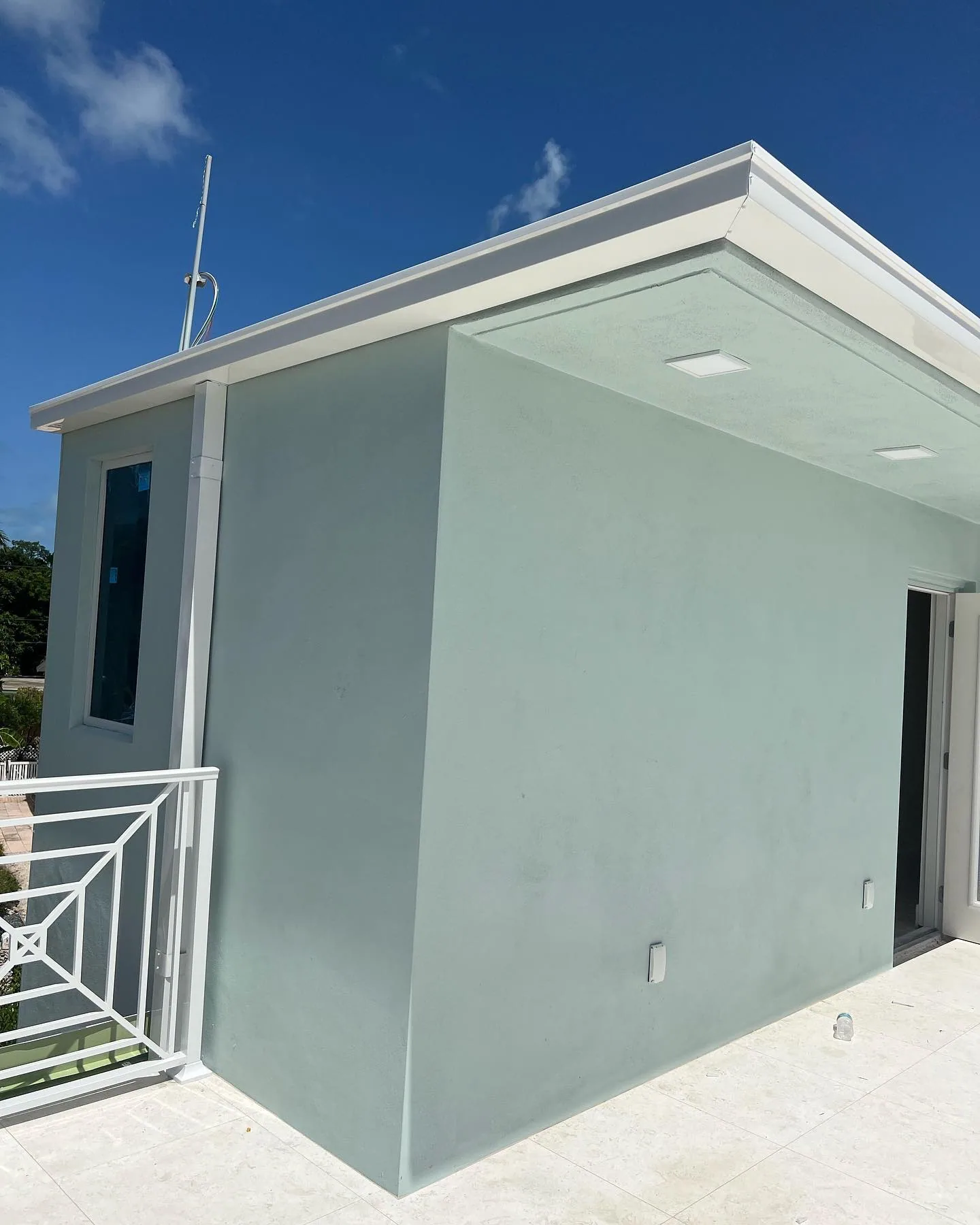
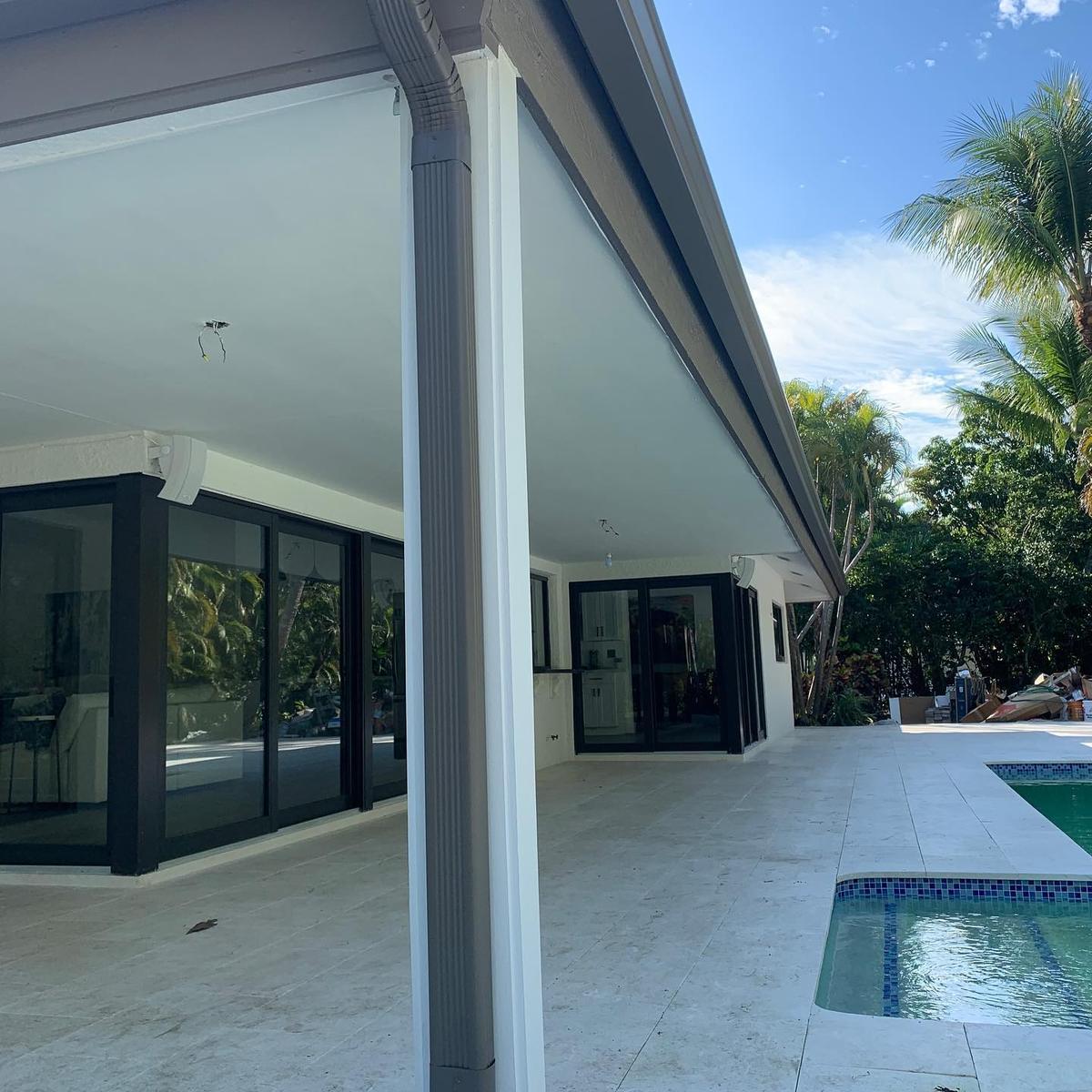
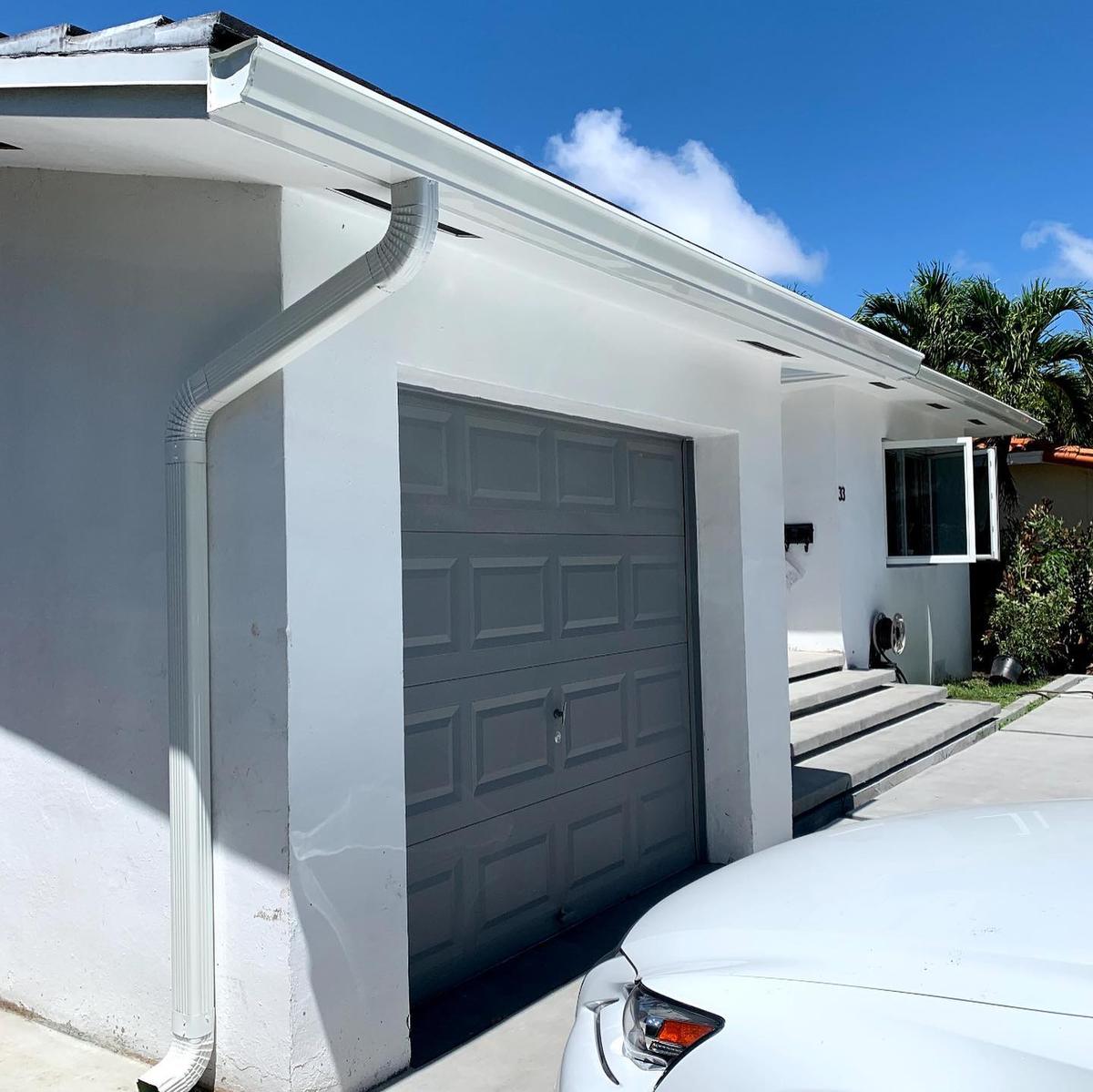
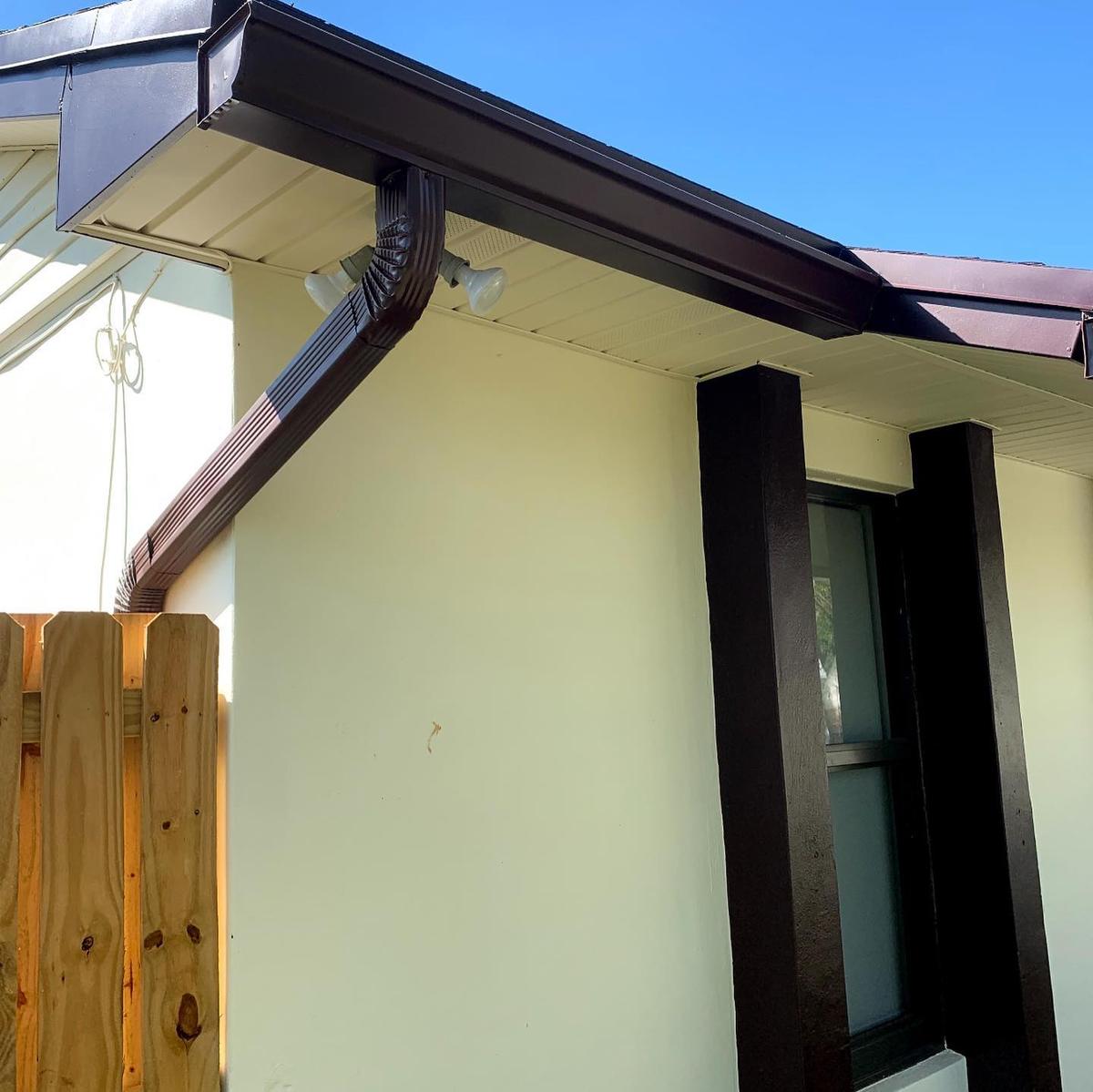
Photos that relate to this guide.
Need a hand with your gutters?
CAG Solutions provides free, no-pressure estimates across Cape Coral and Southwest Florida.