Shingle Granules in Gutters: Normal Wear or a Roof Warning?
Local seamless gutter company in Lehigh Acres, FL · Owner: Carlos Garcia
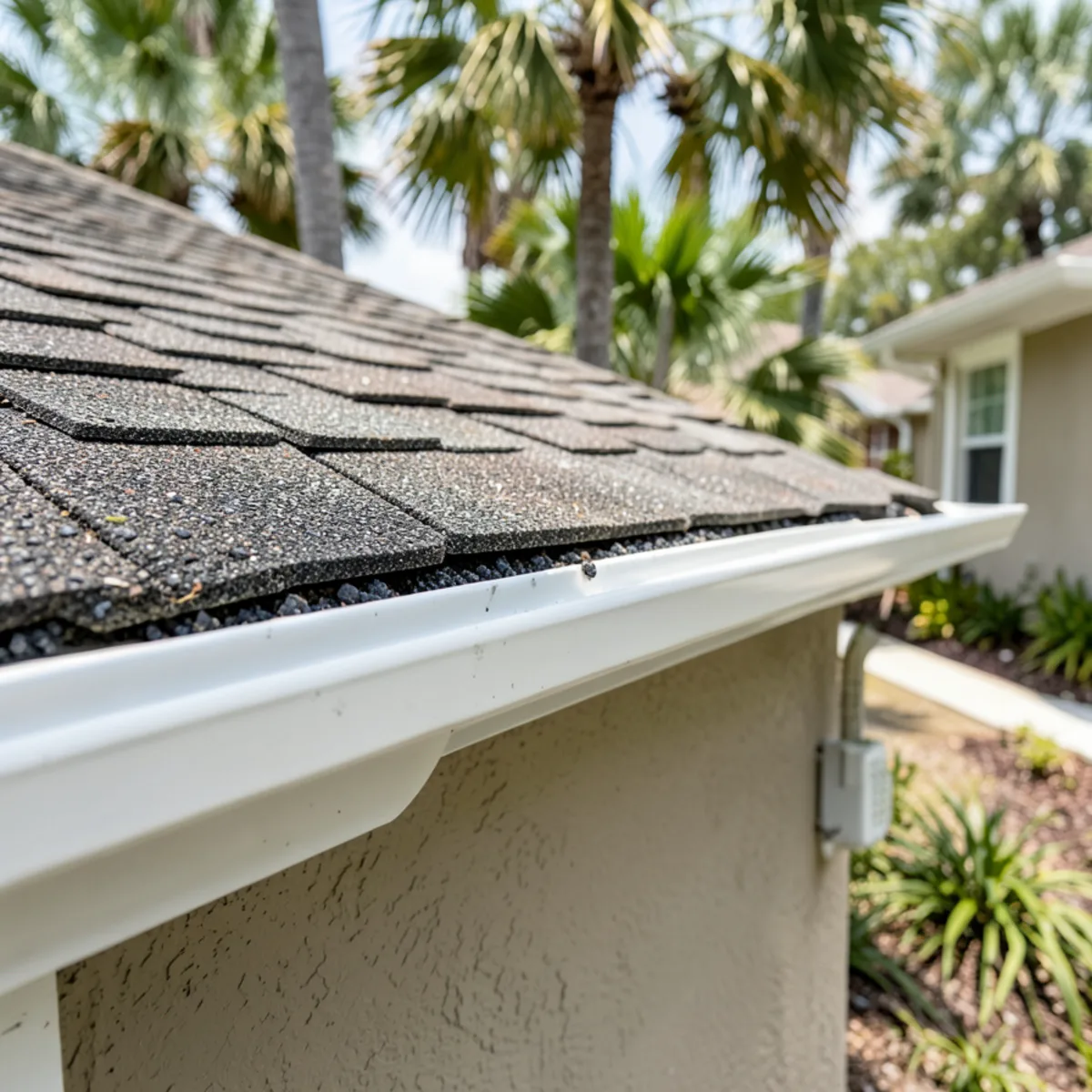
Short Answer
Shingle granules in your gutters are normal on a new roof and after heavy storms, and a light layer at each cleaning is ordinary wear. Large amounts on an older roof, bare or shiny patches on the shingles, or a sudden increase after hail or a hurricane are signs the roof is aging or damaged.
Scoop out a gutter on a shingle roof and you'll often find gritty, sand-like material in the bottom. Those are shingle granules: the crushed mineral coating on asphalt shingles. Some in the gutter is normal. A lot of it can be an early warning about your roof. Here's how to tell the difference, and what granules do to your gutters.
What Shingle Granules Are
Asphalt shingles are coated in ceramic-coated mineral granules that protect the asphalt from UV and give the roof its color. Over time, rain and heat loosen them, and gutters collect what washes off. Tile and metal roofs don't shed granules, though tile roofs shed their own grit and debris.
When Granules in Gutters Are Normal
- New roof: extra loose granules from manufacturing and installation wash off in the first months. That's expected.
- After a hard storm: some loss after heavy rain or wind is common.
- A light layer at cleaning time on an older roof: normal wear.
When Granules Are a Warning Sign
- Large amounts on a roof that isn't new
- Bare, dark, or shiny patches visible on the shingles
- Granules plus curling, cracking, or missing shingles
- A sudden increase after a hailstorm or hurricane
Heavy granule loss on an aging roof usually means the shingles are nearing the end of their life. Florida sun is hard on asphalt shingles. That's a question for a licensed roofer; we'll point it out if we see it, but we're gutter specialists, not roofers.
What Granules Do to Your Gutters
Granules are heavy. They settle into a gritty sludge that adds weight, slows water flow, and packs into downspout elbows like sand. Mixed with leaves, they create the dense clogs that cause overflow. They also make cleaning messier, which is one reason fine-mesh guards need an occasional rinse on shingle roofs. See clogged downspouts.
What About Tile and Metal Roofs?
Many Cape Coral and Estero homes have concrete or clay tile roofs, which don't shed granules. What you'll find in their gutters instead is fine grit from weathering tile, bits of broken tile and mortar, and wind-blown sand. A sudden increase in tile fragments after a storm can mean cracked or slipped tiles, which is also a job for a roofer. Metal roofs shed almost nothing, so debris in their gutters is mostly from trees.
Granules and Gutter Guards
Fine micro-mesh guards keep granules out of the gutter, but granules can sit on top of the mesh and, mixed with pollen, form a film that slows water entry. On shingle roofs, expect to rinse or brush mesh guards occasionally. Perforated covers let more grit through but rarely blind over. See the best gutter guards for Florida for how each type behaves.
Why Florida Shingles Shed Faster
Strong year-round UV and heat break down the asphalt that holds granules in place, and frequent hard rain washes loosened granules off. That's why shingle roofs here often show granule loss earlier in their life than the same shingles would in a milder climate. Tracking how much you scoop out each cleaning is one of the easiest early indicators you have.
How Many Granules Is Too Many?
There's no exact number, but patterns tell you a lot. A thin layer of grit in the bottom of the gutter at each cleaning is normal shedding. A thick layer that fills the bottom of the trough, granules piling up at the downspout outlet, or gritty sludge in the splash zone below the downspout all point to faster loss.
Compare the gutters on different sides of the house too. The south- and west-facing slopes get the most sun in Florida and usually shed more, so heavier loss there alone can be normal aging, while heavy loss everywhere suggests the whole roof is wearing.
Granules After Hail and Hurricanes
Hail strikes knock granules loose in patches, and hurricane wind can scour them off exposed slopes. If you suddenly find much more grit than usual after a storm, photograph the gutters and the downspout discharge before cleaning. That record can help a roofer and your insurer judge whether the storm damaged the roof.
Cleaning Granule Sludge Out of Gutters
Granules mixed with leaves form a heavy, wet sludge that doesn't scoop out as easily as dry debris. It should be removed by hand and bagged rather than flushed down the downspout, where it settles in the elbows and causes clogs. After the trough is cleared, flush each downspout and watch the discharge until it runs clear.
Protecting Your Gutters While the Roof Ages
If your roof is shedding heavily and replacement is a year or two away, keep the gutters on a tighter cleaning schedule so granule sludge doesn't pack the downspouts. Fine mesh guards keep granules out but will need rinsing more often on a shedding roof. When the roof is replaced, it's a good time to check the gutters and fascia too.
What Granules Do Inside Downspouts
Inside a downspout, granules behave like sand. They settle at every elbow and at the bottom of the drop, and when they mix with leaves they form a dense plug that water can't push through. Downspouts on shingle roofs that are shedding heavily often clog even when the gutters above look fairly clean. If you see gritty sludge spilling from the bottom of a downspout or collecting on the splash block, the elbows are filling up and should be cleared.
What to Do About It
- Clean the gutters and downspouts so granules don't build into clogs.
- Note how much you're finding each cleaning. A trend tells you more than one cleaning.
- If loss is heavy or the roof shows bare spots, have a roofer inspect it.
- Keep the gutters flowing; a failing roof plus clogged gutters is the worst combination for fascia and walls.
Our gutter cleaning removes granule sludge and flushes the downspouts, and we'll tell you what we're seeing up there. Call (239) 350-9997.
From the Crew: What We See on Real Jobs
We tell homeowners to track granules the way you'd track mileage. Note roughly how much comes out at each cleaning, a handful or a bucket. A steady, light amount is normal. A big jump from one cleaning to the next, without a storm in between, is the signal to call a roofer.
We're gutter specialists, not roofers, so we'll show you what we're finding and leave the roof diagnosis to them.
Photos that relate to this guide.


Need a hand with your gutters?
CAG Solutions provides free, no-pressure estimates across Cape Coral and Southwest Florida.