Clogged Downspout? Signs, Causes & How to Clear It
Local seamless gutter company in Lehigh Acres, FL · Owner: Carlos Garcia
Short Answer
A downspout is clogged when gutters overflow near the outlet even though they look clean, little water comes out the bottom in rain, or water sprays from a downspout joint. Clear it by flushing from the top, then opening the bottom elbow. If it's clear but water still backs up, the underground drain is blocked.
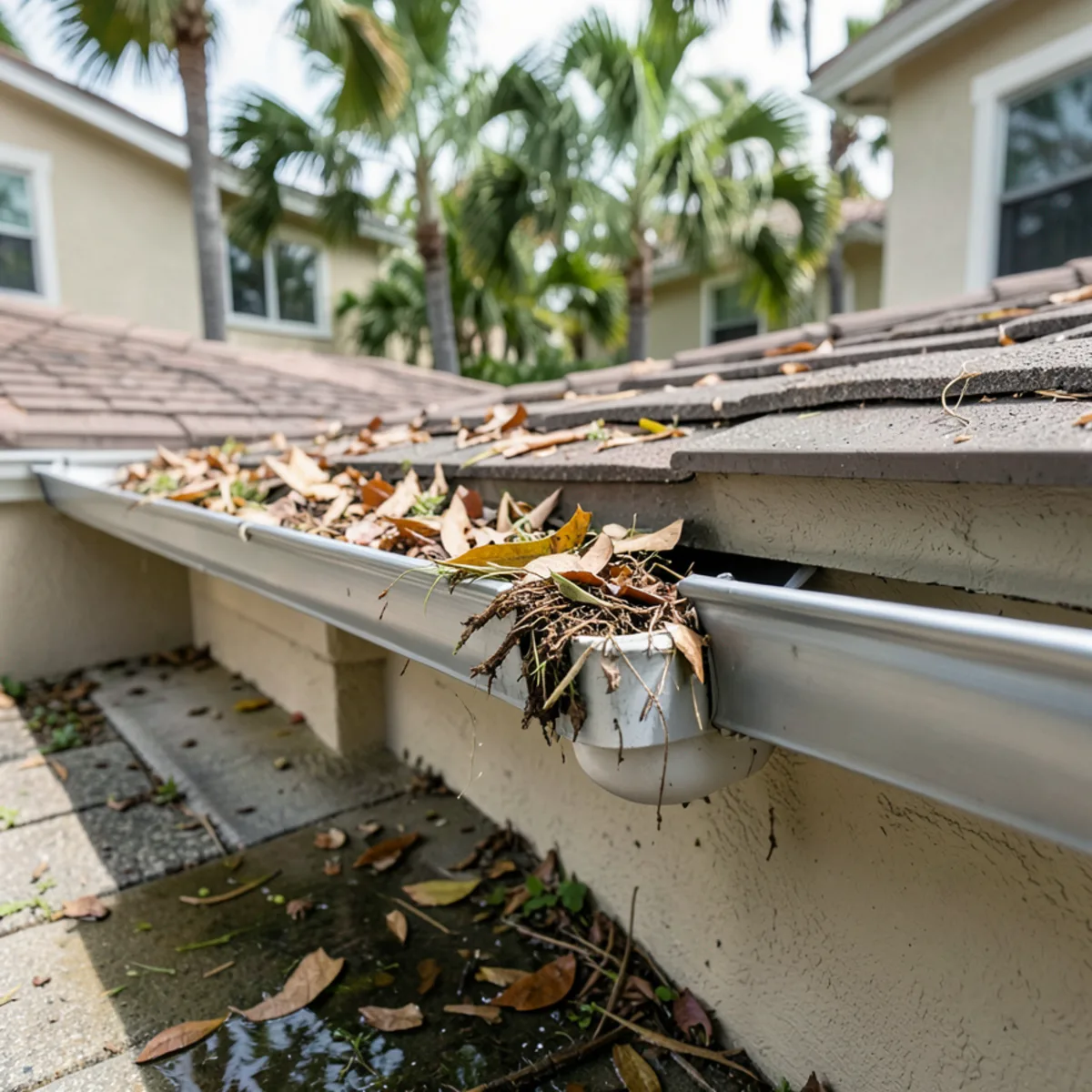
You can clean every inch of gutter and still have overflow if the downspout is blocked. In Southwest Florida, downspouts clog with palm debris, seed pods, roof grit, and the occasional frog or wasp nest, and a blocked outlet backs water up the entire run. Here's how to tell a downspout is clogged, how to clear it safely, and how to keep it from happening again.
Signs of a Clogged Downspout
- Gutters overflow at the downspout end even though they look clean
- Little or no water comes out the bottom during rain
- Water sprays out of a downspout joint or seam
- Standing water in the gutter near the outlet
- A rattle or thud when you tap the downspout (packed debris sounds dull)
What Clogs Downspouts in Florida
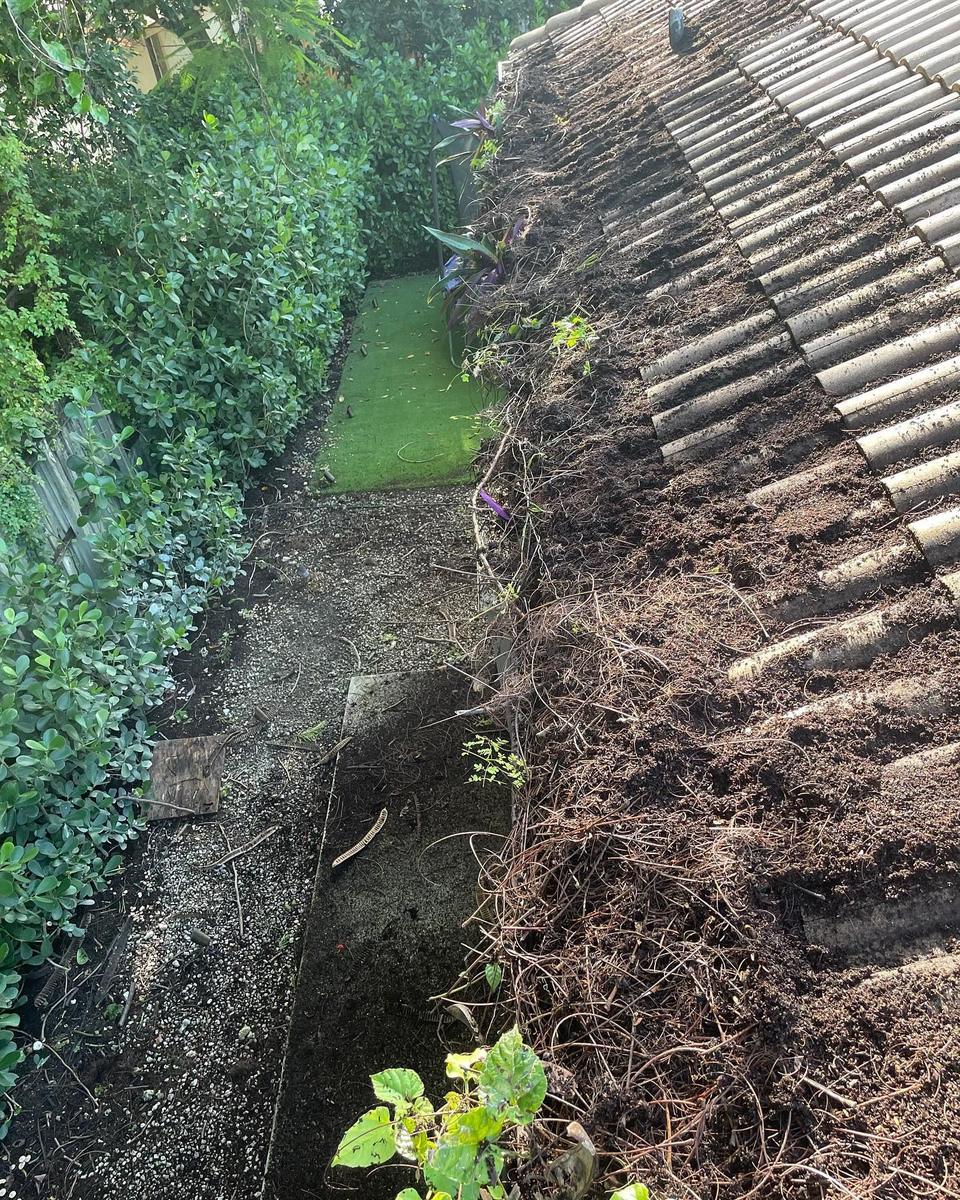
The usual suspects are wet leaves and palm strings that wash down and wedge at the elbows, shingle granules and grit that settle like sand, and seed pods. The elbows at the top and bottom are where clogs form, because debris has to turn a corner. Underground drain pipes add another place for a clog to hide.
How to Clear a Downspout Safely
- Clear the gutter outlet first from a stable ladder; many clogs sit right at the top.
- Flush from the top with a garden hose. If water backs up, the clog is lower.
- Disconnect the bottom elbow and clear it by hand; it's the most common clog point.
- Use a plumber's snake gently for a stubborn blockage. Avoid jamming a pressure washer into the pipe, which can split seams.
- Re-test with the hose until water runs freely.
Skip it and call a pro if the downspout is on a second story, the clog is in an underground drain, or the downspout is crushed.
Clogs in Underground Drains
Downspouts tied into underground pipes can clog where you can't see them. If the downspout is clear but water still backs up, the buried line is blocked or crushed. Those lines often need to be flushed, cleaned, or rerouted to a pop-up emitter or splash block.
How to Keep Downspouts From Clogging
- Clean gutters on a schedule that matches your trees; see how often to clean gutters.
- Use gutter guards or an outlet strainer where palms and oaks overhang.
- Upgrade to oversized 3"x4" downspouts; wider pipes clog far less.
Downspout Size: 2x3 vs. 3x4
Many builder-installed systems use standard 2"x3" downspouts. Oversized 3"x4" downspouts have roughly twice the opening area, so they carry more water and leave much more room for a leaf or palm string to pass without lodging. If a particular downspout clogs repeatedly, upsizing it is usually a better fix than cleaning it more often.
Where the Water Should Go
A clear downspout that empties against the slab just moves the problem. Discharge should land at least a few feet from the foundation on a splash block or extension, or feed a drain that carries it toward the yard or swale. More in why downspout placement matters.
Why Downspout Elbows Clog First
Water and debris move fast down a straight downspout, then slow and change direction at each elbow. Leaves, palm strings and seed pods catch on the inside of the turn, and once one piece lodges, everything behind it piles up. Shingle granules and roof grit then settle into the gaps like sand, turning a loose clog into a solid plug.
That's why the most effective layouts use as few elbows as possible and wide-throat outlets at the gutter, so debris has room to pass.
Why Not Blast It With a Pressure Washer?
It's tempting to force a clog out with a pressure washer, but it often makes things worse. High-pressure water can pack the debris tighter at the elbow, split the seams of an aluminum downspout, or blow apart a joint that was holding. It also sends sludge back up into the gutter. A garden hose from the bottom, a hand-cleared elbow, or a plumber's snake does the job without damage.
Do Downspout Strainers and Screens Help?
A strainer at the gutter outlet stops large debris from entering the downspout, which keeps the pipe clear. The trade-off is that the strainer itself clogs, and a blocked strainer sends water over the gutter edge. Strainers work best on homes that get regular gutter cleaning or have guards, where someone checks the outlet a few times a year. On their own, without cleaning, they just move the clog up a few inches.
Signs the Problem Is the Underground Drain
- The downspout is clear when you disconnect it, but water backs up when it's reconnected.
- The pop-up emitter in the yard never opens in rain.
- The ground around the buried line stays soggy or sinks.
- Water bubbles up at the downspout connection during storms.
Buried lines can be flushed, but crushed or root-filled sections need to be dug up and replaced, or the downspout rerouted to an above-ground extension.
Designing Downspouts That Don't Clog
The best way to deal with clogged downspouts is to build them so they rarely clog. When we lay out a new system or replace an old one, a few choices make the biggest difference:
- Fewer elbows. Every turn is a catch point, so drops run as straight as the wall allows.
- Wider pipe. Oversized 3"x4" downspouts pass debris that lodges in standard 2"x3" pipe.
- Smooth outlets. A properly cut, wide outlet at the gutter keeps leaves from bridging the opening.
- More drops on long runs. Splitting a long run between two downspouts halves the debris each one carries.
- Accessible bottoms. A removable bottom elbow or a cleanout makes clearing a two-minute job.
Combined with a cleaning schedule that matches your trees, these choices turn downspout clogs from a monthly nuisance into a rare one.
When to Call for Help
Our gutter cleaning includes flushing and testing every downspout, and if a downspout is undersized or badly placed, we'll tell you. Call (239) 350-9997.
From the Crew: What We See on Real Jobs
Most clogs we clear are in the bottom elbow or the first elbow under the gutter outlet, not the straight section. Debris slides down the pipe, hits the turn, and packs there. Taking the bottom elbow off solves more clogs than any amount of hosing from the top.
When the same downspout clogs every few months, we stop clearing it and upsize it instead. A 3"x4" drop with a wide outlet passes debris a 2"x3" catches, and that fix lasts.
Photos that relate to this guide.


Need a hand with your gutters?
CAG Solutions provides free, no-pressure estimates across Cape Coral and Southwest Florida.