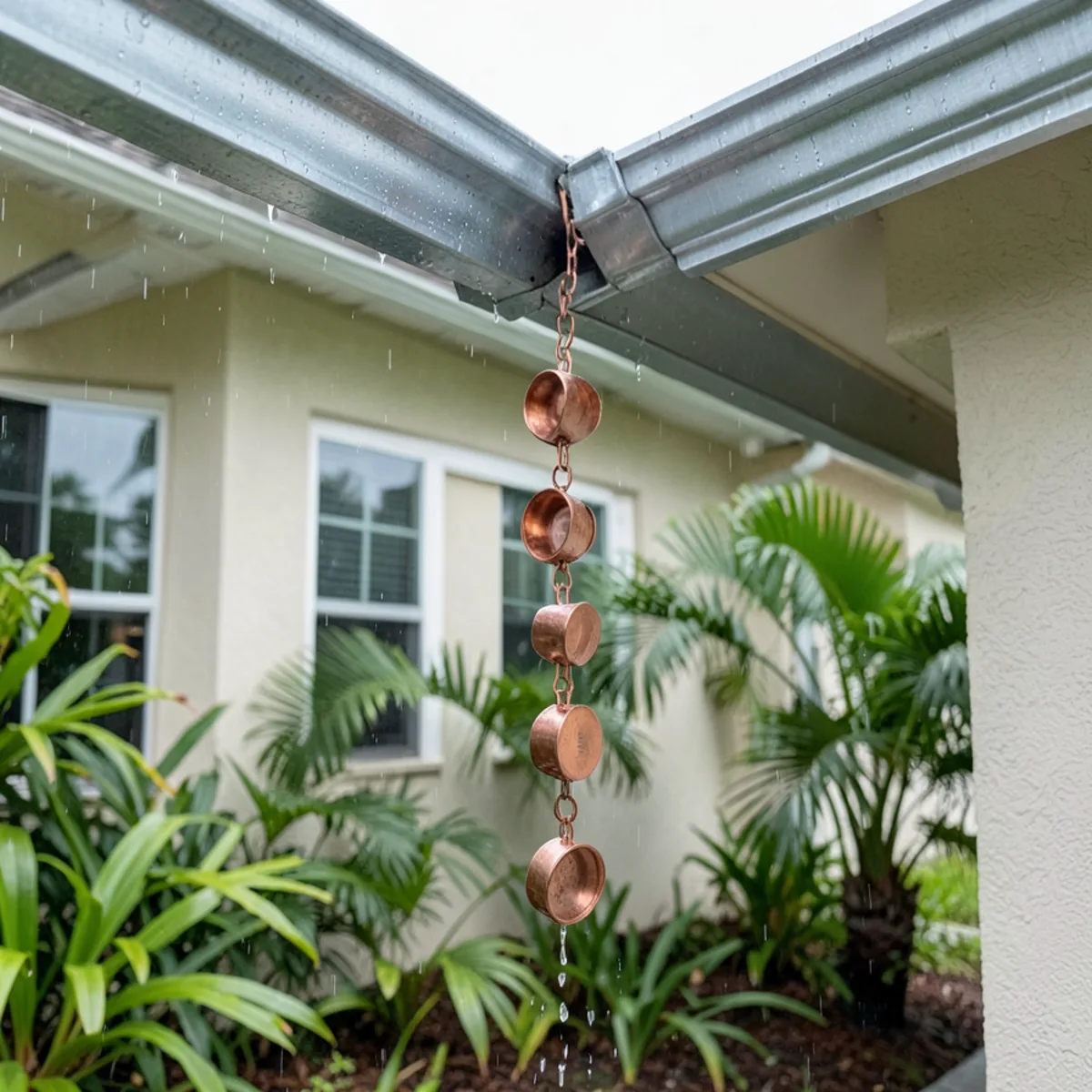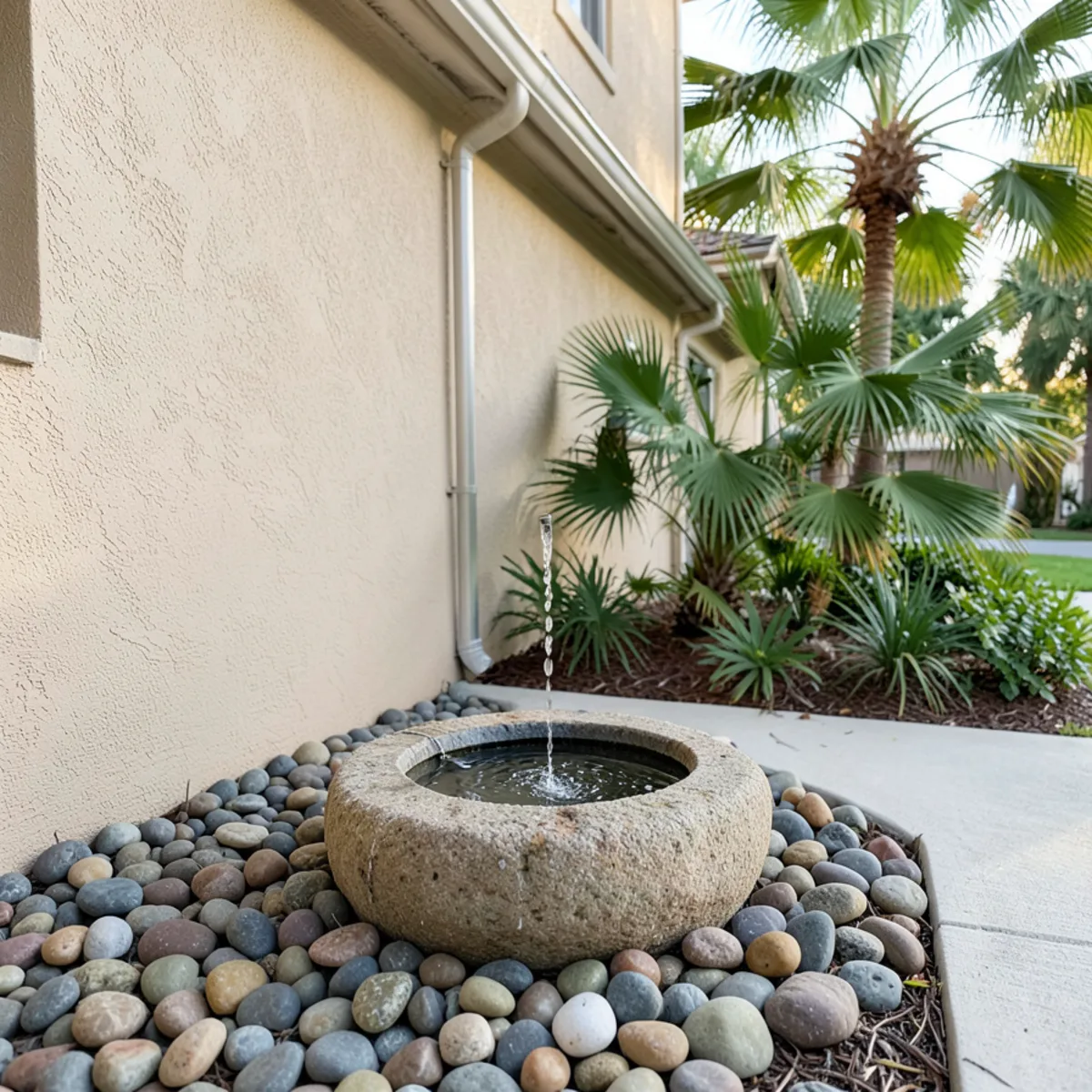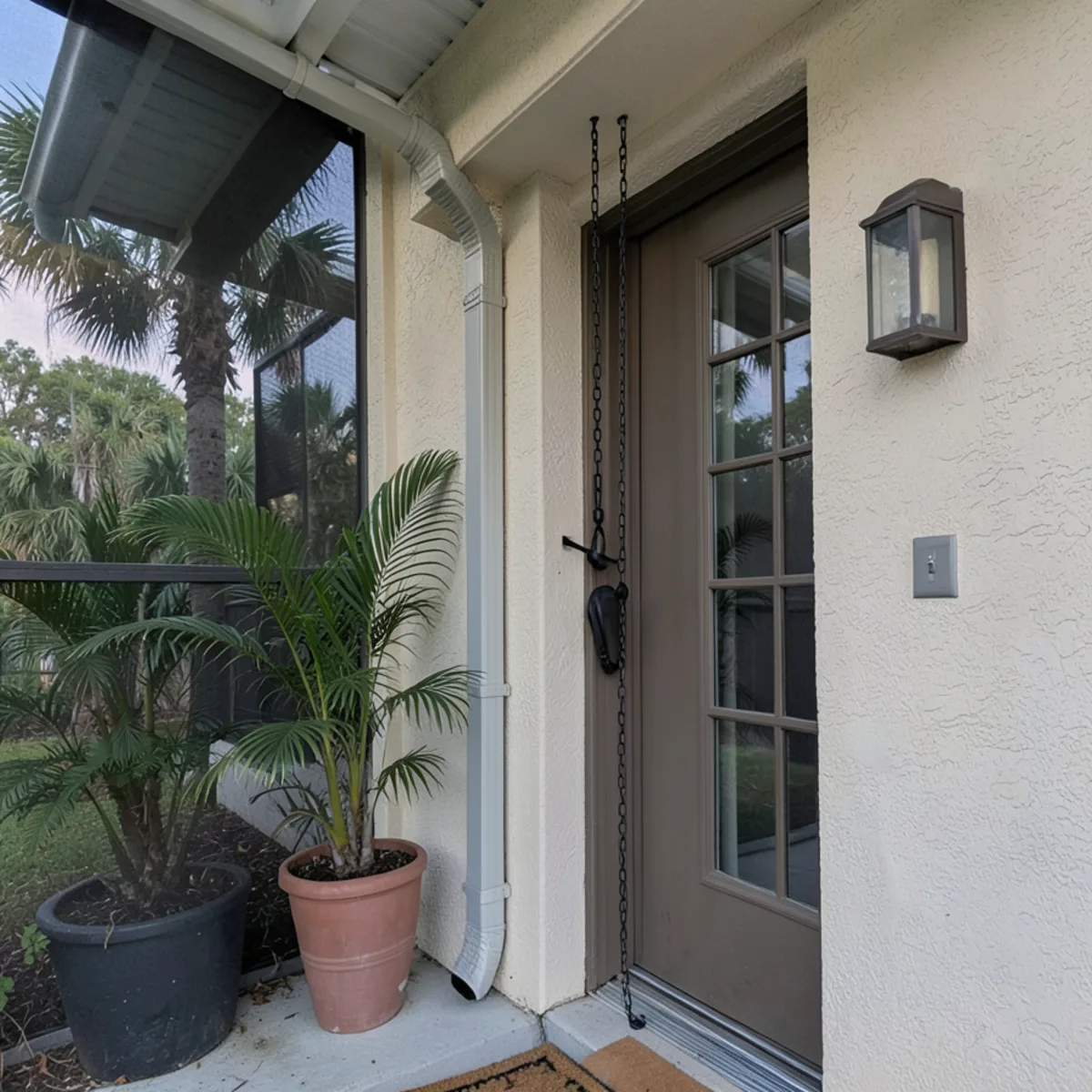
A rain chain replaces a closed downspout with a chain of cups or links that guides water from the gutter to the ground. Done right, it's one of the nicest details you can add to an entry, a lanai, or a garden corner. Done wrong, it splashes, swings in the wind, and dumps water against the foundation.
Rain chains are something CAG customers ask us for by name. Carlos often suggests one during the estimate, and Melissa helps track down the style you want. The trick is putting them where they belong and planning where the water lands.
What Rain Chain Installation Includes
A rain chain is a small part of the gutter system, but it has to be planned like a downspout: from the outlet at the top to where the water lands. Every installation includes the hardware and the drainage, not just the chain.
- Choosing corners where roof volume suits a chain
- Cup-style, link or decorative chain in copper, aluminum or powder-coat
- A proper gutter outlet and chain attachment in place of the downspout
- A basin, planter, rock bed or drain at the landing point
- Bottom anchoring so the chain can't swing in storm wind
- Matching downspouts kept on the high-volume corners
Where Rain Chains Work (and Where They Don't)
Rain chains carry less water than a downspout and let some splash off in heavy rain. That makes placement everything:
- Good spots: entries, porches, small roof sections, garden beds, corners with modest runoff
- Poor spots: corners that drain a big roof plane or a valley, next to doors you use in the rain, or right against the foundation with no basin
On most homes we pair a few rain chains at visible corners with standard downspouts where the volume is. Our rain chains vs. downspouts guide explains the trade-offs.
Cup-Style vs. Link-Style Chains
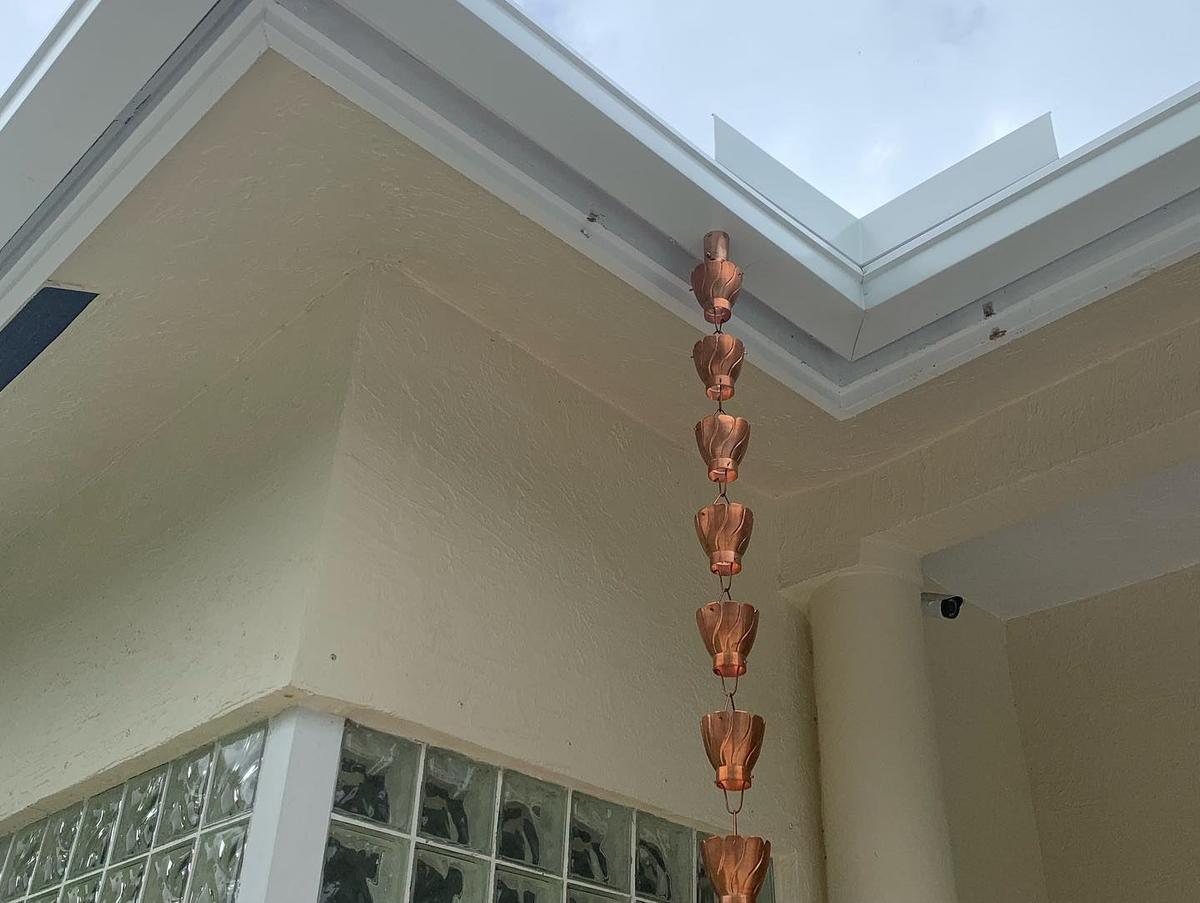
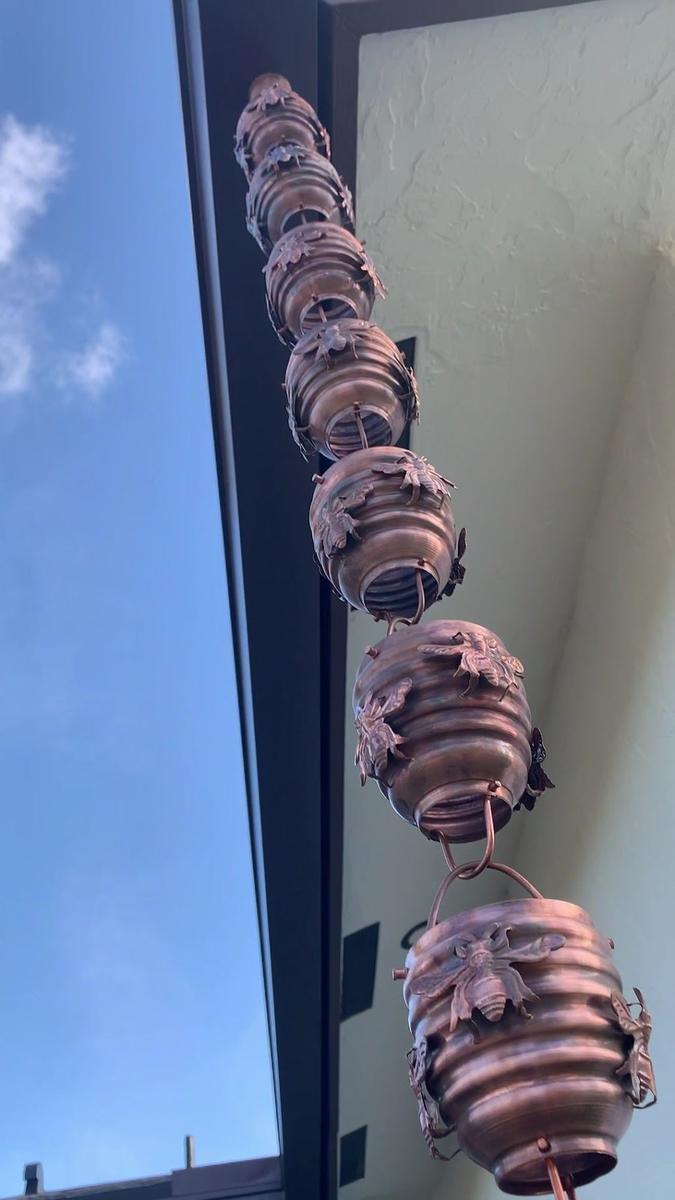
Cup-style chains have open cups that catch and pass water down. They handle more flow with less splash, which is why we recommend them for Florida rain. Link-style chains are more decorative and lighter, but they splash more in a downpour. Decorative designs, from flowers to beehives, are usually cup-style variations.
Copper, Aluminum and Powder-Coated Finishes
Copper is the classic: it weathers to a deep brown and eventually green patina. Aluminum and powder-coated chains come in black, white, and bronze to match gutters and trim. We match the chain to your gutters, including copper and half-round systems.
Where the Water Goes: Basins, Rocks and Drains
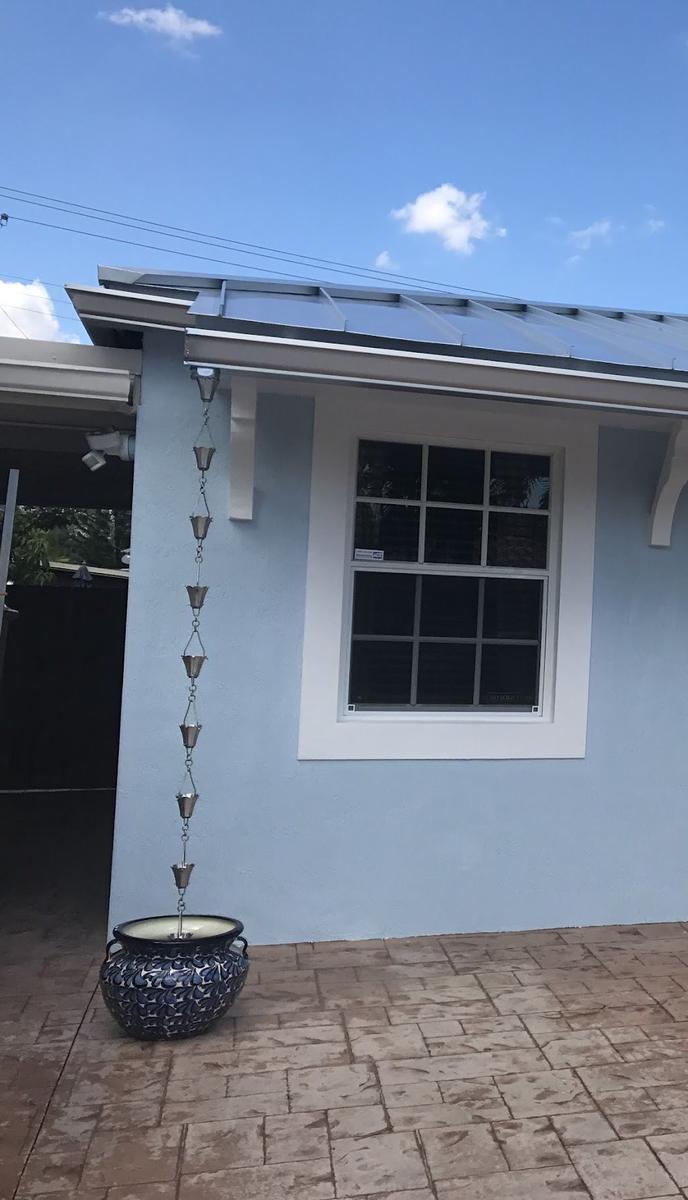
A rain chain still delivers roof water to one spot. We plan the landing: a decorative basin or planter, a river-rock bed, a splash block, or a drain that carries water away from the slab. Without that, a rain chain can erode a garden bed or splash the foundation.
Anchoring Rain Chains for Hurricane Season
An unanchored chain swings in high wind and can bang against walls and windows. We anchor the bottom of the chain to a basin, stake, or ground anchor so it stays put in a storm. Before a hurricane, it's also easy to unhook a chain and bring it inside.
Installing Rain Chains on Existing Gutters
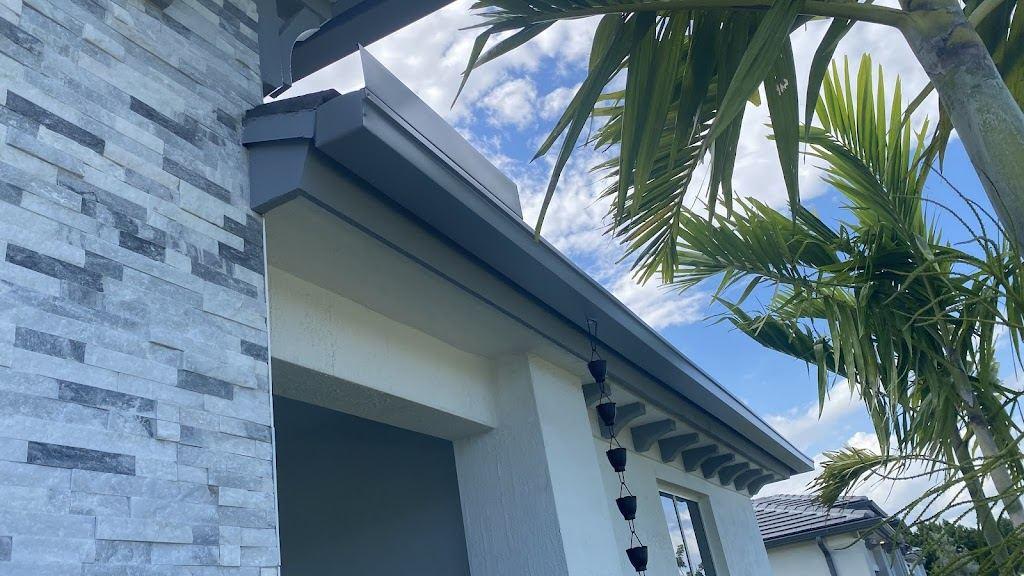
You don't need new gutters to add a rain chain. We remove the downspout at the chosen corner, fit a proper outlet and gutter attachment, and hang the chain. If your gutters are due for replacement anyway, we plan rain chain locations into the new system.
How We Install a Rain Chain
- 1
Check the corner's volume
We look at how much roof drains to the outlet; big planes and valleys stay on downspouts.
- 2
Pick the chain
Cup, link or decorative, in a finish that matches the gutters and trim.
- 3
Swap the outlet
The downspout comes off and a proper outlet and chain attachment go in.
- 4
Plan the landing
A basin, planter, rock bed or drain is set so water lands away from the slab.
- 5
Anchor and test
The chain is anchored at the bottom and we run water to check the flow and splash.
What Rain Chains Cost to Install
The chain itself varies more than anything else: simple aluminum links cost far less than heavy copper cups or decorative designs. Installation cost depends on the number of chains, whether the gutter outlet needs to be changed, and what goes at the landing point, from a splash block to a planter basin or a drain line. We price the chain and the installation separately so you can compare styles.
HOAs and Placement Rules
Rain chains are a visible change to the front of the house, so HOA approval is the rule most homeowners face, especially in communities with strict exterior palettes. The discharge also has to stay on your lot and away from the foundation; Cape Coral neighborhoods drain to roadside swales, so water should be directed toward the yard or swale, not a neighbor's property. Building permits are set by the local building department and aren't generally needed for a rain chain on an existing gutter.
Why Rain Chains Through CAG
Two reviewers mention rain chains by name: Carlos suggested one that "is totally beautiful", and Melissa found the exact chain a homeowner wanted in time for installation. We install chains as part of a working gutter system, on the right corners, with downspouts where the volume needs them.
More Rain Chains We've Installed
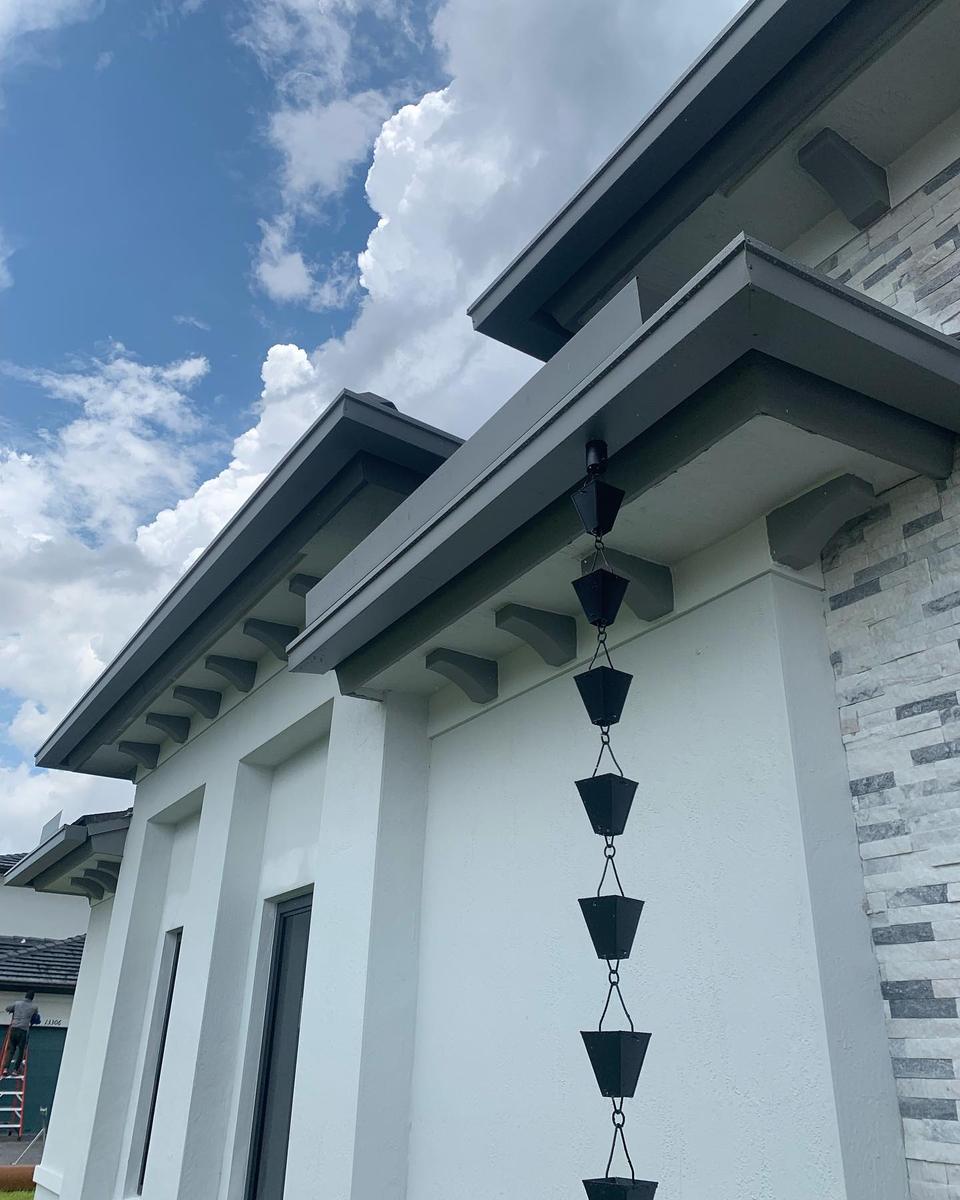
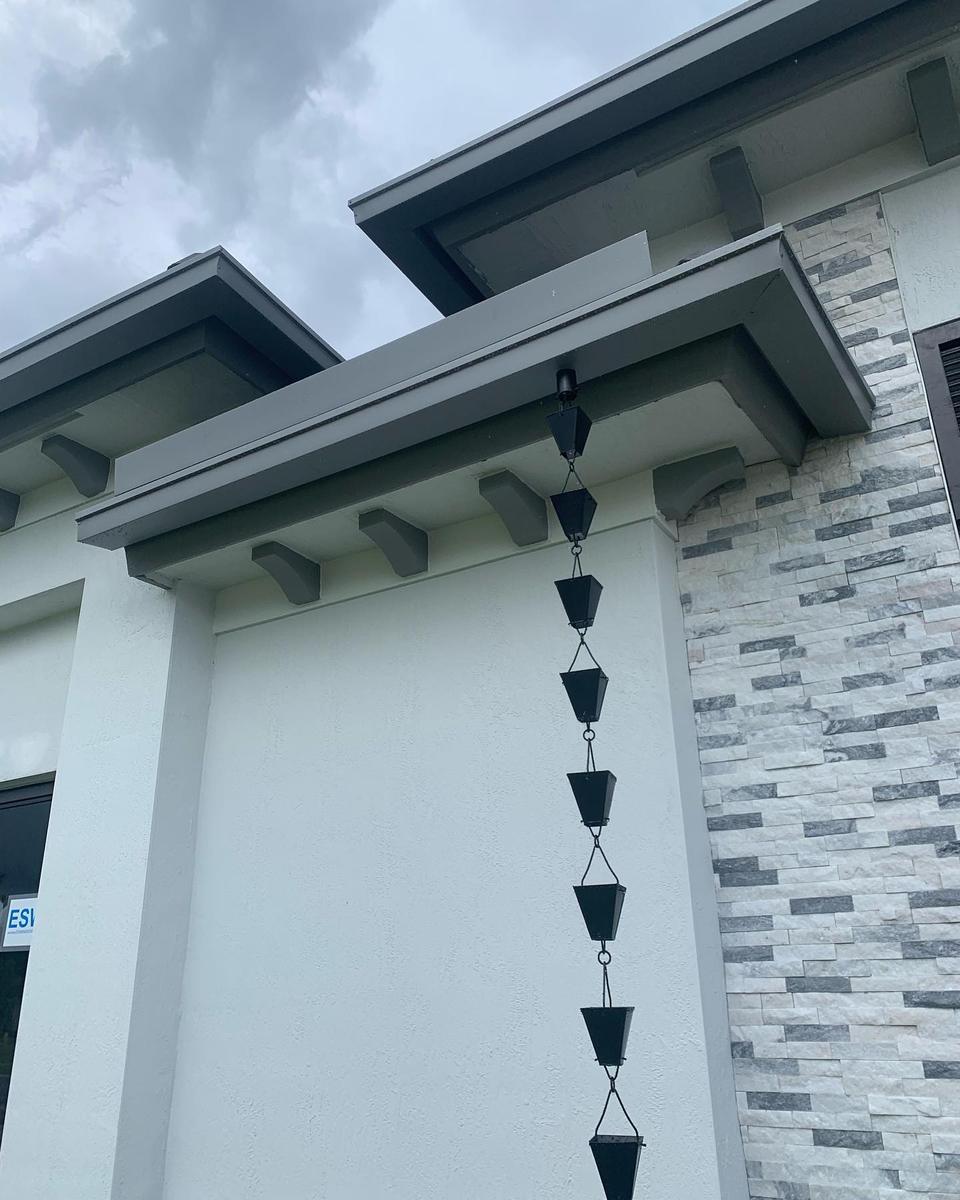
Cup-style chains on CAG jobs.

Rain Chains in Use
Illustrative images of what this work involves. They show typical details, not specific CAG jobs.