Why Gutters Overflow During Heavy Rain and What to Do About It
You watch the rain sheet off your roof, hit the gutter, and pour straight over the front edge like a waterfall. The gutter is "there," but it is doing nothing. That water is now landing against your foundation, your fascia, and your landscaping instead of moving away from the house.
In Southwest Florida, an overflowing gutter is not a cosmetic annoyance. It is the start of rot, erosion, and a four-figure repair you did not budget for. Our rain does not fall politely. A summer cell can dump two inches in under an hour, and a gutter that cannot move that volume fast enough fails right when you need it most. The good news: gutters overflow in heavy rain for a handful of predictable reasons, and most of them are fixable.
Why Overflowing Gutters Are a Bigger Problem Here
SW Florida throws a triple threat at your home: torrential rain, hurricane winds, and corrosive salt air. Each one attacks a gutter differently, and overflow is usually the first visible symptom that something has broken down.
When water spills over the back edge of the gutter, it runs straight down the fascia board. That board is wood. Wood plus constant humidity plus standing water equals hidden rot. By the time you see a soft spot or a paint bubble, the damage has often spread behind the board where you cannot see it.
Overflow at the front edge is no friendlier. It dumps a concentrated stream next to your foundation and washes out mulch, soil, and pavers. In a region with sandy soil and a high water table, that erosion happens fast.
Reason 1: Undersized Gutters and Downspouts
This is the most common cause we find, and it is almost always a builder or budget-installer cutting corners. A standard 5-inch gutter with a single 2"x3" downspout simply cannot carry the volume of a Florida downpour. The trough fills, backs up, and spills.
For our climate, the fix is sizing the system to the storm, not to the catalog default:
- Move to oversized 3"x4" downspouts, or add a second downspout on long runs, so water actually has somewhere to go.
- Use a 6-inch gutter trough on large roof planes that feed a lot of water to one corner.
- Make sure every long roof valley has its own dedicated drop, not one downspout trying to drain half the house.
If your gutters only overflow during the hardest rain and look fine in a drizzle, undersizing is your prime suspect. A correctly sized downspout installation often solves the problem on its own.
Reason 2: Clogs From Palm Strings, Oak Catkins, and Pine Needles
Our trees are relentless. Palm strings, oak catkins in spring, pine needles, and summer pollen all settle into the trough and pack down into a dense mat. Once that mat forms, water cannot reach the downspout and the gutter overflows even in moderate rain.
Pine needles and catkins are especially sneaky. They are fine enough to slip past cheap screens and then knit together into a sponge that holds water and weight. That extra weight is what eventually pulls hangers loose.
Two things keep clogs from causing overflow:
- Regular gutter cleaning on a schedule that matches your tree cover, not a once-a-year afterthought.
- Quality gutter guards matched to the debris you actually have. The right guard for oak catkins is different from the right guard for palm strings.
If your gutter overflows at one specific spot every time, walk out and look. There is usually a visible plug of debris right at the downspout opening.
Reason 3: Wrong Pitch and Sagging Sections
Gutters are not level. They are pitched, very slightly, so water flows toward the downspout. Get that pitch wrong and water pools in the middle of the run instead of draining. A pooled section overflows long before the downspout ever sees the water.
Pitch problems come from two places. Sometimes the gutter was installed wrong from day one. More often, hangers have loosened over time and a section has begun to sag, creating a low spot that holds standing water. In our heat, that standing water also accelerates corrosion and breeds mosquitoes.
You can spot a pitch or sag issue by looking for a water line, a stain, or a streak of dirt that sits in one part of the gutter after the rain stops. That is where the water is sitting instead of flowing.
Reason 4: Failing Seams and Pulled-Out Hangers
Older sectional gutters are joined together with seams, and every seam is a future leak. As aluminum goes through daily thermal expansion in our heat, those seams flex, the sealant cracks, and water finds the gap. What looks like "overflow" from the ground is sometimes a seam dumping water out the joint.
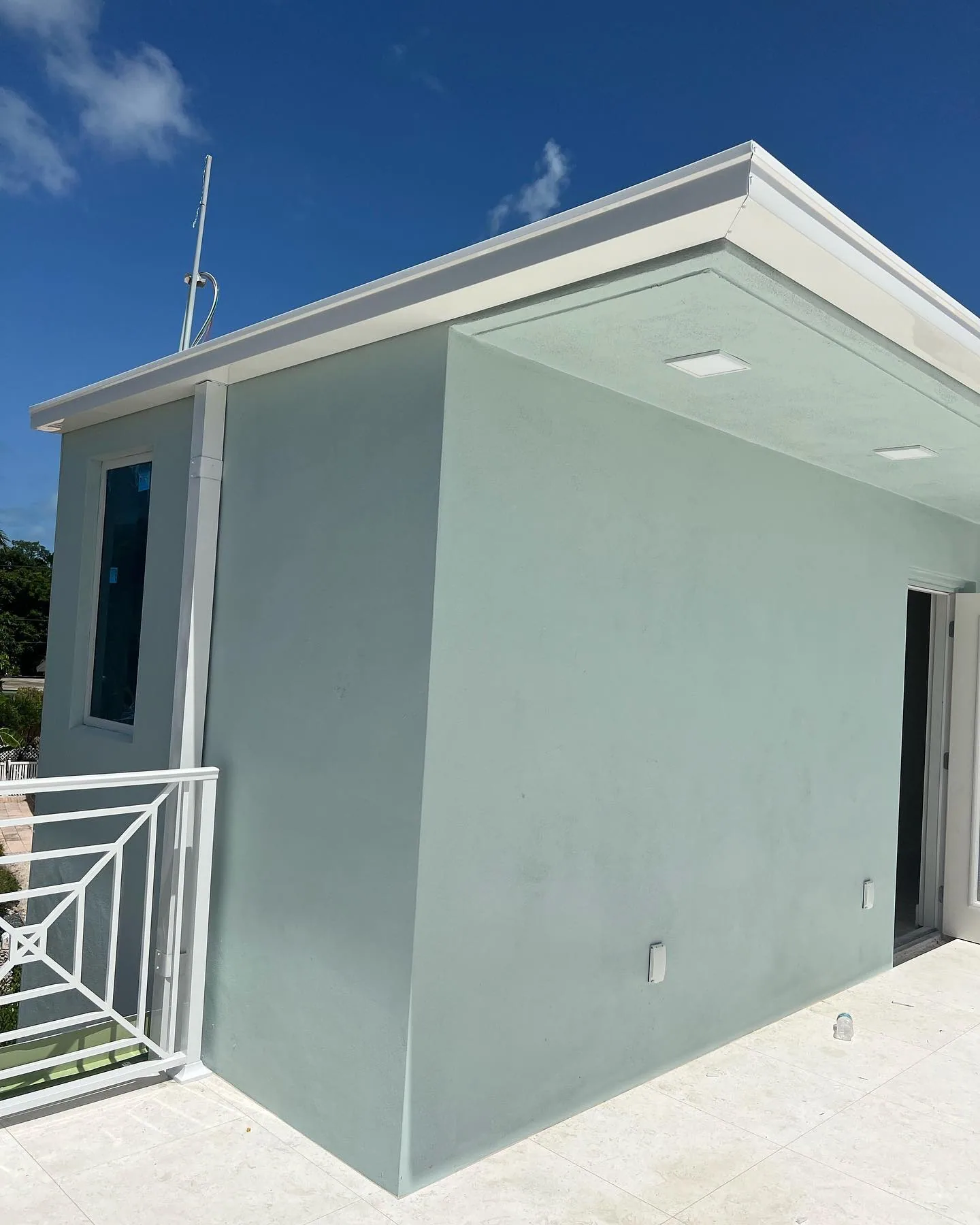
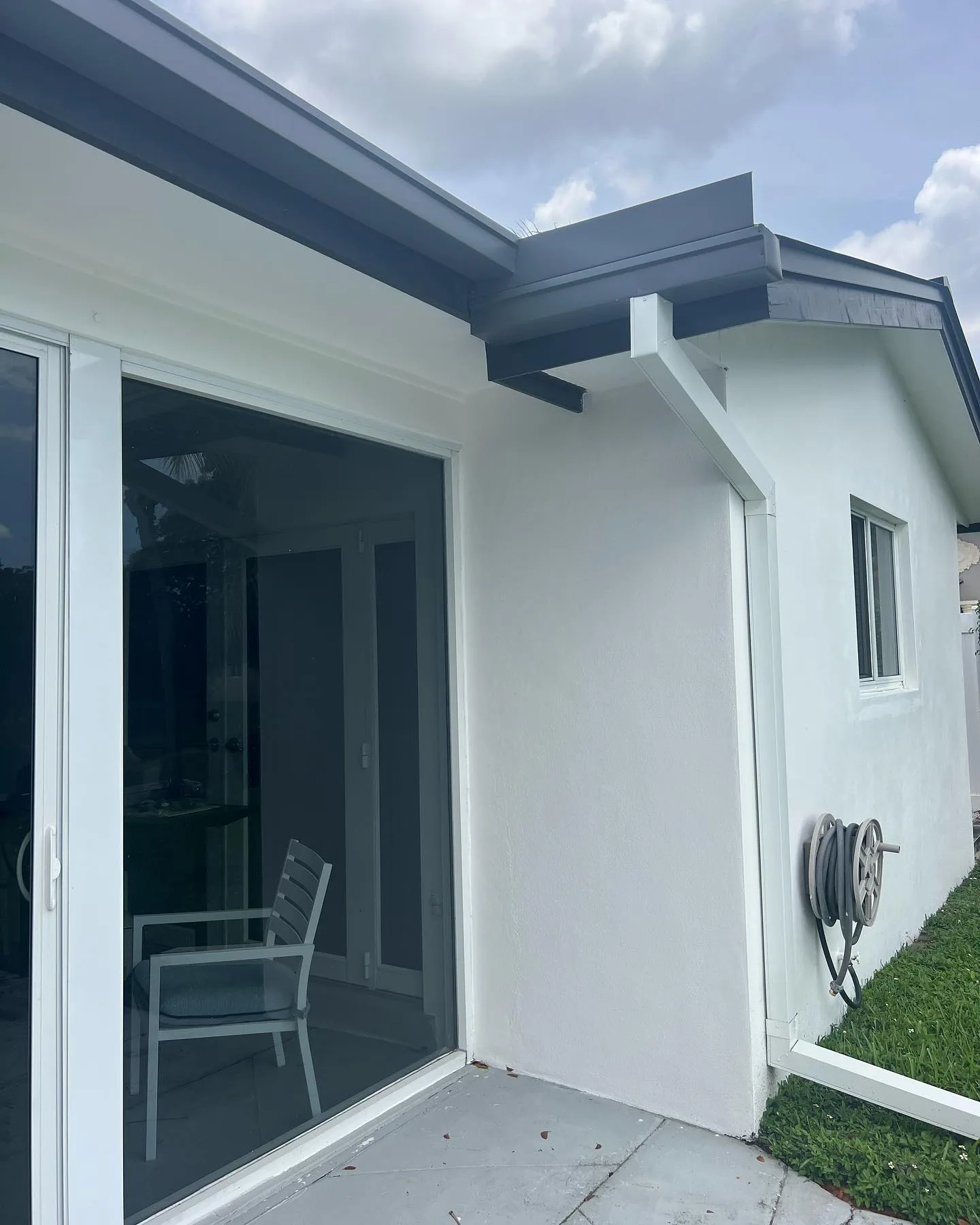
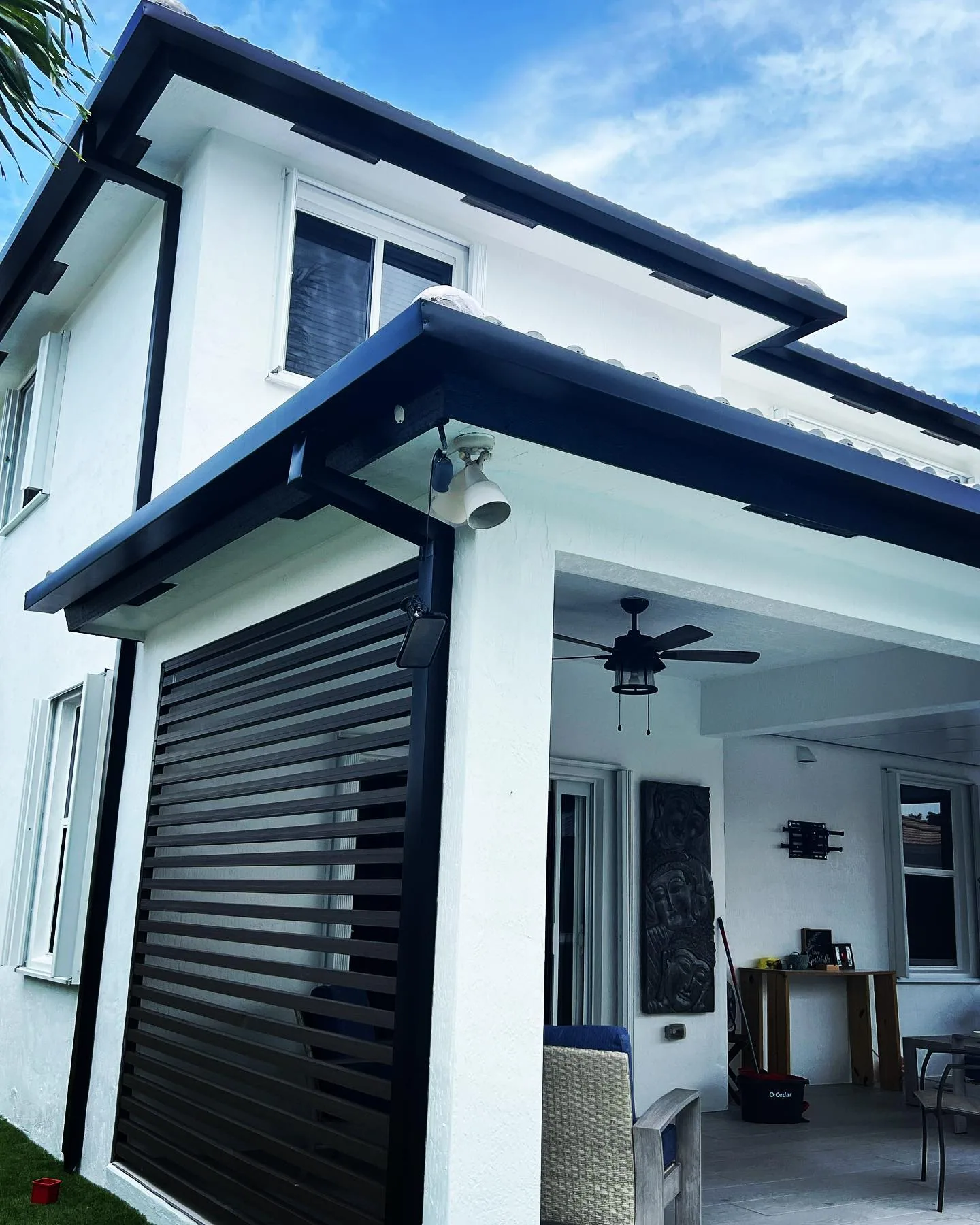
This is exactly why we install seamless gutters formed on site. One continuous run has no mid-span joints to fail. Pair that with the right metal and fasteners and the whole system holds up:
- .032-gauge aluminum minimum for coastal durability. Thinner stock pits and corrodes faster in salt air and dents under debris load.
- Hidden-hanger systems with screws, not the old spike-and-ferrule. Screws bite and hold; spikes work loose and let the gutter sag and pull away in high wind.
- Hangers spaced close enough to carry a full, heavy gutter without bowing between mounts.
Before any of that goes up, the fascia behind it has to be sound. We inspect for hidden humidity rot first, because mounting new gutters to a soft soffit and fascia just guarantees you will be doing this again next year.
What to Do About It
If your gutters are overflowing, here is the practical order of operations:
- Look during the rain. Note exactly where it spills, front edge or back, and whether it is one spot or the whole run. That tells you a lot about the cause.
- Clear the debris. Rule out a simple clog before assuming the worst.
- Check the pitch and hangers. Look for standing water and sagging sections after the rain stops.
- Get an honest assessment of whether the system is just clogged or genuinely undersized for our rainfall.
- Schedule fixes in the dry season. November through May is the window. Book before hurricane season starts June 1, so your system is ready when the heavy storms arrive.
Do not wait for the next named storm to find out your gutters cannot keep up. Overflow during ordinary summer rain is your warning that the system will be overwhelmed when it matters most.
How CAG Solutions Can Help
CAG Solutions Rain Gutters is a local, owner-led seamless gutter contractor based in Lehigh Acres and working throughout Cape Coral and the surrounding coast. We diagnose why your gutters overflow, then fix the actual cause, whether that means professional gutter repair, re-pitching a sagging run, or upsizing to a seamless system with oversized downspouts built for tropical downpours. Carlos often handles estimates personally, our crew is bilingual, and we are open seven days. For a free, no-pressure estimate, call +1 (239) 350-9997 or reach us through our contact page and let's get your home protected before the next big rain.
Need a hand with your gutters?
CAG Solutions provides free, no-pressure estimates across Cape Coral and Southwest Florida.