Best Gutter Material for Florida: Aluminum vs. Vinyl vs. Steel vs. Copper
Local seamless gutter company in Lehigh Acres, FL · Owner: Carlos Garcia
Short Answer
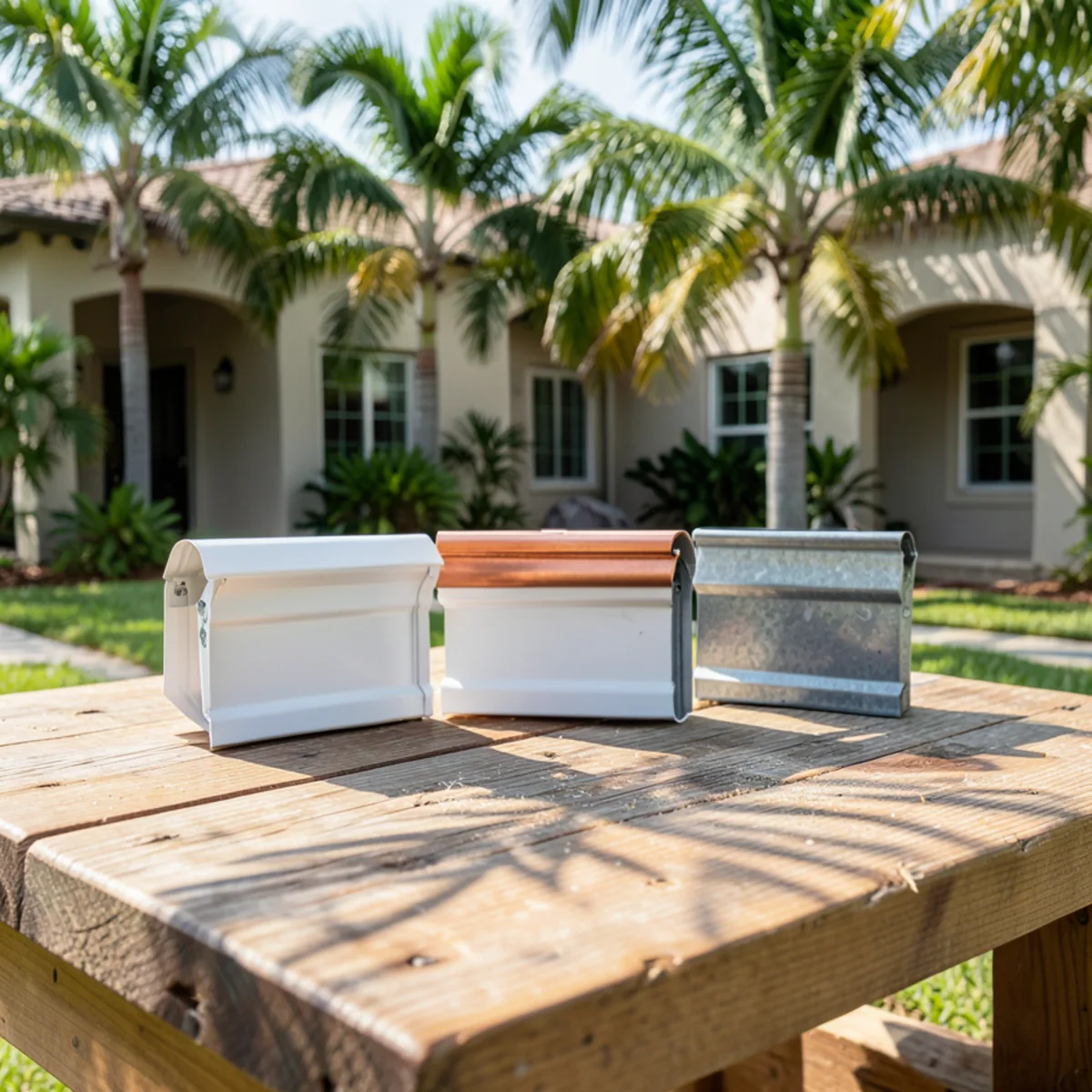
The best gutter material for most Florida homes is seamless aluminum in .032 gauge: it doesn't rust, handles salt air, and costs about $10 to $20 per foot installed nationally. Copper is the premium upgrade for appearance. Vinyl and thin galvanized steel hold up poorly to Florida sun, salt and storms.
Aluminum, vinyl, steel, copper, zinc: every material works somewhere. Southwest Florida is a hard place for gutters, with salt air, intense UV, daily summer storms, and hurricane wind. Here's how the common gutter materials hold up here, what they cost, and why most homes in Cape Coral and Fort Myers end up with aluminum.
Gutter Materials at a Glance
Installed prices per linear foot and lifespans below are national figures from HomeGuide (2026); Florida-specific notes are ours.
| Material | Installed / ft | Lifespan | Florida notes |
|---|---|---|---|
| Aluminum | $10 – $20 | 20 – 30 yrs | Doesn't rust; choose .032 gauge for salt air and wind |
| Vinyl / PVC | $8 – $12 | 10 – 20 yrs | Becomes brittle and fades in strong sun; weak in high wind |
| Steel | $10 – $35 | 20 – 50 yrs | Strong, but galvanized steel rusts at scratches near salt water |
| Copper | $25 – $40 | 50 – 100 yrs | Premium look; patinas instead of rusting |
| Zinc | $35 – $45 | 30 – 80+ yrs | Durable and self-healing patina; rarely used here due to cost |
Aluminum: The Southwest Florida Standard
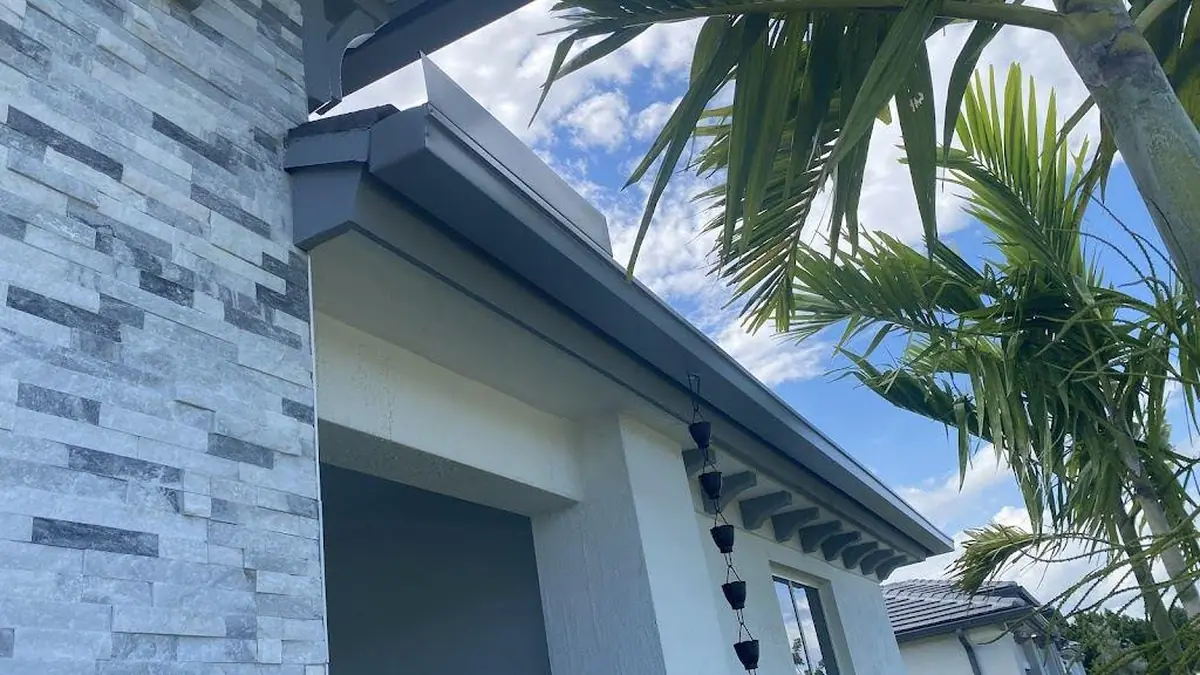
Aluminum doesn't rust, it's light enough to hang in long seamless runs, and it can be formed on site to your exact roofline. Gauge matters: thin builder-grade aluminum dents, sags, and pits faster in salt air. We use .032-gauge aluminum as a minimum. More in the benefits of aluminum gutters for Florida homes.
Vinyl Gutters: Cheap, but a Poor Fit Here
Vinyl is the cheapest option and easy to DIY. In Southwest Florida, constant UV makes it brittle and faded, sectional joints leak as they expand and contract in the heat, and it doesn't stand up to hurricane wind or a falling palm frond. It's a short-term fix at best.
Steel and Stainless Steel
Galvanized steel is strong and handles impacts, but once the coating is scratched it rusts, and salt air speeds that up. Stainless steel resists corrosion but costs considerably more and is uncommon on homes. For most coastal homes, heavy-gauge aluminum gives similar real-world durability for less.
Copper and Zinc: Premium Choices
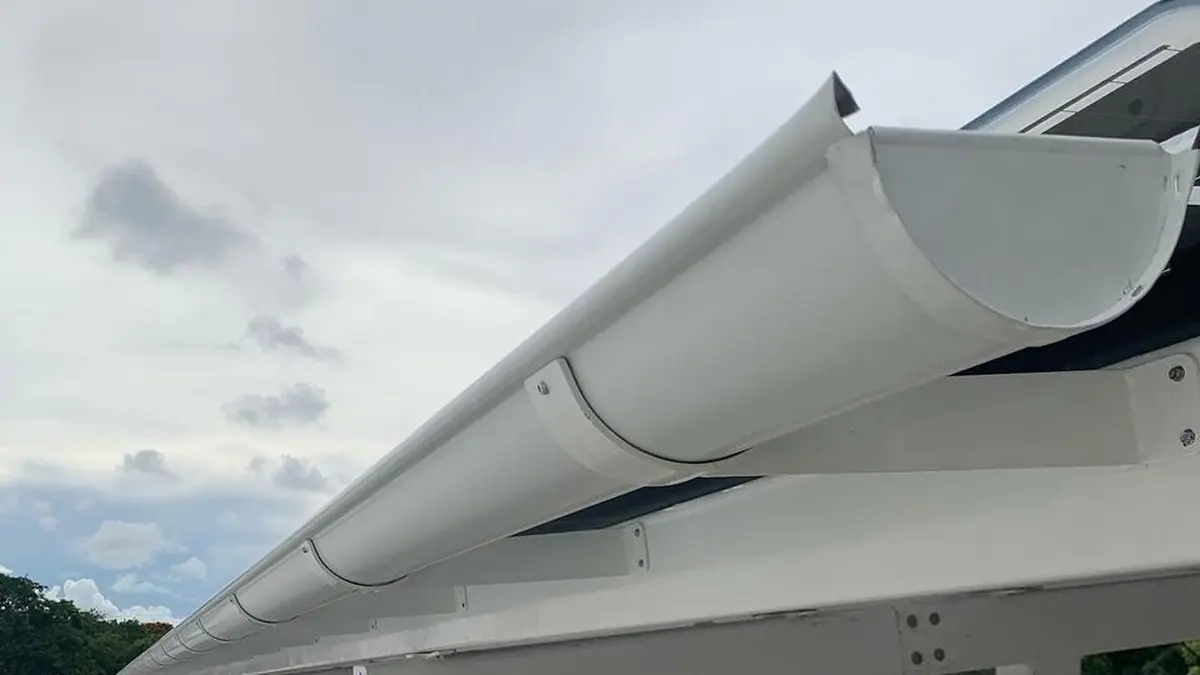
Copper doesn't rust; it weathers to brown and then a green patina, and it can outlast the house. It's usually chosen for looks on estate, Mediterranean, and historic homes, often in a half-round profile. See half-round and copper gutters.
Seamless Matters as Much as Material
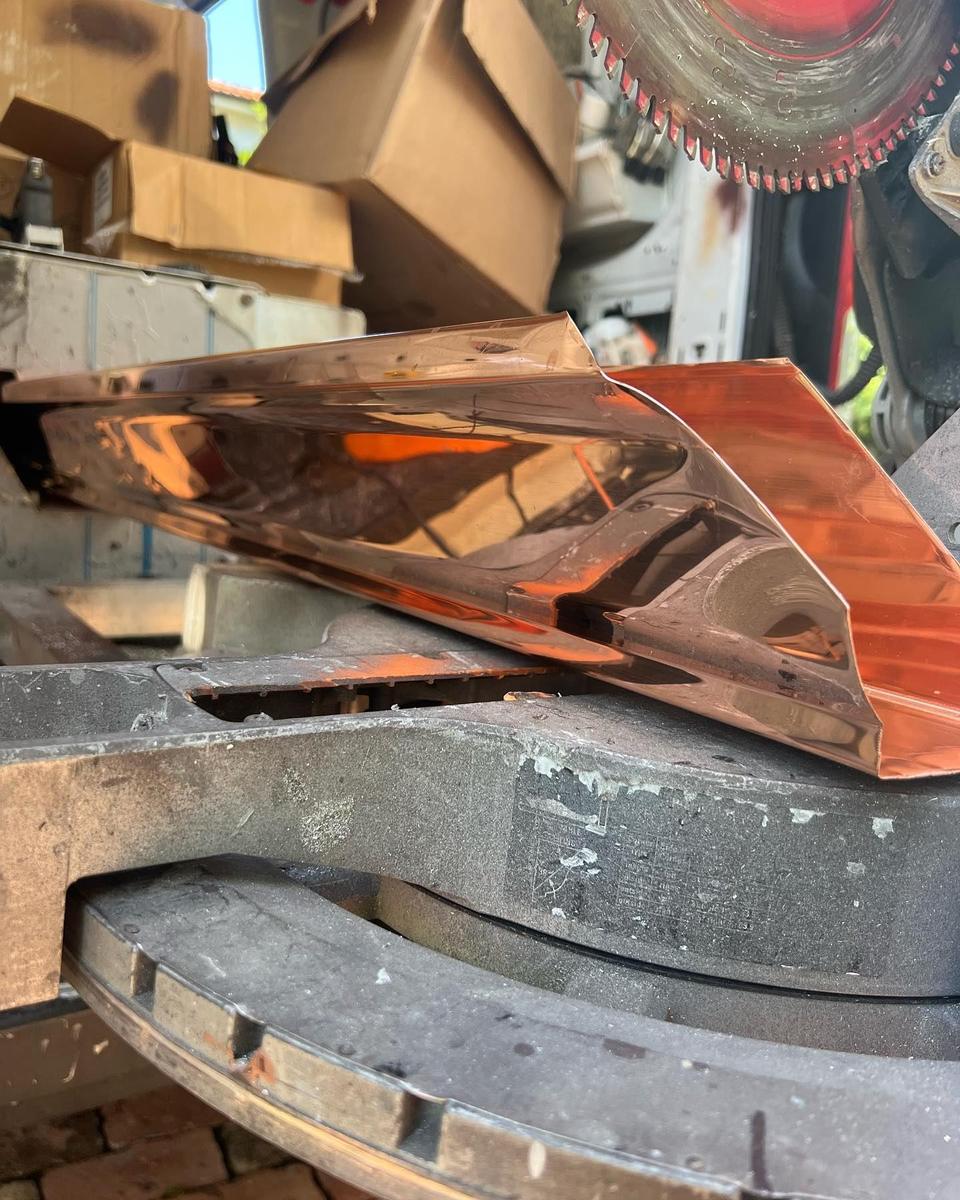
The weakest point of most gutter systems isn't the metal, it's the joints. Sectional gutters, in any material, leak at the seams first. Seamless aluminum formed in one piece per run removes most of them. See seamless vs. sectional gutters.
Gauge and Finish: The Details That Decide Lifespan
Two aluminum gutters can look identical and last very different lengths of time. Gauge is the metal's thickness: builder-grade aluminum is often thinner than .027 inch, while coastal installs use .032. Thicker metal resists dents from ladders and falling fronds, holds its shape under the weight of wet debris, and takes longer to pit through in salt air.
The finish matters too. Seamless aluminum comes pre-painted with a baked enamel that resists chalking and fading. Darker colors absorb more heat and may fade faster in full Florida sun, while white and lighter tones hold their look longest.
Why Mixing Metals Causes Corrosion
When two different metals touch in the presence of moisture, the less noble one corrodes faster. That's galvanic corrosion, and salt air speeds it up. In practice it means:
- Copper gutters need copper or compatible fasteners and brackets, never galvanized steel.
- Aluminum gutters should be fastened with stainless or coated screws, not bare steel.
- Steel downspouts on aluminum gutters can corrode at the joint.
It's one of the most common hidden reasons gutters corrode early near the coast, and it's easy to avoid at install time.
Choosing a Material for Your Home
For a typical single-family home in Cape Coral, Fort Myers or Lehigh Acres, seamless .032 aluminum in a color matched to the trim is the right call. For a Mediterranean or estate home where the roofline is part of the design, copper or copper half-round on the front elevation, with aluminum elsewhere, gives the look without the full copper price. For a shed, gazebo or short porch run, a less expensive option may be fine, as long as you accept shorter life.
How Long Each Material Lasts in Southwest Florida
National lifespan figures assume an average climate. Southwest Florida's mix of salt air, intense UV, daily summer storms and hurricane wind shortens the low end of every range. In our experience:
- Vinyl often shows brittle brackets and leaking joints within its first decade here, well before national estimates.
- Thin aluminum near the water pits and dents sooner than heavier gauge; .032 aluminum holds up for decades when kept clean.
- Galvanized steel lasts as long as its coating does; once scratched near salt water, rust spreads.
- Copper outlasts everything else, but its fasteners and brackets have to be compatible or they become the weak point.
Whatever the material, two habits extend its life: keep debris from sitting wet in the trough, and fix leaking joints before water reaches the fascia behind them.
Matching New Gutters to an Existing System
If only part of the house needs new gutters, matching matters. Seamless aluminum can be formed in the same profile and a close color match to most existing aluminum systems, so a partial replacement doesn't look patched. Matching an old vinyl or steel system is harder, which is one reason homeowners often replace the whole house at once when switching materials.
What's the Best Gutter Material for Florida?
For most Southwest Florida homes: seamless .032-gauge aluminum, sized correctly (often 6-inch on big or tile roofs) and fastened with screwed hidden hangers. Copper is the upgrade when appearance is the priority. Vinyl and thin steel are the ones to avoid near the coast. Talk through your options at a free estimate: (239) 350-9997.
From the Crew: What We See on Real Jobs
We pull more failed vinyl and thin steel gutters off Southwest Florida homes than any other material. Vinyl usually fails at the joints, which open up as it expands in the afternoon heat, and the brackets crack after a few years of sun. Galvanized steel fails where the coating was scratched during install, and rust streaks follow.
Copper is the one material we never see fail from weather; the issue with copper is cost and theft risk on vacant homes.
If you're unsure what your current gutters are made of, a magnet helps: it sticks to steel, not to aluminum, copper or vinyl.
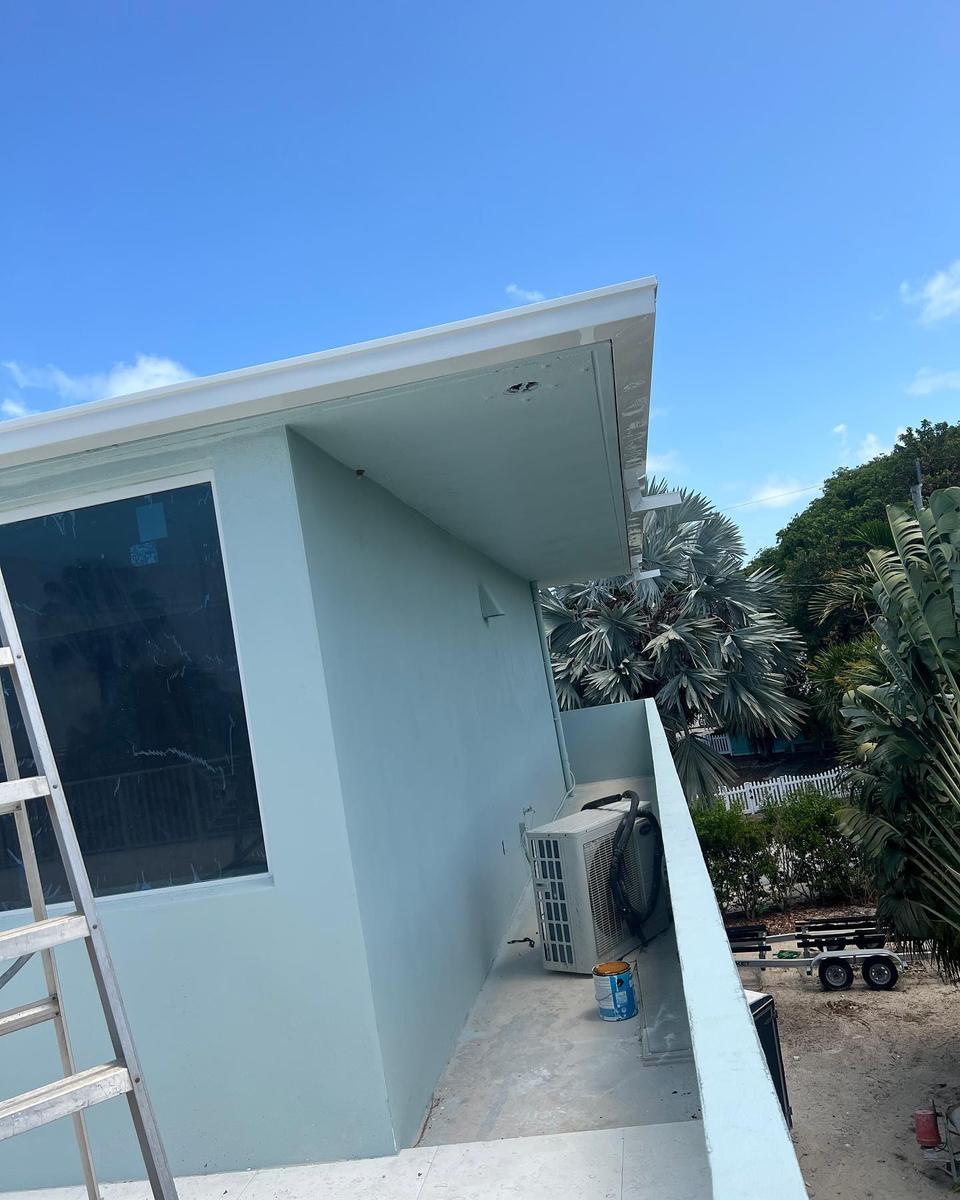
Photos that relate to this guide.
Need a hand with your gutters?
CAG Solutions provides free, no-pressure estimates across Cape Coral and Southwest Florida.