Half-Round vs. K-Style Gutters: Which Is Better for Your Home?
Local seamless gutter company in Lehigh Acres, FL · Owner: Carlos Garcia
Short Answer
K-style gutters carry more water per foot and cost less, which makes them the practical choice for most Florida homes and large roofs. Half-round gutters cost about $1 to $2 more per foot and carry a little less water, but their classic shape suits Mediterranean, estate and historic homes. Many homes mix both.
Most gutters in Southwest Florida are K-style: the flat-backed profile with a decorative front that looks like crown molding. Half-round gutters, the smooth semicircle you see on older and architectural homes, are the main alternative. Both work. The right choice depends on your home's style, how much water your roof sheds, and your budget.
The Difference in Shape
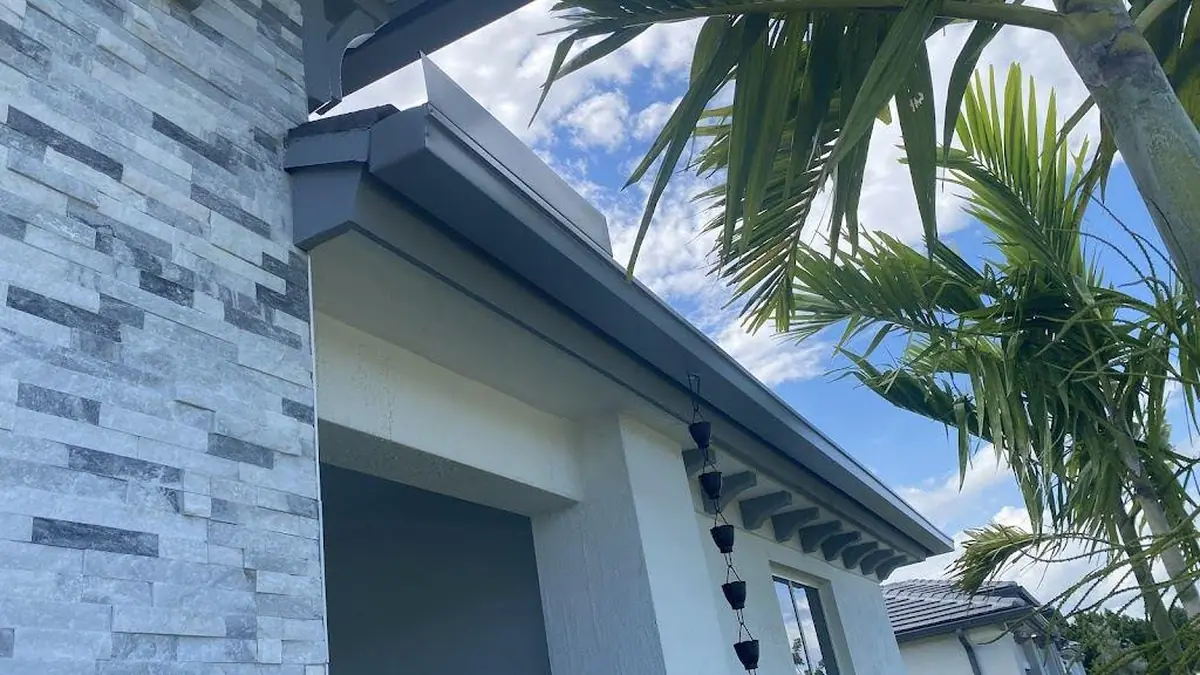
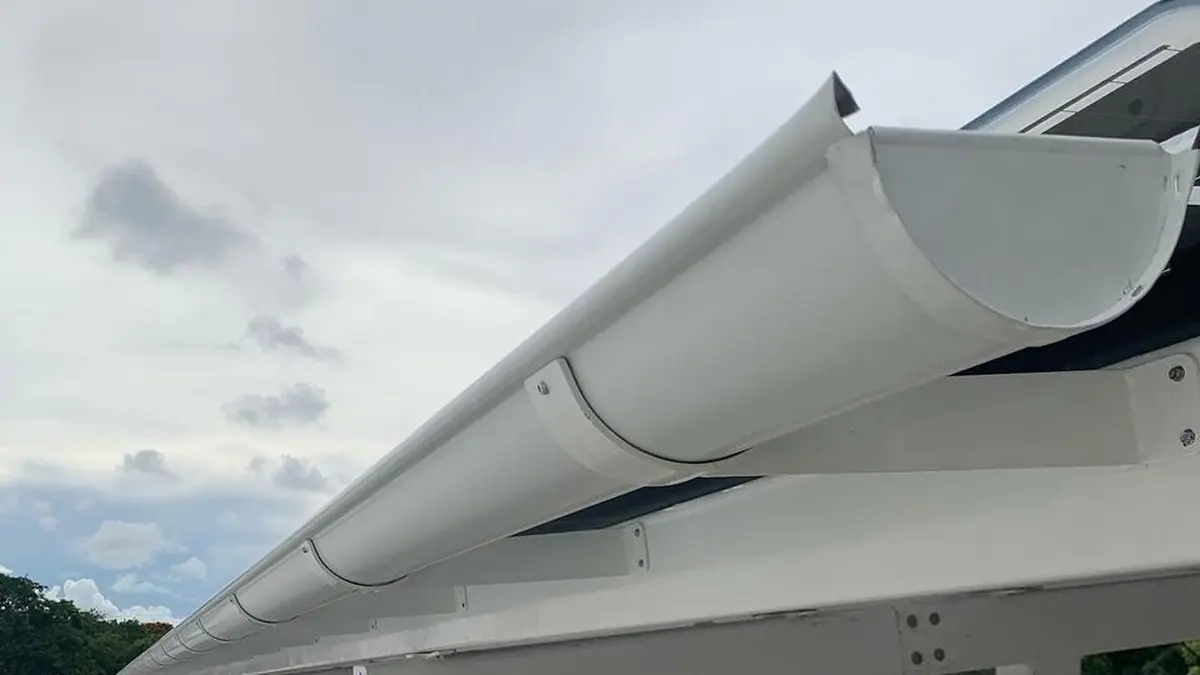
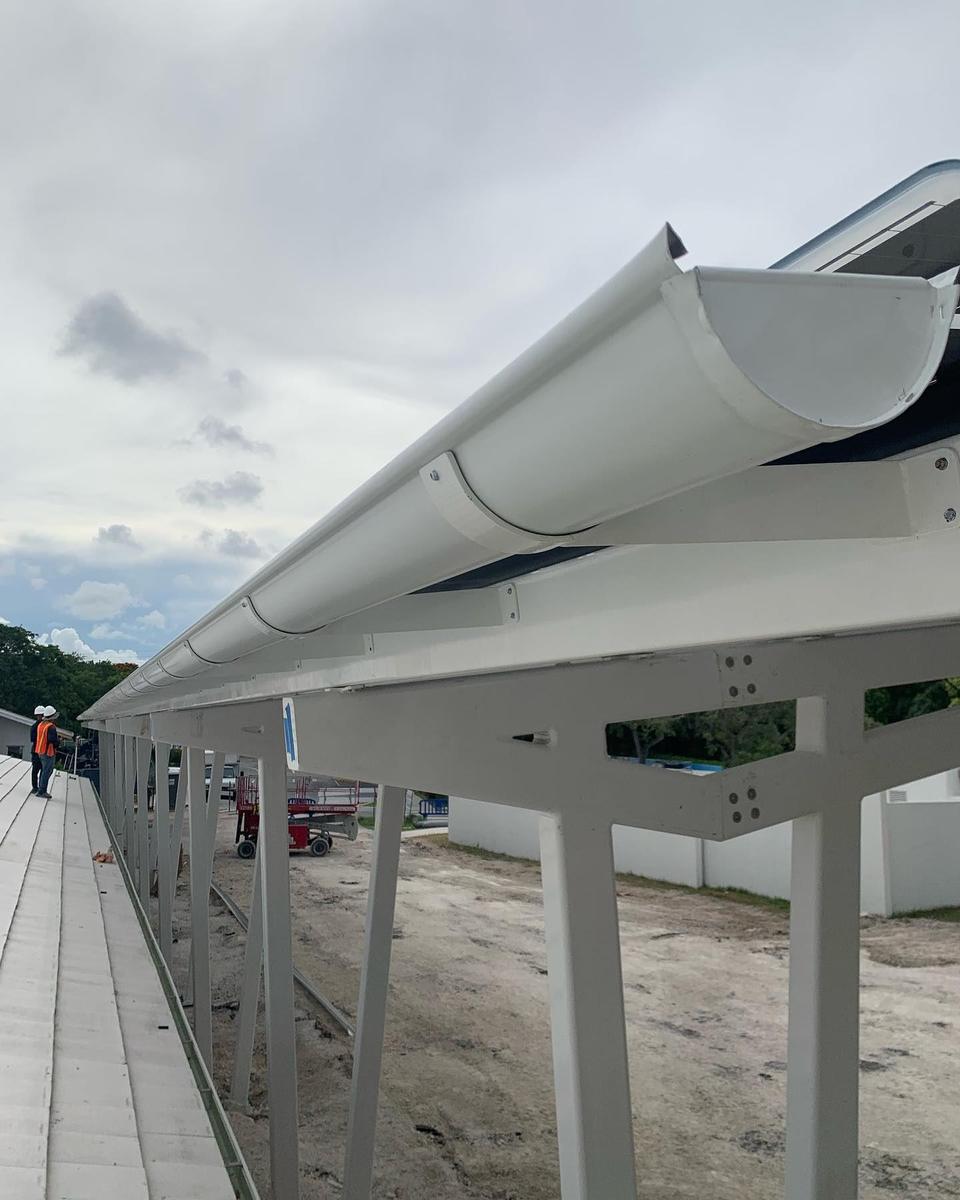
K-style gutters have a flat back that sits tight against the fascia and a front face that hides the roof edge. Half-round gutters are an open semicircle with a rolled front lip, hung from brackets, and usually paired with round downspouts. That shape is why they look softer and more traditional.
Which Carries More Water?
For the same width, K-style carries more. Its flat bottom and angled front hold more water per foot than a semicircle. That's a real consideration under Southwest Florida downpours. A 6-inch half-round or extra downspouts can close the gap, but on big or steep roofs K-style (often 6-inch) is the more practical choice.
Half-Round vs. K-Style at a Glance
| K-style | Half-round | |
|---|---|---|
| Look | Clean, modern, hides roof edge | Classic, architectural |
| Capacity (same width) | Higher | Lower |
| Cost | Lower | About $1–$2 more per foot (national guides) |
| Downspouts | Rectangular | Usually round |
| Cleaning | Corners can hold debris | Smooth curve flushes easily |
| Best on | Most homes, big and tile roofs | Mediterranean, estate, historic homes |
Are Half-Round Gutters More Expensive?
Yes. National cost guides put half-round gutters about $1 to $2 more per linear foot than K-style in aluminum, and copper half-round costs considerably more again. The brackets and round downspouts add to the total. Our gutter installation cost guide covers the other factors.
Which Homes Suit Half-Round Gutters?
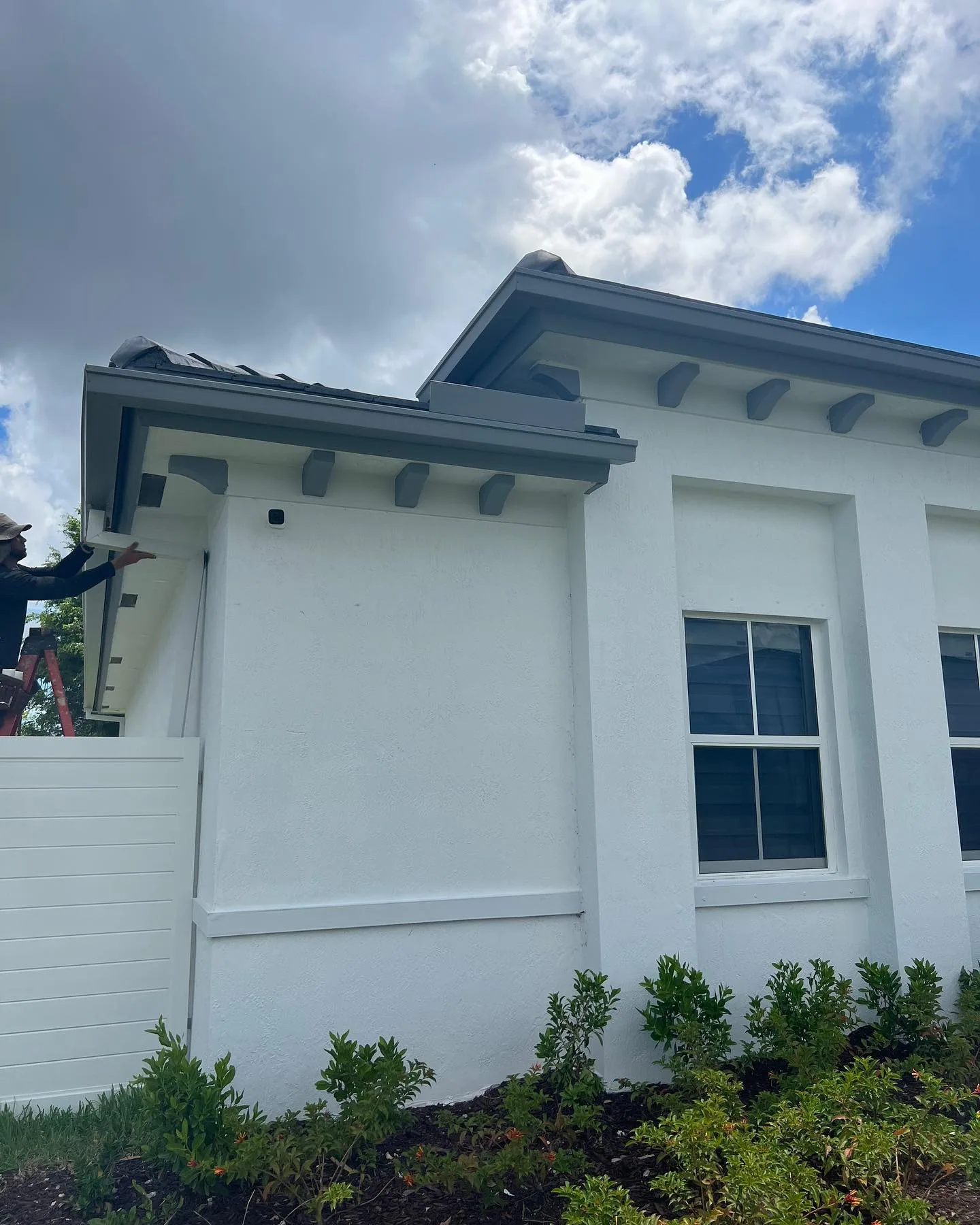
Half-round looks right on Mediterranean and Spanish-revival homes, coastal estates, older homes with exposed rafter tails, and buildings where copper is part of the design. On a contemporary stucco home with a flat fascia, K-style or a box gutter usually fits better.
How They're Installed Differently
K-style gutters fasten directly to the fascia with hidden hangers inside the gutter. Half-round gutters usually hang from external brackets screwed to the fascia or roof edge, spaced closely enough to carry a full gutter. The brackets are visible and part of the look, so they're chosen to match the gutter material, especially with copper, where mixing metals invites corrosion.
Durability in Salt Air
Profile doesn't change durability; material does. Heavy-gauge aluminum resists salt air in either shape, and copper half-round develops a protective patina. What matters near the coast is gauge, compatible fasteners, and keeping water flowing so debris doesn't sit wet in the gutter. Half-round's smooth curve has one small advantage: debris flushes out more easily than from K-style's inside corners.
Are Half-Round Gutters Worth It?
If the look matters to you and your roof doesn't push extreme volume, yes. They finish a traditional roofline in a way K-style can't. If capacity and budget come first, K-style wins. Many homeowners split the difference: half-round on the front elevation, K-style where nobody looks.
Gutter Sizes in Each Profile
Both profiles come in 5-inch and 6-inch widths. Because a K-style gutter has a flat bottom and steep front, a 5-inch K-style carries noticeably more water than a 5-inch half-round. On a roof that needs real capacity, a 6-inch half-round narrows the gap, but it also becomes a larger, more prominent feature on the facade. Matching the size to the roof area is the first step for either profile.
Downspouts for Each Profile
K-style gutters usually pair with rectangular downspouts, which sit flat against the wall and come in standard and oversized 3"x4" sizes. Half-round gutters usually pair with round downspouts for a consistent look. Round downspouts look elegant but carry slightly less water than a rectangular drop of similar width, so half-round systems sometimes need an extra drop on large roofs.
How Each Profile Handles Florida Weather
In heavy rain, K-style's extra capacity is the main advantage. In wind, both profiles hold well when fastened properly: K-style with screwed hidden hangers, half-round with closely spaced external brackets. For salt air, the material matters more than the shape; heavy-gauge aluminum or copper in either profile holds up near the coast.
Cleaning and Maintenance Differences
Half-round gutters are a little easier to keep clean, because the smooth curve has no inside corners for debris to wedge into, and water tends to flush grit toward the outlet. K-style gutters collect debris in the corner where the back meets the bottom. Both need regular cleaning in Southwest Florida, and both work with gutter guards, though guard options for half-round are more limited.
Can You Mix Half-Round and K-Style?
Yes, and it's common. Using half-round on the street-facing elevation and K-style on the back and sides gets the architectural look where it's seen and maximum capacity where the largest roof areas drain. The transition is usually made at a corner so the change isn't noticeable, and colors are matched across both profiles.
Where the Extra Cost of Half-Round Comes From
Half-round costs more than K-style for reasons you can see on the finished job. The brackets are separate, visible pieces, spaced closely and set evenly so they look intentional. Round downspouts and their elbows cost more than rectangular ones. Corners and end caps take more fitting. And when the metal is copper, the material itself costs several times what aluminum does, and copper-compatible brackets and fasteners add more. On a typical home, choosing half-round only for the front elevation keeps most of the visual benefit and a fraction of the added cost.
Ask for both profiles priced side by side on the same estimate, so the difference is clear in dollars rather than guesswork.
See Both Before You Decide
We install both profiles in aluminum and copper; see half-round and copper gutters. Call (239) 350-9997 and we'll show you samples on your own roofline.
From the Crew: What We See on Real Jobs
When homeowners ask us for half-round on a big two-story tile roof, we usually suggest a split: half-round on the front elevation where it's seen, K-style on the back where the biggest roof planes drain. They get the look on the street side and the capacity where it matters.
Another practical point: half-round brackets are visible, so we lay out their spacing evenly. Uneven brackets are the first thing that makes a half-round install look cheap.
If you're torn, look at the downspouts too: round downspouts on a half-round system are often what makes the look feel finished.
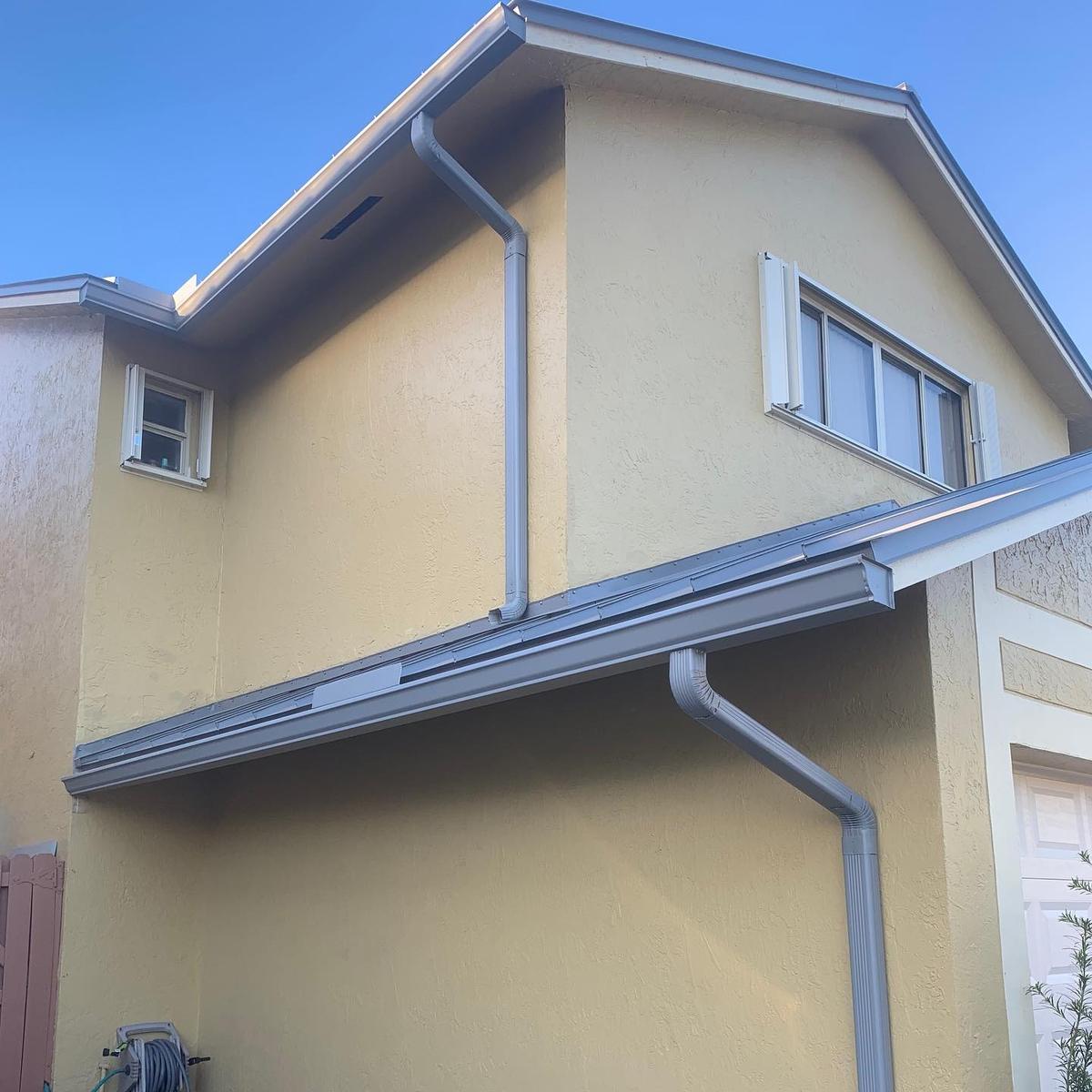
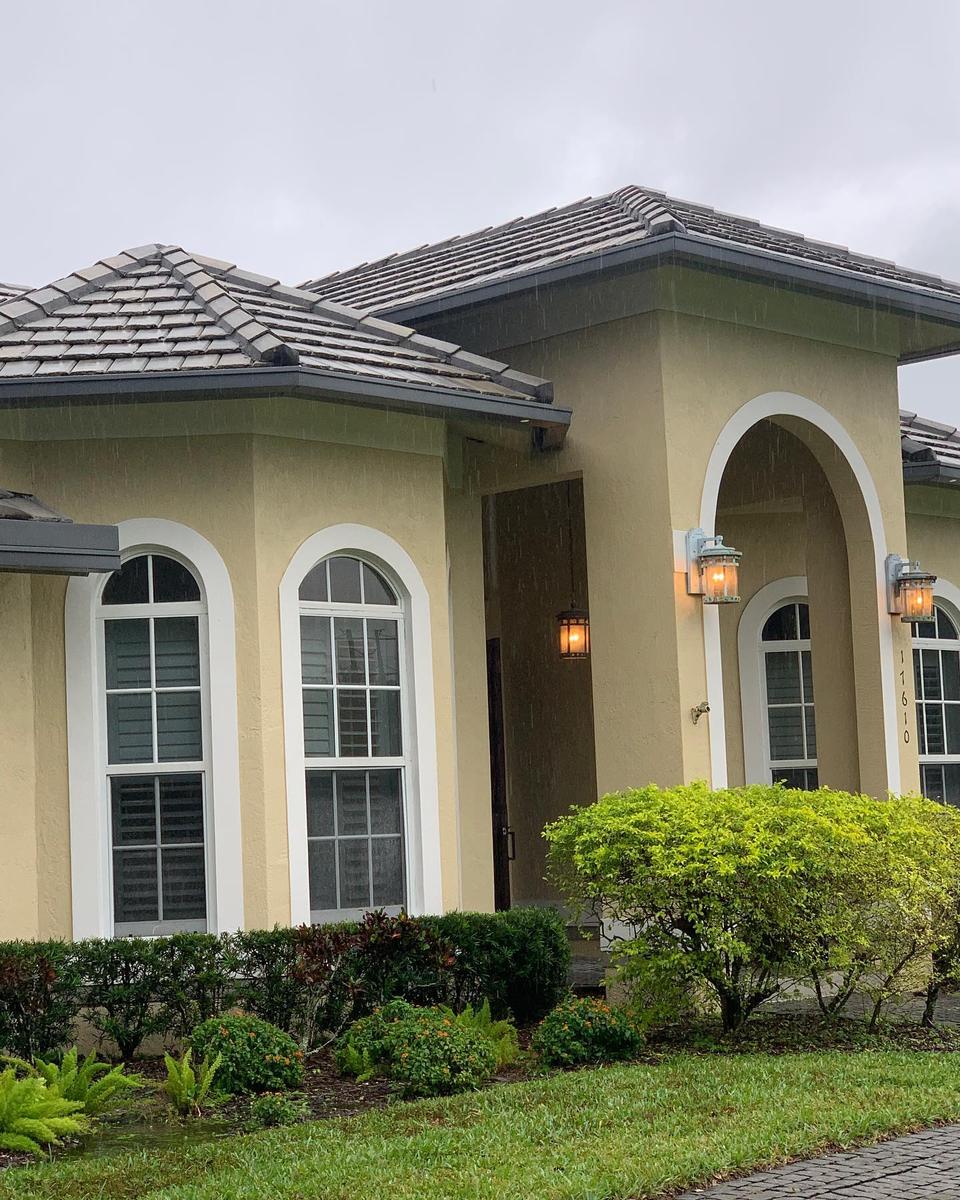
Photos that relate to this guide.
Need a hand with your gutters?
CAG Solutions provides free, no-pressure estimates across Cape Coral and Southwest Florida.