Benefits of Aluminum Gutters for Florida Homes
Most gutter failures in Southwest Florida are not bad luck. They are the wrong material installed the wrong way. We have pulled rusted steel off Cape Coral homes, scraped sun-rotted vinyl out of gutter runs, and re-mounted entire systems that tore loose in the first real storm. The common thread is corrosion, weight, and a contractor who picked the cheapest material on the truck.
Here is the cost of getting it wrong: water that should run to a downspout instead pours over the lip, soaks the fascia, and rots the wood behind it. Then it finds your soffit, your siding, and eventually your slab. By the time you see the stain inside, the damage is months old. Aluminum gutters, specified correctly for our climate, are how you avoid all of that. Let us walk through why.
Salt Air Is the Real Test
Coastal Florida air carries salt. Salt is corrosive. It eats steel from the inside, leaves chalky white pitting on bare metal, and finds every scratch in a finish. On the barrier islands and anywhere close to the water, this is the single biggest factor in how long a gutter lasts.
Aluminum holds up because it forms its own protective oxide layer. It does not rust the way galvanized steel does. With a baked-on enamel finish over the top, it resists salt-air pitting for years longer than the bargain alternatives. That matters even more out on Sanibel and the coastal stretches, where homes take the full brunt of marine air every single day.
One caveat we always give: gauge matters. Thin .025 aluminum dents and oil-cans in the heat. We spec .032-gauge aluminum minimum for coastal durability. The slightly thicker metal holds its shape, resists hail and ladder dents, and stands up to the wind loads we see down here. If a quote does not name the gauge, ask.
Lightweight, So Your Fascia Survives
A loaded gutter full of rainwater is heavy no matter what it is made of. The question is how much dead weight the empty gutter adds before the water even arrives. Aluminum is light. That keeps the constant load on your fascia board low, which matters in a climate where humidity already works against the wood.
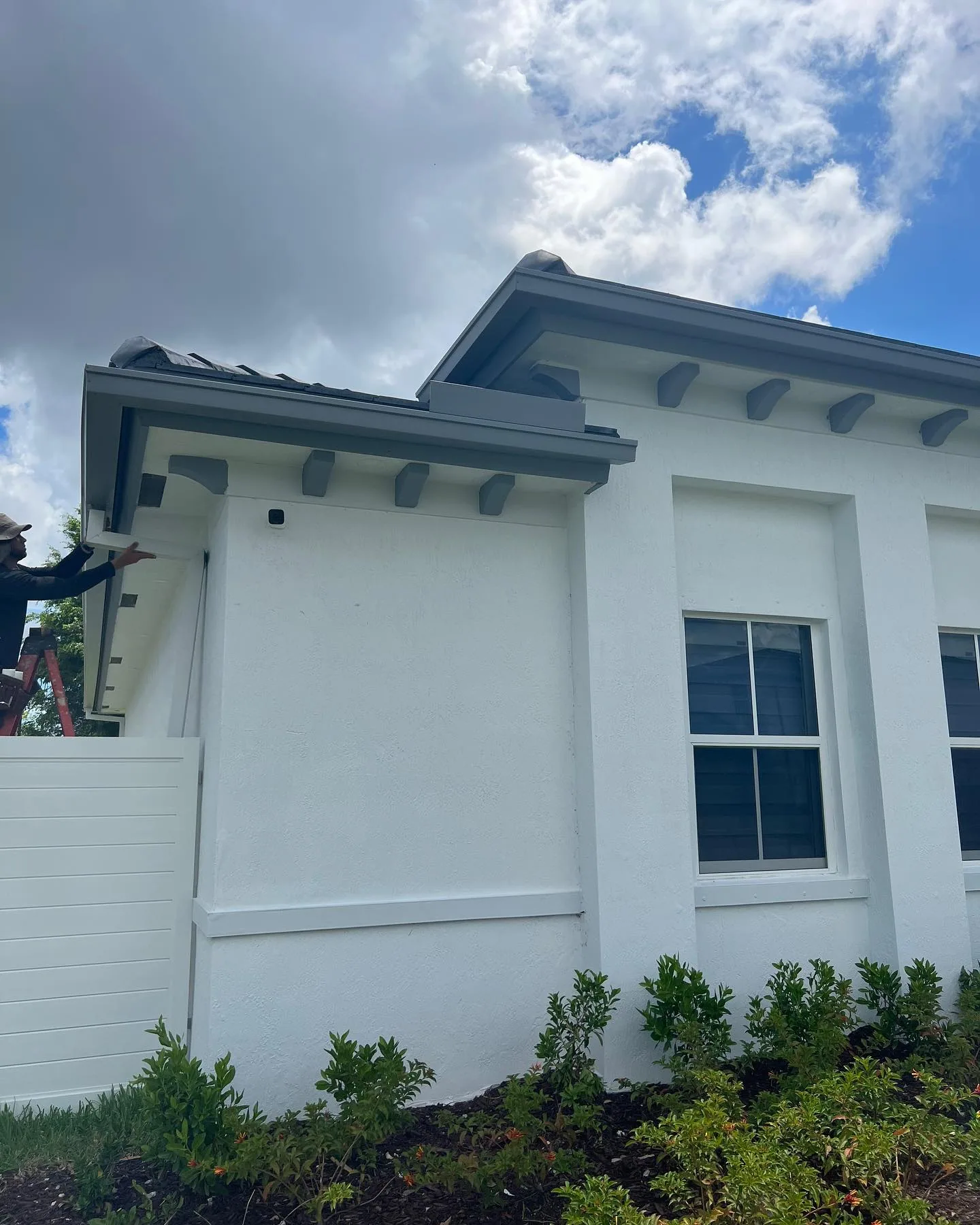
Before we mount anything, we inspect the fascia for hidden humidity rot. Soft, spongy wood will not hold a fastener no matter how good the gutter is. If we find rot, we deal with the soffit and fascia first. Then we hang the system on hidden-hanger systems with screws, not the old spike-and-ferrule nails that work loose every time the metal expands and contracts. Screws into sound wood are what give you wind resistance when a tropical system rolls through.
- Lighter dead load means less stress on aging fascia and rafter tails.
- Hidden hangers spread the load and disappear behind the gutter face.
- Screws hold under thermal cycling and wind uplift far better than nails.
Seamless Aluminum Handles the Heat
Florida sun moves metal. Gutters expand in the afternoon heat and contract overnight. Every joint in a sectional gutter is a place for that movement to work a seam loose, and every loose seam is a future leak. The more joints, the more failure points.
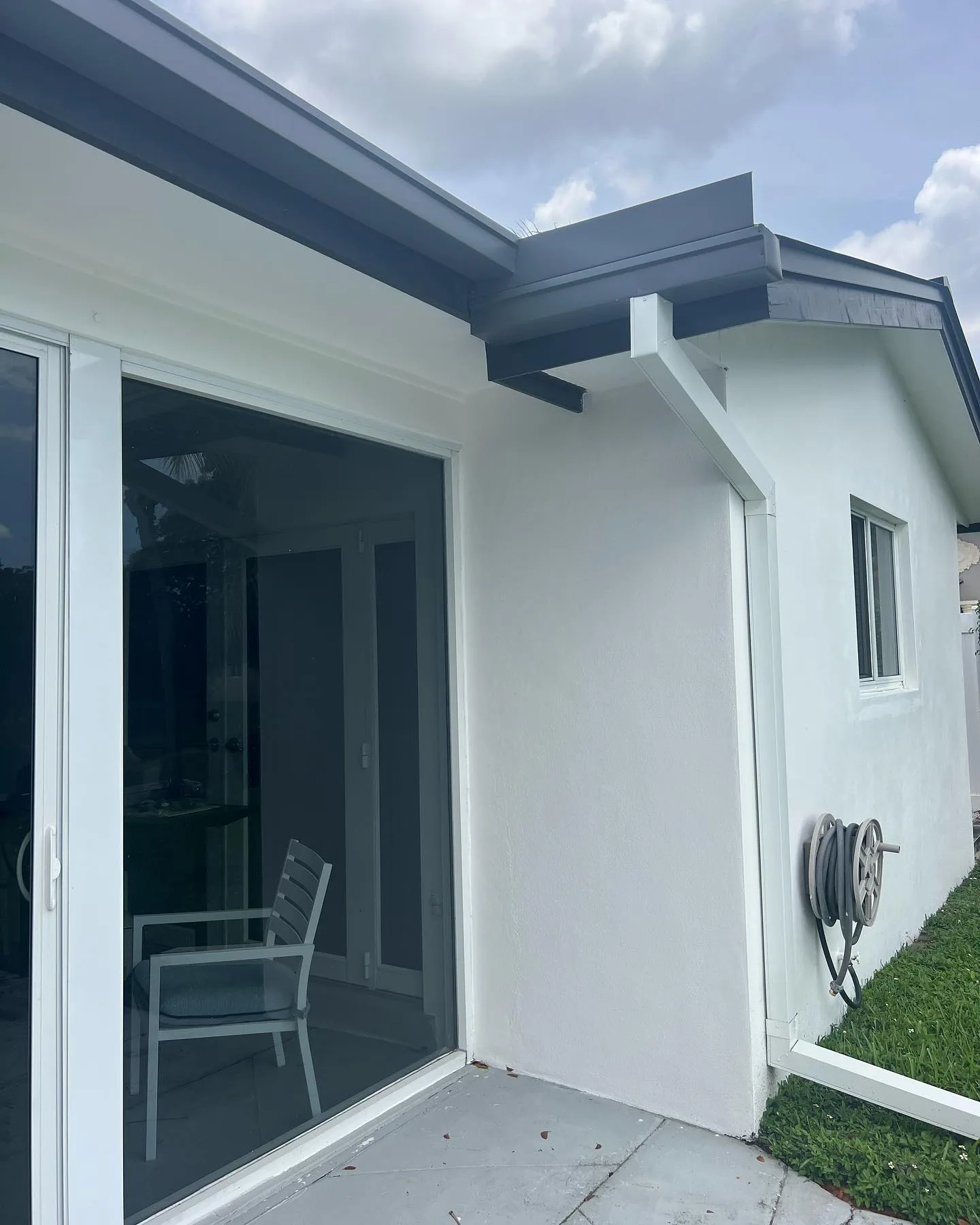
This is why we run seamless aluminum gutters, formed on site to the exact length of each run. One continuous piece per run means the only seams are at the corners and the downspout outlets. Fewer seams, fewer leaks, and far less of the thermal-expansion stress that splits sectional systems apart over a few summers.
Seamless also looks cleaner along the roofline, but that is the bonus. The real win is that water stays inside the channel and goes where it is supposed to go.
Built for Tropical Downpour Volume
Our rain does not fall politely. A summer afternoon can drop more water in twenty minutes than some climates see in a week. A gutter that is the right material but the wrong size will simply overflow, and overflow defeats the entire purpose of having gutters at all.
Aluminum forms easily into the larger profiles and outlets that our volume demands. We push customers toward oversized 3" x 4" downspouts, or dual downspouts on long runs, so the channel can actually empty fast enough to keep up. Undersized 2" x 3" spouts clog and back up the second the catkins start falling.
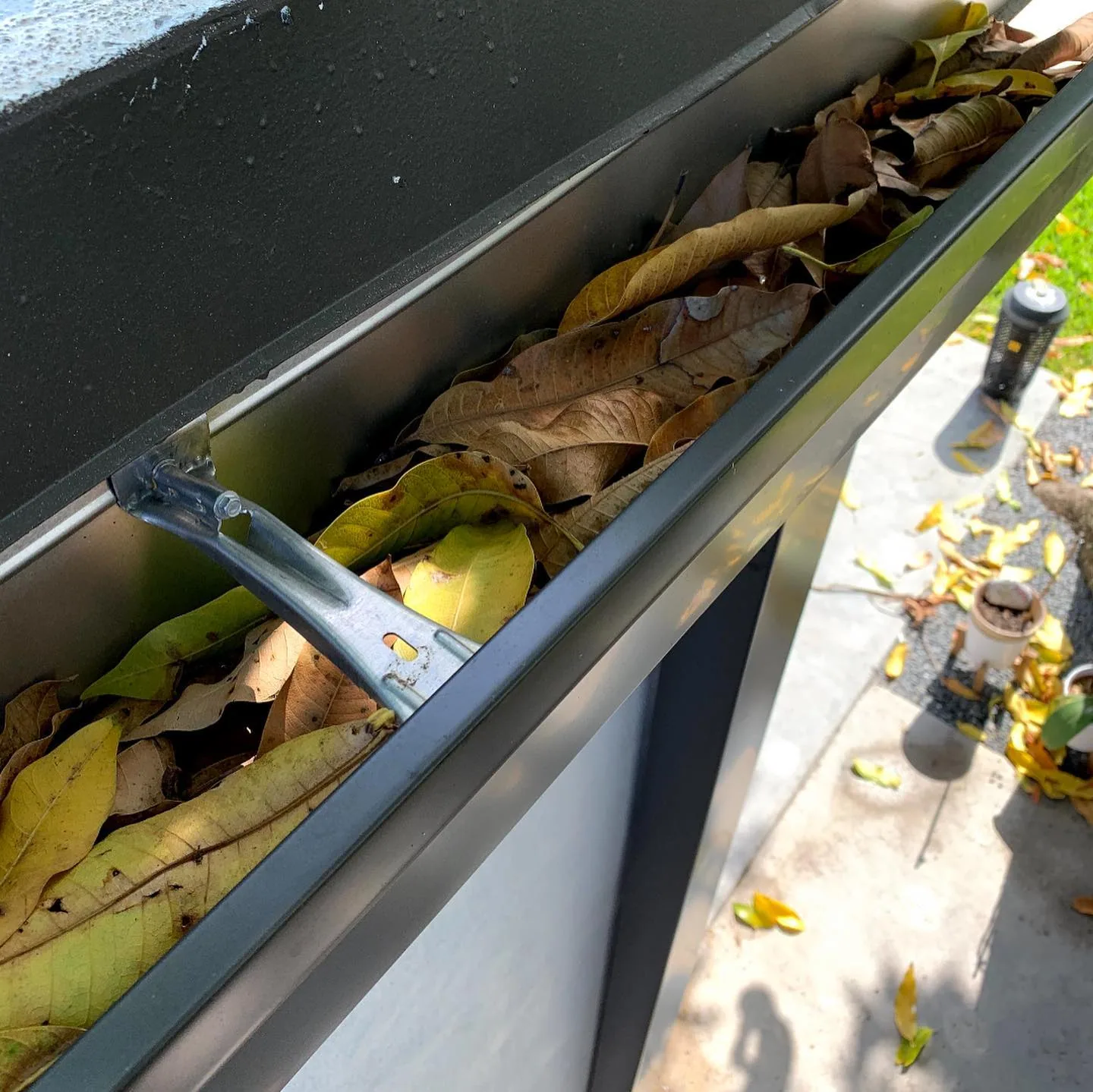
Speaking of debris, that is the other half of the volume problem. Our gutters fill with:
- Oak catkins in spring that mat down into a wet felt.
- Palm strings and fronds that bridge across the channel.
- Pine needles that weave into a mesh nothing drains through.
- Summer pollen that turns into sludge after the first rain.
A larger aluminum profile gives that debris more room before it dams up, and pairs well with gutter guards if you have heavy tree cover. Either way, keeping the channel pitched correctly toward the outlets is what prevents standing water and overflow.
Long-Term Value and Low Maintenance
Aluminum earns its keep over time. It does not rust, it takes a durable factory finish, and it asks very little of you beyond keeping the channel clear. Compare that to steel that pits and streaks in salt air, or vinyl that goes brittle and cracks under UV after a couple of Florida summers.
Low maintenance does not mean no maintenance. A seasonal clean-out keeps the pitch true and the outlets open, and it gives you a chance to catch a loose hanger or a separated seam before it becomes water damage. Regular gutter maintenance is cheap insurance against the far more expensive job of replacing rotted fascia and soffit later.
The finish color is yours to pick to match the house, and a quality enamel coat holds that color through years of sun without the constant fading you get from lesser materials.
Schedule Before Hurricane Season
Timing is part of doing this right. The best window to install or replace gutters is the dry season, roughly November through May, when crews can work clean and finishes cure without an afternoon storm interrupting the job.
More important: get it done before hurricane season starts June 1. You do not want to be the homeowner calling around for a gutter install with a named storm in the Gulf. Properly mounted, wind-rated aluminum gutters with screwed hidden hangers are part of how your roofline sheds water and survives the wind. Booking early means we can inspect your fascia, set the right pitch, and have you ready before the weather turns.
How CAG Solutions Can Help
CAG Solutions is an owner-led, bilingual gutter contractor based in Lehigh Acres and serving Cape Coral, Fort Myers, the islands, and the rest of Southwest Florida. We install seamless aluminum gutters spec'd for our salt air, our downpours, and our wind, using .032 aluminum, hidden hangers, and oversized downspouts because that is what actually lasts here. Carlos often handles estimates personally, and there is no pressure and no charge to find out what your home needs. Call us at +1 (239) 350-9997 or request your free estimate and we will get you protected before the next storm.
Need a hand with your gutters?
CAG Solutions provides free, no-pressure estimates across Cape Coral and Southwest Florida.