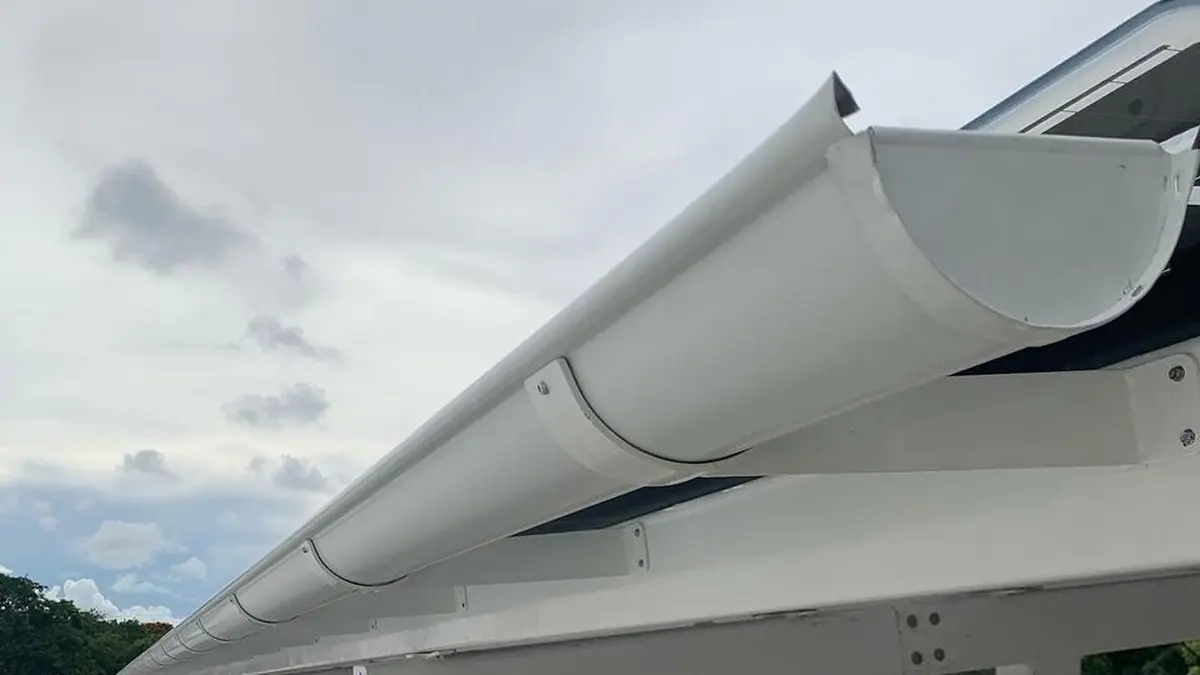
Rain Chains vs. Downspouts: Which Works Better in Florida?
Local seamless gutter company in Lehigh Acres, FL · Owner: Carlos Garcia
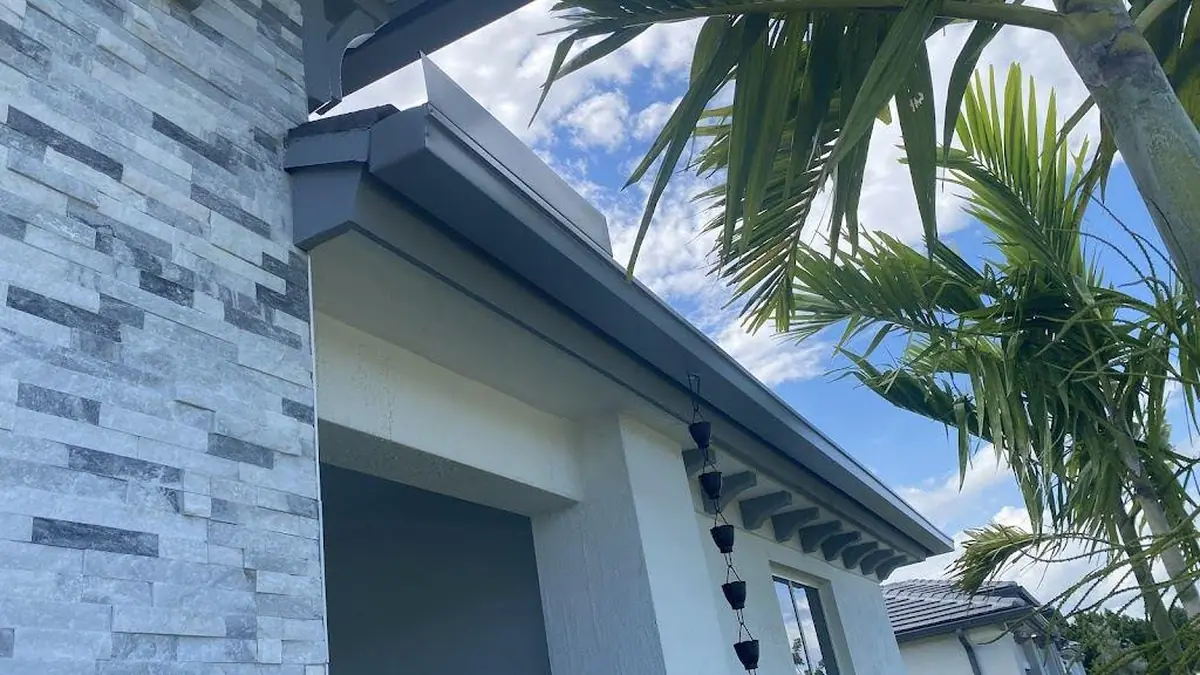
Short Answer
Downspouts move far more water with almost no splash, so they belong on corners that drain large roof areas. Rain chains are decorative and work well in light to moderate rain on small roof sections like entries and porches. Most Florida homes get the best result using both: chains where they're seen, downspouts where the volume is.
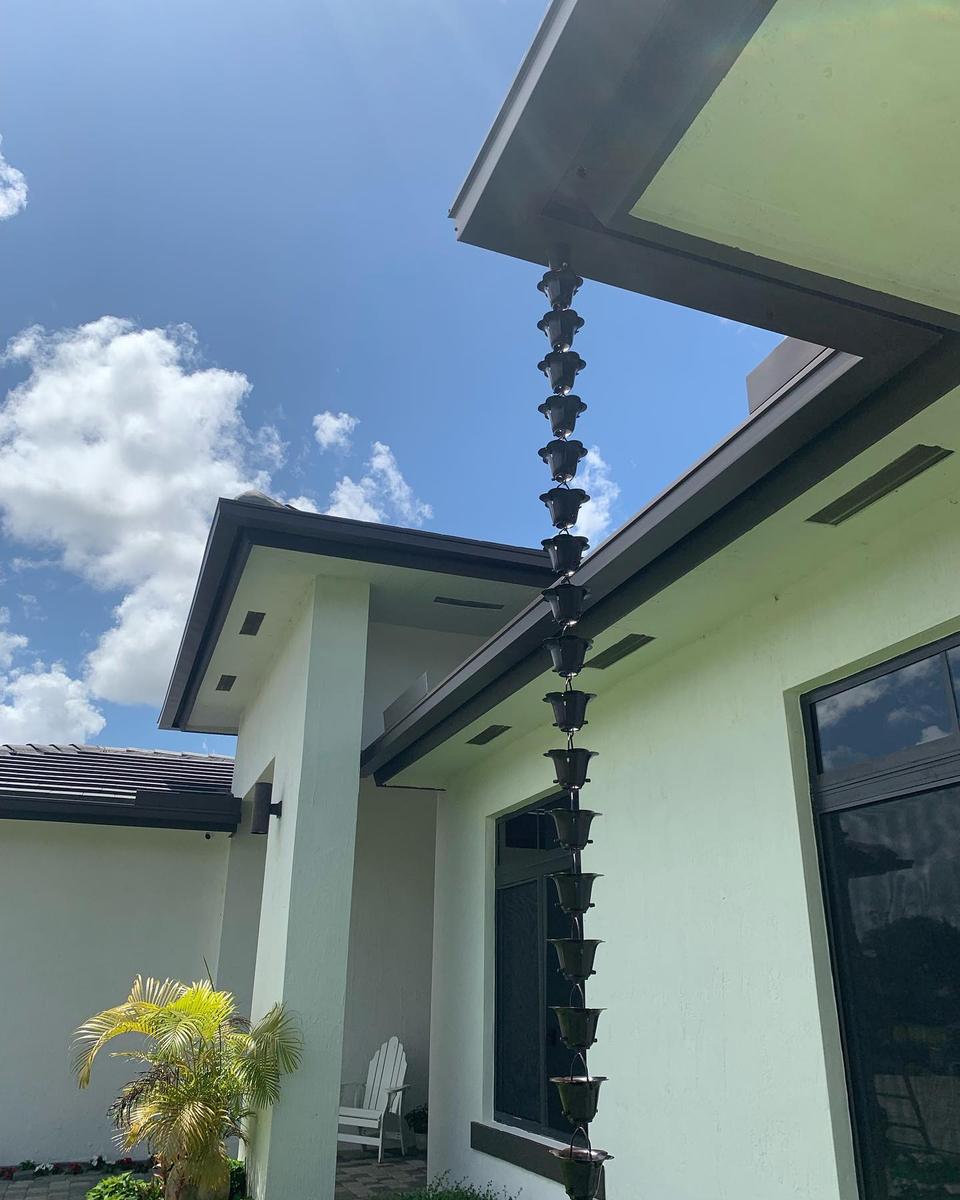
Rain chains are one of the most-requested details on new gutter systems: a chain of copper cups at the front entry instead of a plain aluminum downspout. They're also easy to put in the wrong place. In Southwest Florida, where a summer storm can drop inches of rain in an hour, the choice between a rain chain and a downspout is a drainage decision as much as a design one.
How Each One Works
A downspout is a closed pipe. It carries all the water the gutter delivers straight to the ground or a drain, with almost no splash, and oversized 3"x4" downspouts move a lot of it. A rain chain hangs from the gutter outlet, and water clings to and falls through a series of cups or links. It's open to the air, so it's visible, and audible, and it handles less volume.
Rain Chains vs. Downspouts at a Glance
| Rain chain | Downspout | |
|---|---|---|
| Capacity | Lower; best on small roof areas | High, especially 3x4 oversized |
| Splash | Some, more in heavy rain | Minimal |
| Wind | Must be anchored | Fixed to the wall |
| Look | Decorative focal point | Blends in when color-matched |
| Clogging | Rarely clogs | Can clog at elbows |
| Cost | Varies widely; copper costs more | Economical |
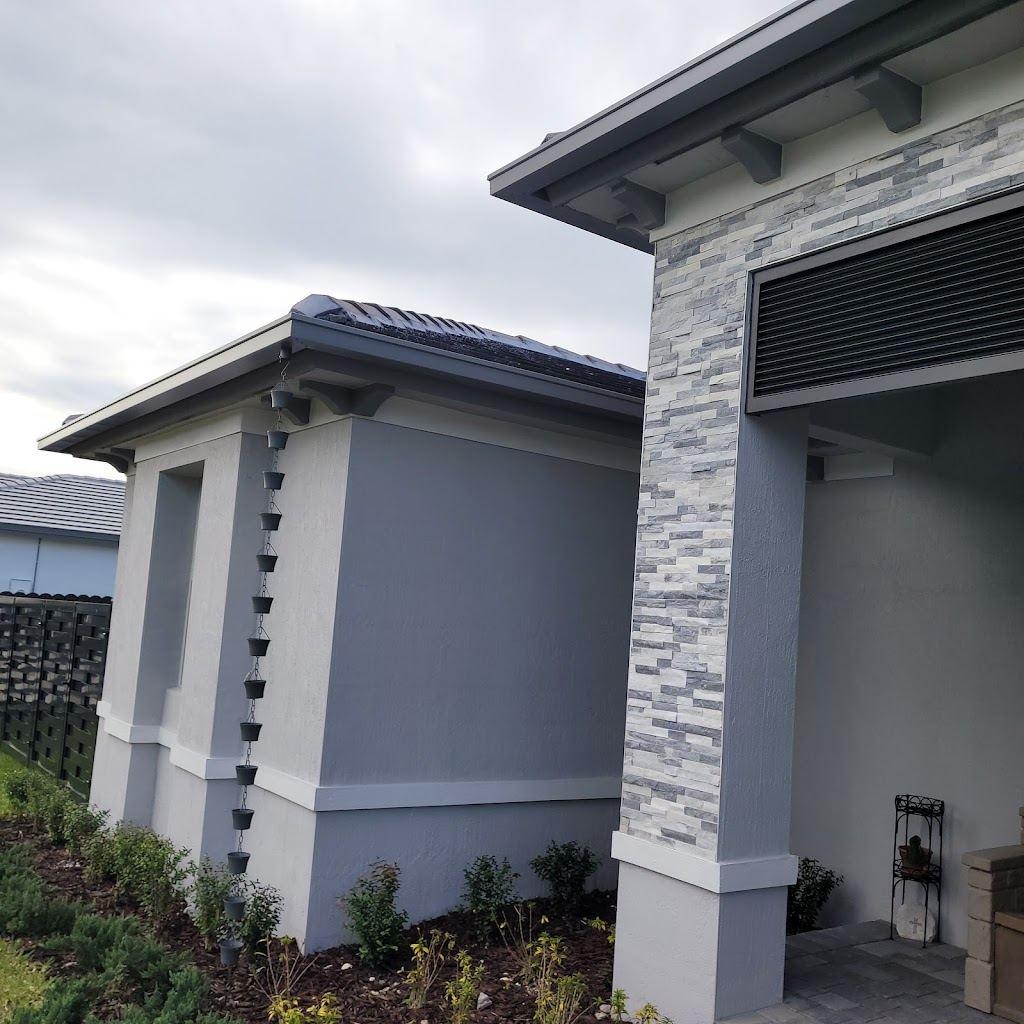
Do Rain Chains Really Work?
Yes, within limits. In light and moderate rain a cup-style chain guides water down cleanly. In a heavy Florida downpour, water arrives faster than the chain can carry it and some spills or splashes off. That's fine at a porch corner fed by a small roof section. It's a problem at a corner fed by a big roof plane or a valley, where a downspout belongs.
The Downsides of Rain Chains
- Less capacity than a downspout
- Splash near doors and walkways in heavy rain
- They swing in high wind unless anchored at the bottom
- They need a planned landing spot (a basin, rock bed, or drain) or they erode the ground and splash the foundation
Cup-Style vs. Link-Style Chains
Cup-style chains catch and pass water through open cups and handle much more flow with less splash. Link-style chains look lighter and more delicate but splash more. For Florida rain, we recommend cup-style almost everywhere.
The Best Answer: Use Both
On most homes we put rain chains where people see them, like the front entry, a lanai corner, or a garden bed, and keep downspouts on the high-volume corners. You get the look without giving up drainage. Where the water lands still matters; see why downspout placement matters.
Rain Chains in Hurricane Season
Anchor the bottom of every chain to a basin, stake, or ground anchor so it can't swing into windows or walls. Before a major storm, a rain chain is also easy to unhook and bring inside. A downspout can't be.
How Much Water Can a Rain Chain Handle?
There's no standard rating, but the principle is simple: a closed downspout contains all the water and carries it down as fast as gravity allows, while a rain chain relies on water clinging to the cups or links. As the flow increases, more water jumps off the chain. In light and moderate rain, a cup-style chain handles a typical porch or entry roof well. In a Southwest Florida downpour, the same chain will splash, and on a large roof plane it will overflow at the gutter outlet. Sizing the roof area to the chain matters more than the chain's style.
What to Put at the Bottom of a Rain Chain
- A basin or decorative bowl that fills and overflows into a planted bed or drain
- A river-rock bed that spreads water and stops erosion
- A rain barrel, where water collection is the goal
- A drain that carries water away from the slab
Whatever you choose, it should anchor the bottom of the chain and keep water several feet from the foundation.
Rain Chain vs. Downspout Cost
A standard aluminum downspout is one of the least expensive parts of a gutter system; published 2026 national figures put installed downspouts around $30 to $75 each. Rain chains vary far more: simple aluminum links are inexpensive, while heavy copper cup chains and decorative designs cost several times more, plus the basin or drainage at the bottom. Expect a rain chain at a front entry to cost more than the downspout it replaces.
Maintaining Rain Chains
Rain chains need little care. Check that the gutter outlet above the chain stays clear, since a clogged outlet sends water over the gutter edge instead of down the chain. Copper chains darken and patina naturally; aluminum and powder-coated chains can be rinsed. Before hurricane season, confirm the bottom anchor is secure, or unhook the chain and store it during a major storm.
Choosing Where Rain Chains Go on Your Home
Walk around the house and note which corners drain small roof sections, like a front entry overhang, a porch, a garden corner or a lanai edge, and which drain large planes or valleys. Rain chains go on the first group, ideally where people will see and hear them. The second group keeps downspouts, color-matched so they disappear.
Choosing a Rain Chain Style
Cup-style chains are the practical pick for Florida rain because each cup catches and passes water down, reducing splash. Link-style chains are lighter and more decorative but splash more. Material changes the look over time: copper darkens to brown and eventually green, while powder-coated aluminum keeps its color. Match the chain to the gutters and trim, and choose a length that reaches the basin or ground without hanging loose.
Getting a Rain Chain Installed
We install copper, aluminum, and powder-coated rain chains on new or existing gutters, with a proper outlet and a planned landing spot. Call (239) 350-9997 for a free estimate.
From the Crew: What We See on Real Jobs
The rain chain complaints we hear are almost all placement problems: a chain hung at the corner below a roof valley, where it can't keep up and floods the walkway, or a chain with nothing at the bottom, so it carves a hole in the mulch. Move the chain to a smaller roof section and give it a basin, and the same chain works fine.
We've also learned to ask about wind before installing near windows. An anchored chain is fine; an unanchored one will find the glass in the first tropical storm.
And keep the gutter outlet above a chain clear; it clogs just like a downspout opening.
Photos that relate to this guide.

Need a hand with your gutters?
CAG Solutions provides free, no-pressure estimates across Cape Coral and Southwest Florida.