Seamless Gutters vs. Sectional Gutters: Which Is Better for Florida Homes?
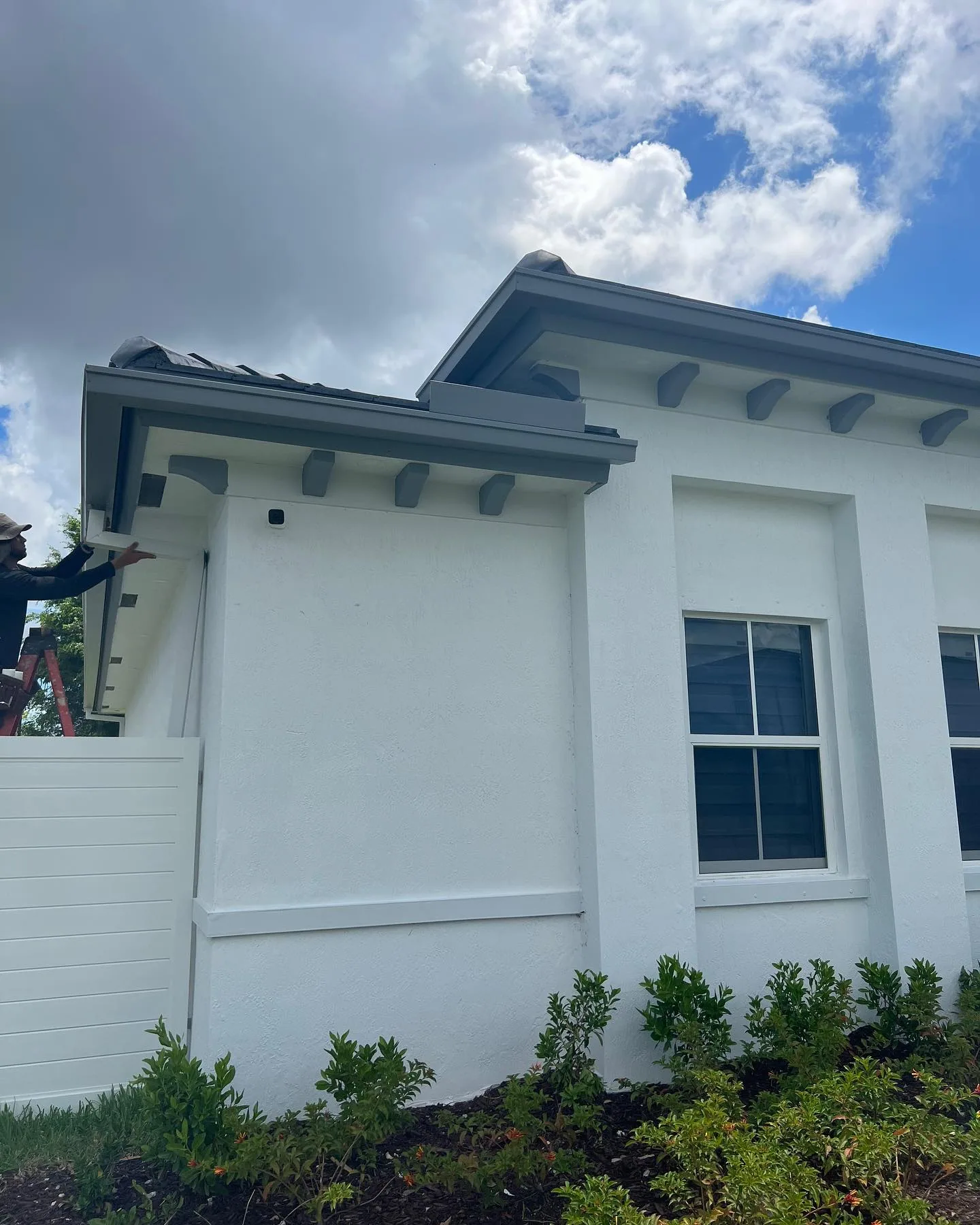
Most gutter failures in Southwest Florida don't start at the roofline. They start at a seam. A joint that looked fine on install day, then opened up a year later under the weight of a August downpour and a fascia board quietly soaking behind it.
If you're choosing gutters for a Cape Coral or Fort Myers home, the seamless-versus-sectional question is the first real decision you'll make. It sounds like a small detail. It isn't. In a climate that throws torrential rain, hurricane winds, and corrosive salt air at your home all in the same year, the number of joints in your gutter system is the difference between a system that protects your foundation and one that fails you during the storm you bought it for.
Here's the honest breakdown.
Seamless vs. Sectional Gutters at a Glance
| Factor | Seamless Gutters | Sectional Gutters |
|---|---|---|
| Leak resistance | High — one continuous piece, no mid-run joints | Lower — every joint can leak over time |
| Wind resistance | Strong with screwed hidden hangers | Weaker — more seams and fasteners to fail |
| Salt-air durability | Excellent in .032 aluminum | Same metal, but joints corrode and leak first |
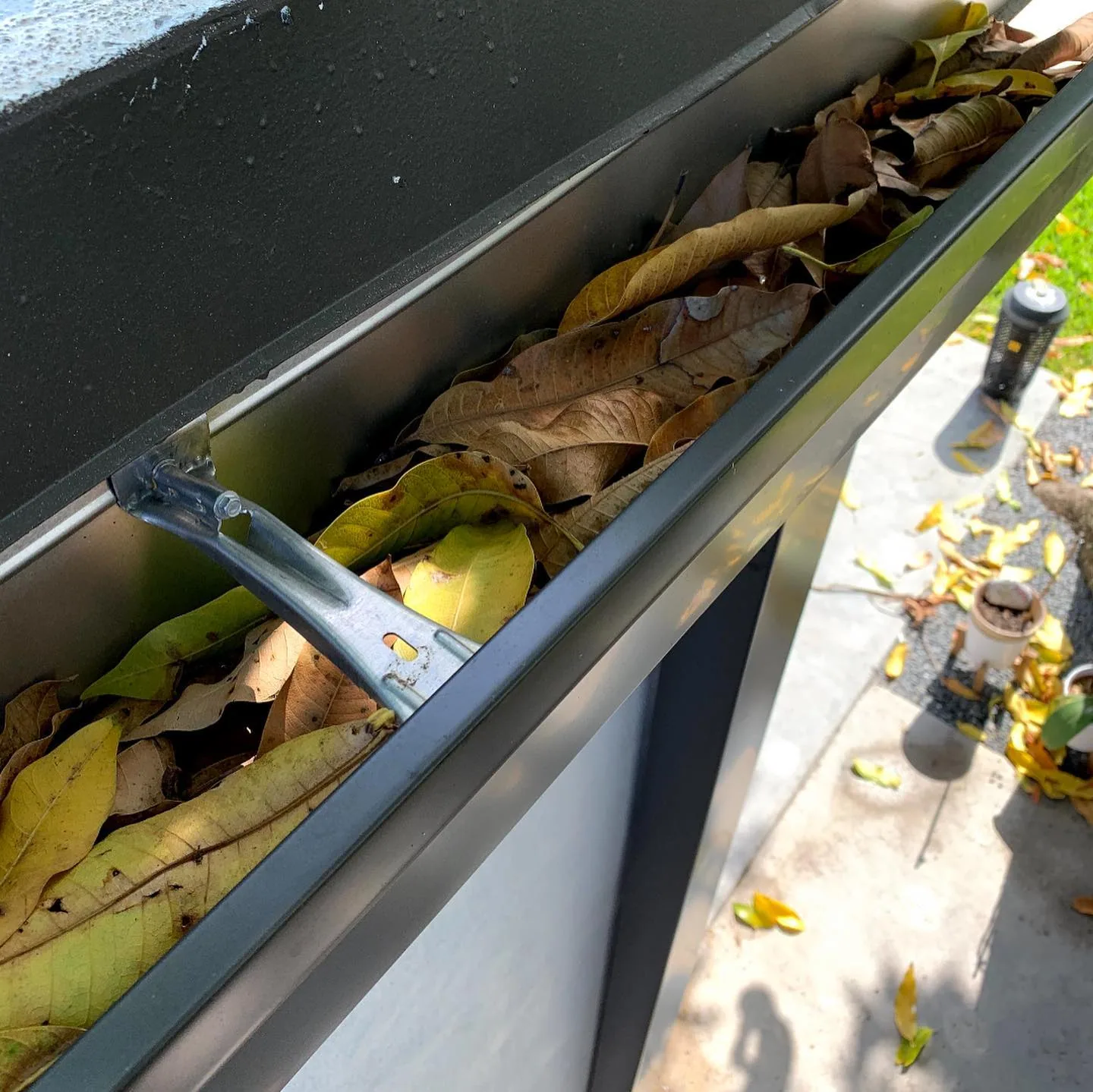
| Debris handling | Smooth interior, fewer catch points | Joints and end caps trap debris |
| Up-front cost | Slightly higher (fabricated on site) | Slightly lower (off-the-shelf sections) |
| Long-term cost | Lower — fewer repairs and leaks | Higher — recurring seam repairs |
Why the Seam Matters in Florida
Every seam in a gutter is a potential leak. That's true everywhere. In SW Florida it's worse, because three forces work on those joints at the same time.
- Volume. Our summer storms dump rain faster than gutters in dry climates ever see. Water finds the weak joint and pushes through it.
- Thermal expansion. Aluminum heats and cools across our brutal day-night swings. It expands and contracts. Sealed joints flex with it, and sealant fatigues, cracks, and lets go.
- Salt air. Coastal humidity carries salt inland for miles. It works into seams and fasteners and accelerates corrosion at exactly the points already under stress.
So when you reduce the number of seams, you remove the most common failure point before it ever has a chance to fail. That's the whole argument in one sentence.
Sectional Gutters: Where the Trouble Starts
Sectional gutters come in pre-cut lengths, usually 10 feet, that snap or join together with connectors and sealant. They're sold in big-box stores. They're cheap up front. A handy homeowner can hang them in a weekend.
That's the appeal. Here's the cost.
Every joint between sections is sealed by hand. Sealant is a consumable. Under our thermal expansion and constant moisture, it degrades. A typical home gets a dozen or more of these joints, and each one is a future drip waiting on a hot afternoon.
The leaks rarely announce themselves. Water seeps at the seam, runs down behind the gutter, and soaks the fascia. By the time you see a stain or a sag, the rot is already in the wood.
Sectional has a place. A short, simple run on a shed or a back porch can be fine. But for a full home in a coastal storm zone, you're buying a system designed around its own weakest point.
Seamless Gutters: Built for the Climate
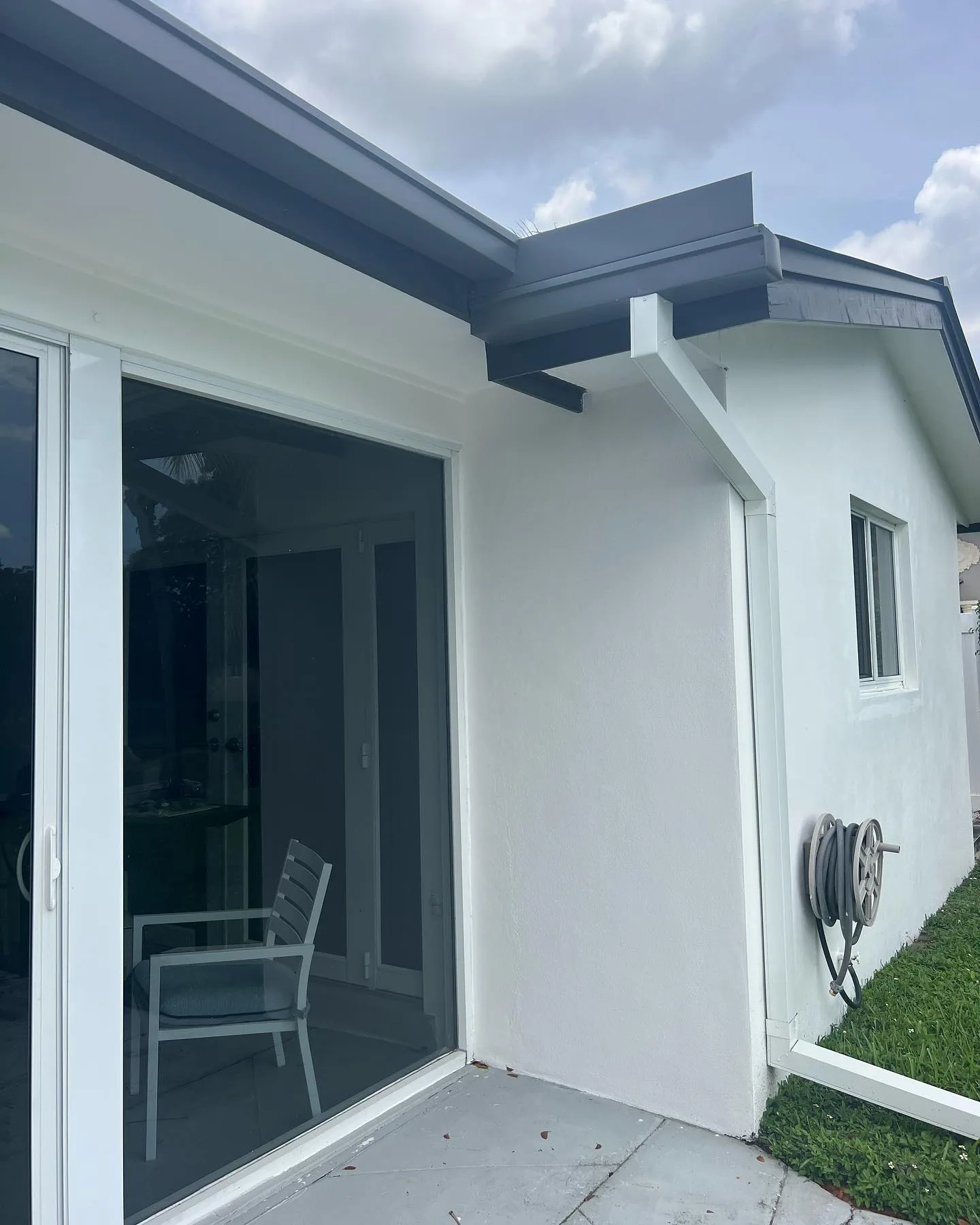
Seamless gutters are formed on-site from a single coil of aluminum, run through a roll-forming machine and cut to the exact length of your roofline. One continuous piece per run. The only joints are at corners and downspout outlets.
Fewer joints means fewer leak points, less sealant to fail, and a cleaner line along the fascia. For a Florida home, that's not a luxury. It's the baseline for a system that lasts.
The material matters as much as the method. For coastal durability you want .032-gauge aluminum at minimum. Thinner stock dents, oil-cans in the heat, and pits faster in salt air. A proper seamless gutter installation pairs that gauge with the right mounting and sizing, which is where most of the real performance lives.
Done right, seamless also lets you add finishing touches a sectional kit can't, like the decorative rain chains we offer in place of a standard downspout where a homeowner wants the look.
Head to Head for Florida Homes
Strip away the sales talk and compare them on what actually matters here.
- Leak resistance: Seamless wins. Joints only at corners and outlets versus a joint every 10 feet.
- Wind resistance: Seamless, when hung on a hidden-hanger system screwed into the fascia. Spike-and-ferrule fasteners on cheap sectional runs pull loose in hurricane gusts.
- Salt-air durability: Seamless in .032 aluminum holds up. Thin sectional stock pits and corrodes sooner.
- Debris handling: Both clog with oak catkins, palm strings, and pine needles. Seamless has fewer internal seams to snag debris, but neither escapes our trees without maintenance.
- Up-front cost: Sectional is cheaper to buy. That's its one real advantage.
- Long-term cost: Seamless. Fewer failures, fewer fascia repairs, fewer callbacks.
The pattern is hard to miss. Sectional wins on the receipt today. Seamless wins everywhere the weather can reach.
What Actually Matters Beyond the Seam
Choosing seamless is the right call, but it won't save you if the rest of the install is wrong. A seamless gutter mounted poorly still fails. Watch these.
- Hidden-hanger systems with screws, not spike-and-ferrule. Screws bite into the fascia and hold through wind load. Spikes work loose over a few storm seasons.
- Oversized downspouts. Standard outlets choke during a tropical downpour and the gutter overflows over the front edge. Insist on 3"x4" or dual downspouts sized to the volume our storms actually deliver.
- Correct pitch. Gutters need a slight, consistent slope toward the outlets. Too flat and water stands, breeds mosquitoes, and overflows. A pro sets the pitch by the foot.
- Fascia inspection first. Salt-air humidity rots fascia from the inside. A good installer probes that wood before mounting anything. Bolt a new system to soft fascia and you've wasted the install.
And timing. Schedule installs in the dry season, November through May, and book before hurricane season starts June 1. Dry-season weather makes for a clean install, and you want the system on the house before the rain it's meant to handle arrives.
The Verdict for SW Florida
For a full home anywhere along this coast, seamless is the answer. Sectional saves money on day one and tends to cost you more by year three, paid out in leaks, rot, and repairs.
That holds whether you're in Cape Coral, Lehigh Acres, or shopping gutter options in Fort Myers. The closer you live to the water, the more the seamless-plus-.032-aluminum combination earns its keep. If your existing gutters are already leaking at the joints, that's not something to patch year after year. Look at proper gutter repair or a clean seamless replacement.
How CAG Solutions can help. We're a local, owner-led seamless gutter contractor. Carlos often does estimates himself, our crew is bilingual, and we're open 7 days. We'll inspect your fascia, size your downspouts for real Florida rain, and hang a seamless gutter system built to survive salt air and storm season. No pressure, no fabricated numbers, just an honest look at what your home needs. Call +1 (239) 350-9997 for a free estimate, or reach us through our contact page.
Need a hand with your gutters?
CAG Solutions provides free, no-pressure estimates across Cape Coral and Southwest Florida.