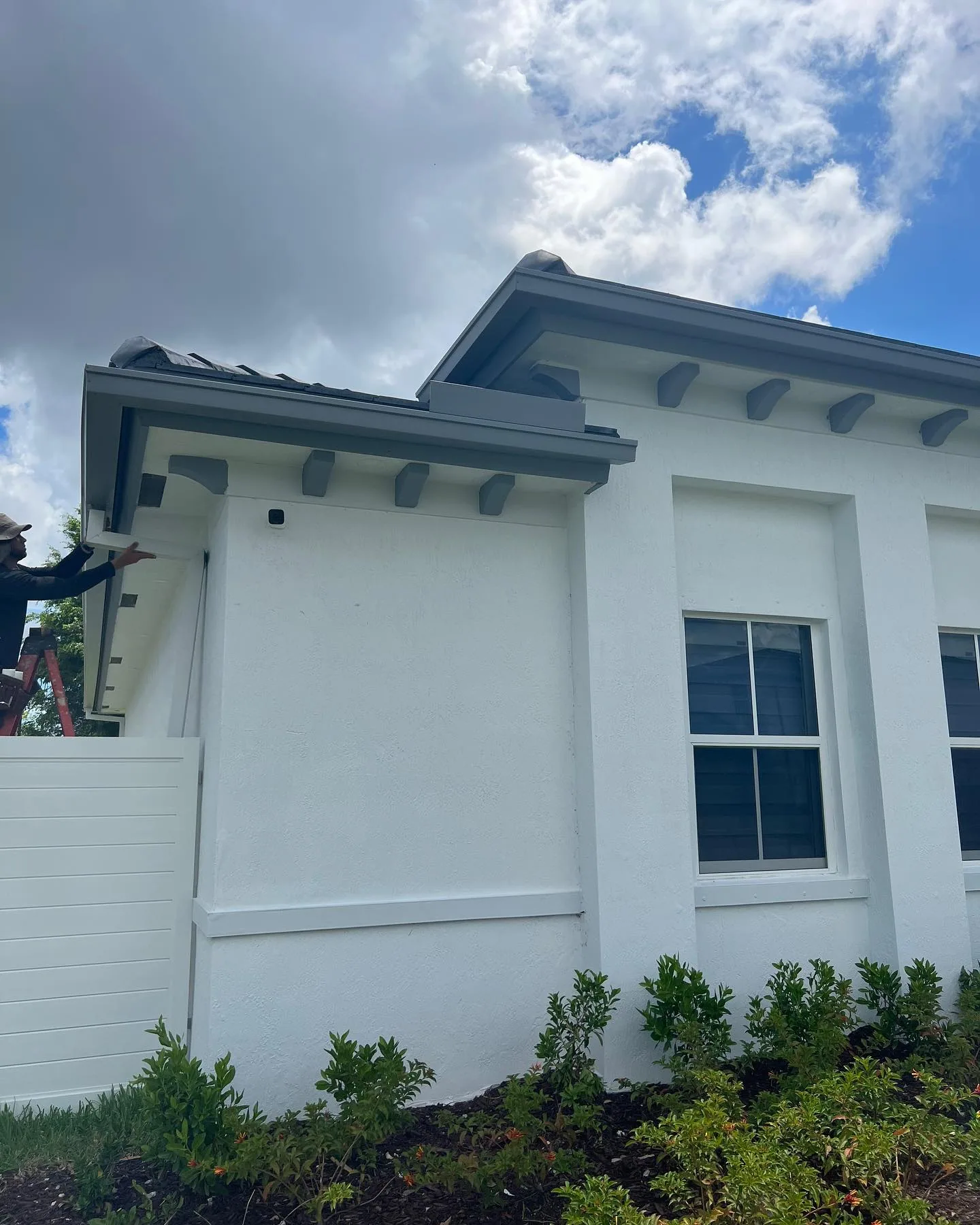
Why Downspout Placement Matters for Preventing Water Damage
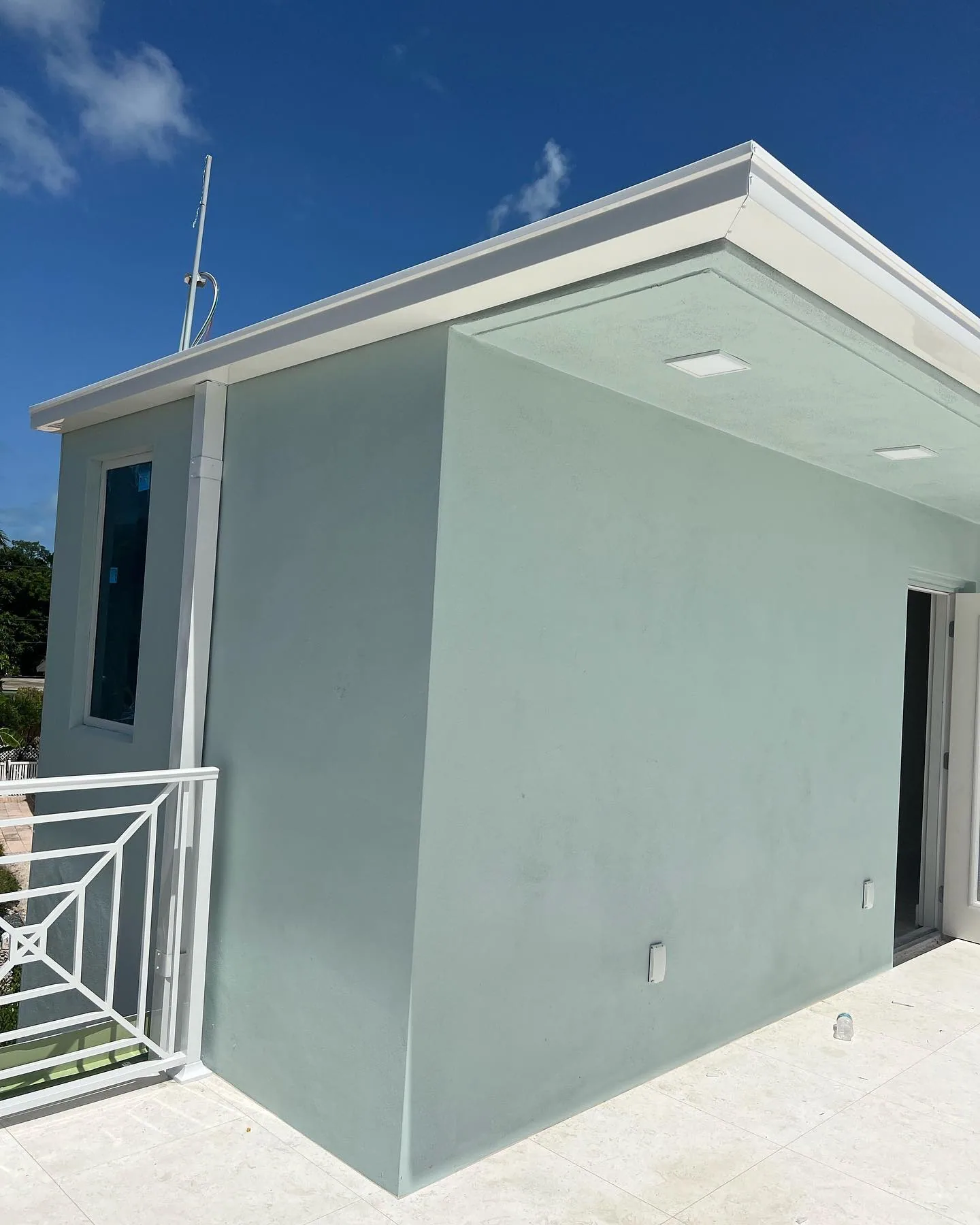
Most water damage we repair in Cape Coral did not start with a roof leak. It started with a downspout dumping a thousand gallons of stormwater in the wrong place, every single afternoon, all summer long.
Here is the problem. A gutter system can be perfect at the roofline and still ruin a home at the ground. If the downspouts are spaced wrong, sized wrong, or discharging against the foundation, all that captured water just relocates the damage. In a SW Florida summer storm, your gutters might move hundreds of gallons in twenty minutes. Where that water goes next is the whole game.
This is why downspout placement matters more than almost any other detail. Get it right and water leaves your property fast. Get it wrong and you get fascia rot, foundation cracks, eroded landscaping, and a soggy slab you will be paying to fix for years.
Why downspout placement decides whether you stay dry
A downspout is the exit. The gutter only collects; the downspout is how the water actually escapes. If the exit is in the wrong spot, the gutter backs up, overflows behind the trough, and pours straight down your soffit and fascia.
In our climate the stakes are higher than up north. We deal with a triple threat: torrential rain, hurricane winds, and corrosive salt air. A downspout that overflows in a storm is not a minor nuisance. It is salt-laden water sitting against wood and stucco, day after day, feeding rot and corrosion you cannot see until the fascia is soft.
Good placement does three things at once:
- Keeps each run of gutter short enough that water reaches an exit before it overflows.
- Carries discharge far enough from the foundation that it cannot wick back under the slab.
- Avoids dumping concentrated flow onto walkways, driveways, or a neighbor's lot line.
How far apart downspouts should sit
The single most common mistake we see is too few downspouts on too long a gutter. A builder puts one downspout on a forty-foot run to save money, and that run drowns in the first real storm.
As a working rule, a single downspout drains a limited length of gutter, and long or steep roof sections need more. The longer the run, the more water has to travel sideways before it finds an exit, and the more likely it overflows at the far end. We would rather add a downspout than watch a gutter back up.
Placement also depends on pitch. Every gutter needs a slight slope, or pitch, toward its downspout so water keeps moving. If a forty-foot run only has one exit, the pitch at the far end gets so shallow the water just sits there and breeds the very debris that clogs it. Two well-placed downspouts let you pitch from the center outward, halving the distance water has to travel.
Corners, valleys, and rooflines that funnel two slopes into one gutter all need their own consideration. Those are the spots that flood first.
Sizing downspouts for a SW Florida downpour
Placement and size work together. You can put the downspout in the perfect spot and still lose if it is too small for our rain volume.
The standard 2"x3" downspout most builders default to was never meant for a tropical downpour. We push for oversized 3"x4" downspouts, or dual downspouts on long runs, because they move dramatically more water before backing up. When three inches of rain falls in an hour, that extra capacity is the difference between draining and overflowing.
The material matters as much as the dimensions. For coastal durability we install .032-gauge aluminum minimum. Thinner stock pits and corrodes faster in salt air, and it dents under flying debris. Pair the right gauge with the right size and the system actually keeps up with the sky.
None of this works if the seamless trough above it is undersized either, which is why we treat the gutter and downspout as one system when we design a seamless gutter layout.
Where the water actually goes once it exits
A downspout that drops water two inches from the foundation has solved nothing. It just moved the flood from the roof to the slab. This is the part of placement homeowners forget.
Discharge needs to travel away from the house. Your options:
- Splash blocks and extensions to carry water several feet past the foundation and away from beds.
- Underground drain lines that route discharge to a lower point on the lot or a drainage swale.
- Grading checks so the ground slopes away from the house, not toward it.
In Cape Coral, with so many homes on slab and so much sandy soil, water that pools against the foundation finds its way under the slab fast. That is how you get hairline cracks, efflorescence on interior walls, and that musty smell that never quite leaves. Placement is not finished until you know where the last drop lands.
For homeowners who want function and curb appeal, we also offer decorative rain chains as an alternative to a closed downspout in the right low-volume spots. They guide water visibly and beautifully, though for a main roof valley in a storm we still steer you to oversized downspouts.
Wind resistance and the fascia underneath
Placement is not just horizontal. It is what you anchor into. A downspout in the perfect spot still fails if the gutter feeding it tears off in a storm.
We mount with hidden-hanger systems screwed into the fascia, not the old spike-and-ferrule nails that work loose in wind and thermal expansion. Aluminum expands and contracts every hot-to-cool cycle, and nails back out over time. Screws into solid wood hold through the cycling and through hurricane gusts.
Before we mount anything, we inspect the fascia for hidden humidity rot. SW Florida humidity rots fascia from behind, and a downspout strap screwed into soft wood will pull free in the first big blow. If the wood is compromised, that gets addressed first. There is no point placing a downspout perfectly on a board that cannot hold it.
Timing helps too. We schedule installs in the dry season, November through May, and we tell every customer the same thing: book before hurricane season starts June 1, while the weather cooperates and before the rush.
Signs your current downspouts are in the wrong place
You do not need a contractor to spot most of these. Walk your home after the next storm and look for:
- Water streaking down fascia or stucco below a gutter joint.
- Eroded mulch, soil, or trenching directly under a downspout outlet.
- Pooling or standing water against the foundation hours after rain stops.
- Gutters that overflow at one end while another section stays dry.
- Staining on the soffit, the first sign of overflow getting behind the gutter.
- Constant clogs from oak catkins, palm strings, pine needles, and summer pollen at a single overworked downspout.
If you see any of these, the fix is usually adding or relocating a downspout and upsizing it, not replacing the whole system. A focused gutter repair often solves it.
How CAG Solutions can help
We are a local, owner-led crew, and we have repaired too many homes after cheap installs failed in a tropical storm to take downspout placement lightly. Carlos often does estimates himself, walks your roofline, checks your fascia, and tells you straight where your water is going wrong. Our downspout installation work is built around SW Florida rain volume, salt air, and wind, and we serve homeowners across Cape Coral and the surrounding coast.
The estimate is free and there is no pressure. We are open 7 days. Call us at +1 (239) 350-9997 or reach out through our contact page, and let's make sure your downspouts are sending water where it belongs, away from your home.
Need a hand with your gutters?
CAG Solutions provides free, no-pressure estimates across Cape Coral and Southwest Florida.