The Best Gutter Guards for Florida Homes: Types Compared
Local seamless gutter company in Lehigh Acres, FL · Owner: Carlos Garcia
Short Answer
The best gutter guard for most Florida homes is a quality micro-mesh guard screwed to the gutter, because it blocks pine needles, seed pods and leaves while letting heavy rain through. Homes with mostly large leaves and palm fronds also do well with perforated aluminum or reverse-curve covers.
Ask five people what the best gutter guard is and you'll get five brand names. In Southwest Florida the better question is: what falls on your roof? Palm strings, oak catkins, pine needles, seed pods, and pollen behave differently, and a guard that's perfect for one is useless for another. Here's how the main types compare in our climate.
Start With Your Debris, Not a Brand
- Oak leaves and catkins (spring): mat together and blind cheap screens.
- Palm strings and fronds: long and stringy; they drape over covers and wrap around brush guards.
- Pine needles: slip through wide holes and lodge upright in screens.
- Seed pods, pollen and grit: fine enough to pass through anything except fine mesh.
Most Cape Coral and Fort Myers homes have a mix, which is why fine micro-mesh and well-fitted perforated covers are the most common recommendations here.
Micro-Mesh Guards
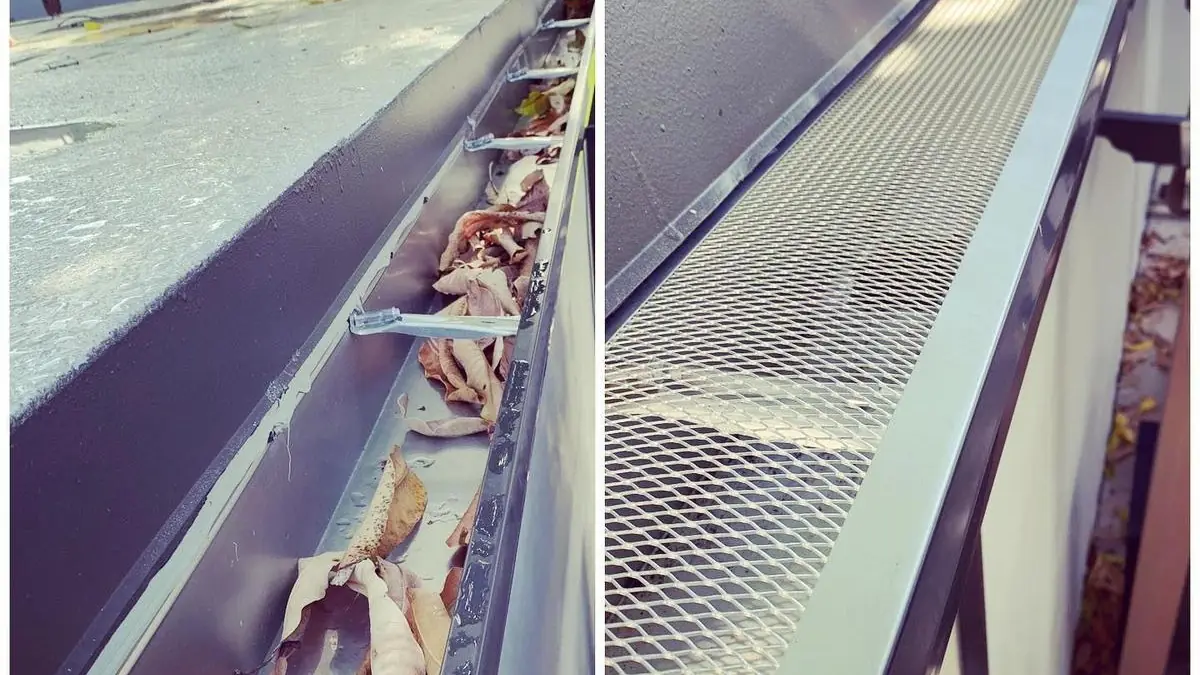
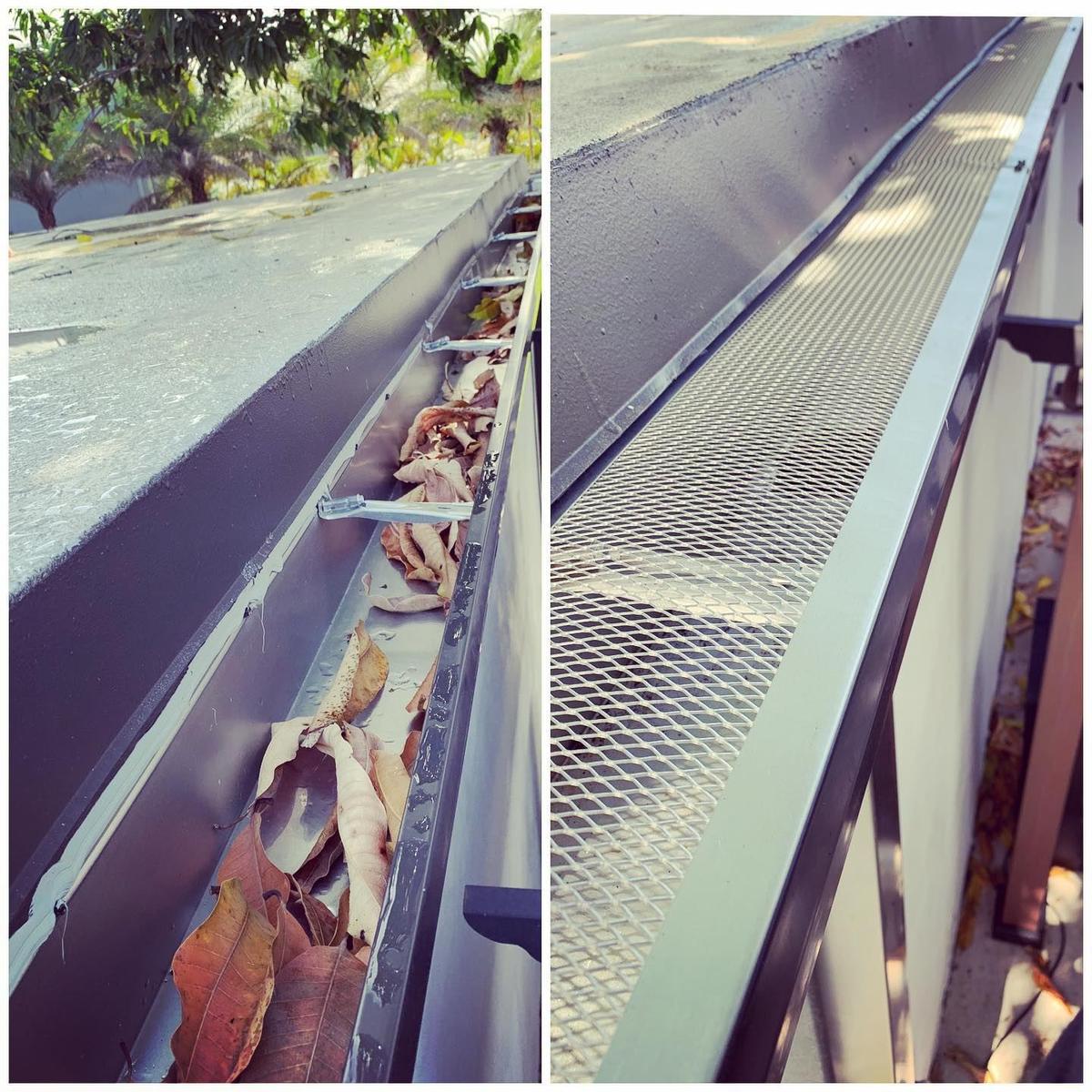
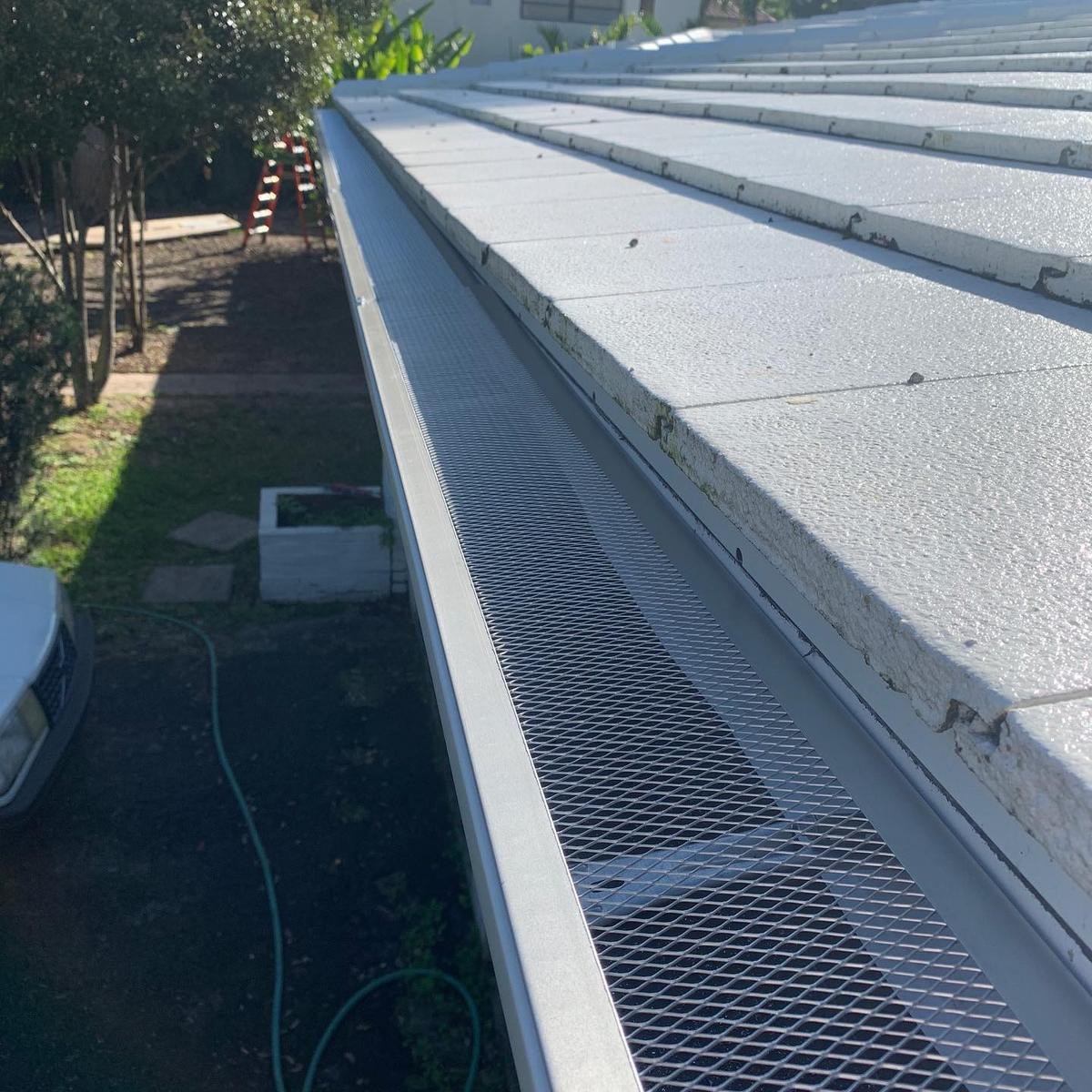
A fine stainless mesh over a frame. It blocks pine needles, seed pods, and most fine debris while letting heavy rain through. Best for: homes with pines or mixed debris. Watch for: pollen film that needs an occasional rinse, and cheap mesh that sags. Quality and installation angle matter more than the brand.
Reverse-Curve (Surface-Tension) Covers
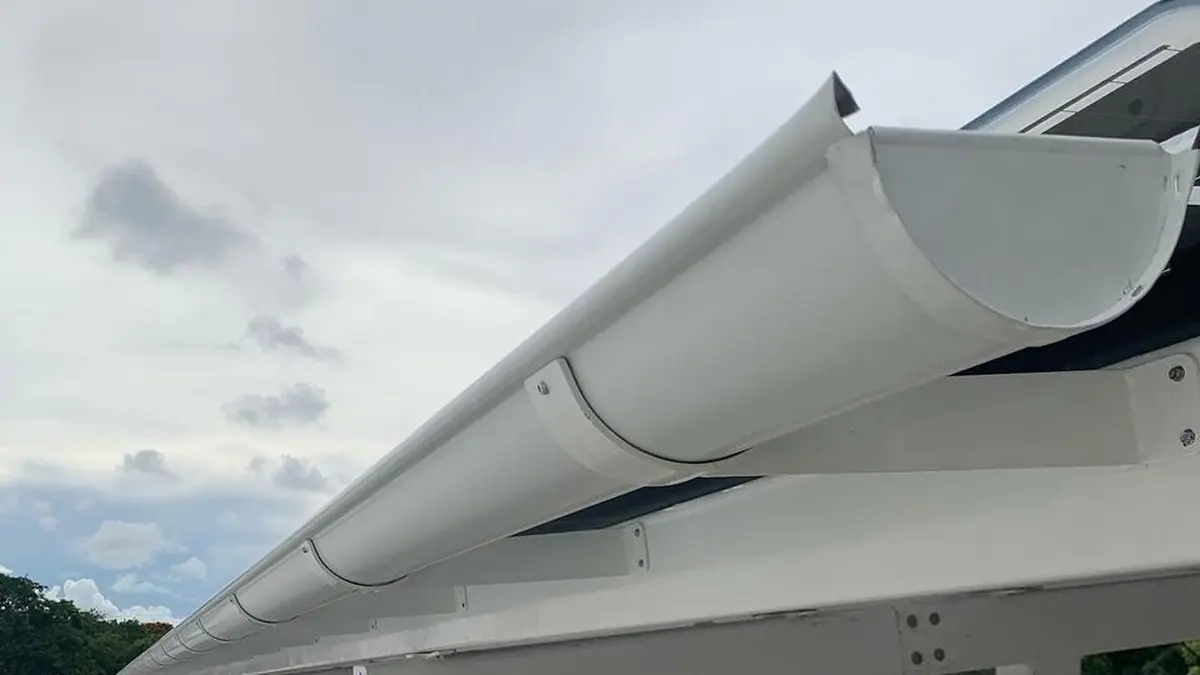
A solid hood that curves over the gutter; water follows the curve in while leaves slide off. Best for: heavy leaf and palm frond loads. Watch for: in very intense downpours, water can overshoot the curve on steep roofs, and they're the most expensive type. They also change the look of the roof edge more than other guards.
Perforated Aluminum Covers
A rigid aluminum sheet with small holes. Durable, inexpensive, and sheds larger leaves well. Best for: leaf and frond debris on a budget. Watch for: pine needles and seeds can wedge in the holes. Thin or loosely fitted covers lift in high wind.
Screens, Foam and Brush Guards
These are the cheap, often DIY options. Plastic and steel screens block leaves but let needles through and can sag. Foam inserts clog with fine debris and degrade quickly in Florida heat and sun. Brush guards catch leaves on their bristles and need to be pulled out and cleaned. We rarely recommend them for Southwest Florida homes, but they're better than nothing on a low-risk run.
Quick Comparison for Southwest Florida
| Guard | Pine needles | Palm/oak leaves | Heavy downpours | Upkeep |
|---|---|---|---|---|
| Micro-mesh | Excellent | Very good | Very good | Rinse occasionally |
| Reverse-curve | Good | Excellent | Good (steep roofs can overshoot) | Low |
| Perforated aluminum | Fair | Very good | Very good | Brush off occasionally |
| Screens | Poor | Fair | Good | Moderate |
| Foam / brush | Poor | Fair | Fair | High |
Ratings are our field experience with typical installations, not lab tests. Pricing for each type is covered in our gutter guard cost guide.
Hurricane Wind and Tile Roofs
Whatever type you choose, fastening is what keeps it on the house in a storm. Guards should be screwed to the gutter, not just snapped in, and on tile roofs they must go in without lifting or cracking tile. Guards also don't fix a gutter that's undersized or badly pitched. If your gutters overflow when clean, read why gutters overflow first.
Still deciding whether guards are worth it at all? Read are gutter guards worth it for Cape Coral homes.
Which Gutter Guards Work on Tile Roofs?
Many Cape Coral, Estero and Naples homes have concrete or clay tile roofs, and they change the guard decision. Guards designed to slide under the first course of shingles can't do that on tile without lifting it, which risks cracking tiles and opening the roof edge.
On tile roofs we usually fit guards that attach to the gutter itself, sitting just below the tile edge: micro-mesh panels or perforated covers fastened to the front lip and the back of the gutter. They catch debris rolling off the tile without disturbing the roof. Reverse-curve hoods are harder to fit cleanly on tile and are rarely our first choice there.
How to Tell Your Gutter Guards Are Working
- Watch in a downpour. Water should go into the gutter, not sheet over the guard and the front edge.
- Check the top after leaf drop. A light layer that blows off is normal; a matted layer means the guard needs a rinse.
- Look at the downspout discharge. Steady flow means the outlet isn't clogged under the guard.
- Check fasteners after storms. Any panel that lifted needs re-securing before the next wind.
If water is running over the guard in moderate rain, the guard is either clogged on top or set at the wrong angle for your roof pitch.
DIY Gutter Guards vs. Professional Installation
Hardware stores sell screens, foam inserts and snap-in mesh panels for a fraction of the cost of installed guards. On a single-story home with shingles and light debris, a DIY guard can work, especially screwed-down mesh rather than snap-in screens.
Where DIY usually falls short in Southwest Florida:
- Fastening. Snap-in panels lift in storm gusts; screwed panels take a drill and a steady ladder.
- Tile roofs. Getting a guard to sit correctly under a tile edge without cracking tile is fiddly work.
- The gutters underneath. A DIY guard on a gutter with bad pitch or a leaking joint just hides the problem.
- Fine debris. Cheap screens let pine needles and seed pods through, so the downspout still clogs.
If you go DIY, buy the finest mesh you can, screw it down, and clean and fix the gutters before covering them. If the roof is tile or two stories, professional installation is usually worth it.
What We Usually Recommend
For most Southwest Florida homes with mixed trees, a quality micro-mesh guard, securely fastened, gives the best balance. Homes dominated by big leaves and palms do well with perforated or reverse-curve covers. And homes with no overhanging trees often don't need guards at all. Our gutter guard installation starts with a look at your trees and roof, and we'll tell you if guards aren't worth it. Call (239) 350-9997.
From the Crew: What We See on Real Jobs
In the field, guard failures in Southwest Florida come from three things: the wrong guard for the debris, a guard that was never screwed down, and a guard installed on a gutter that was already sagging. Fix the gutter first, match the guard to what falls on your roof, and fasten it.
We'd also rather tell you to skip guards than sell them to a house with no trees nearby.
One more field note: on homes under queen palms, check the guard after the palm's seed stalks drop. The hard seed clusters sit on top of mesh and need to be brushed off before the next heavy rain.
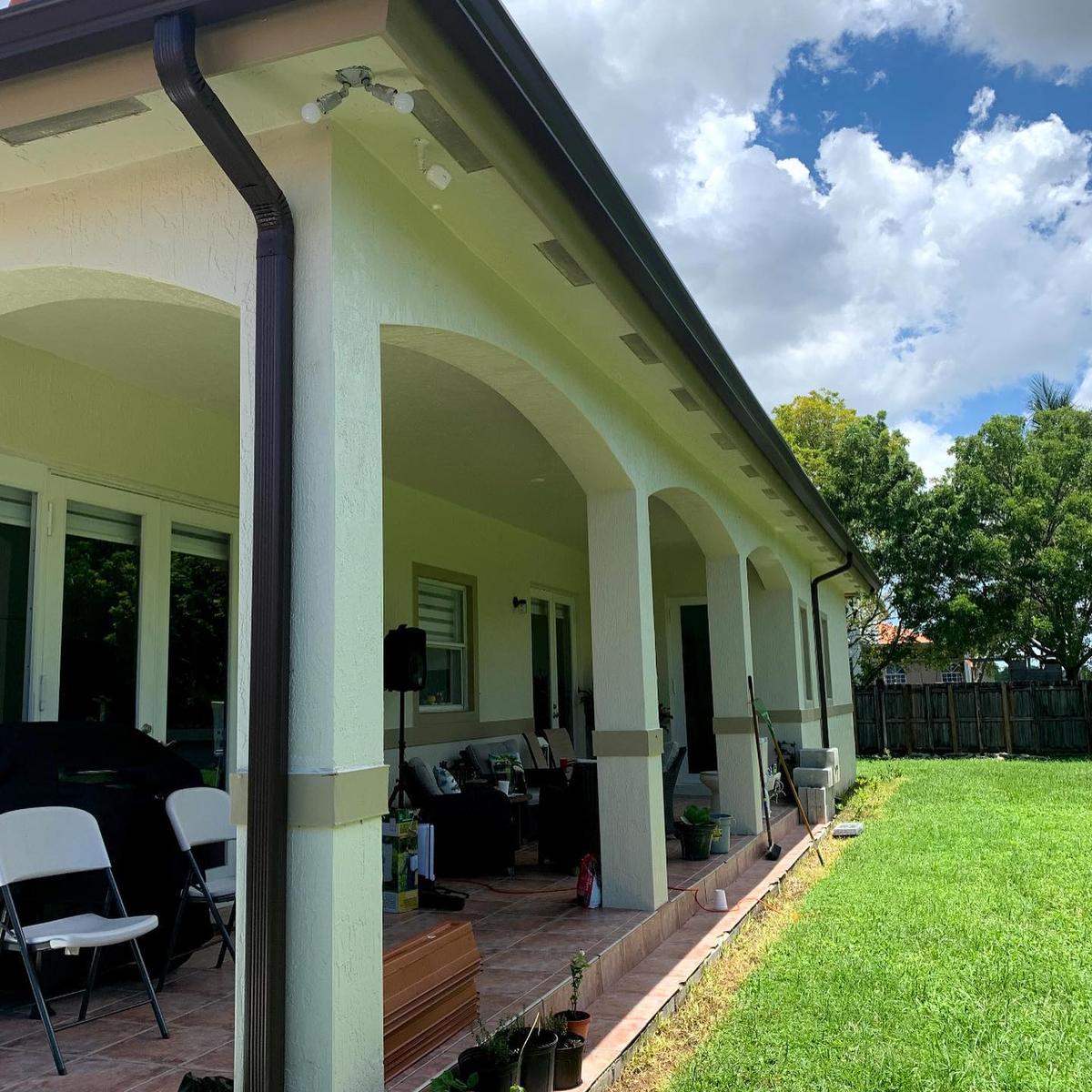
Photos that relate to this guide.
Need a hand with your gutters?
CAG Solutions provides free, no-pressure estimates across Cape Coral and Southwest Florida.