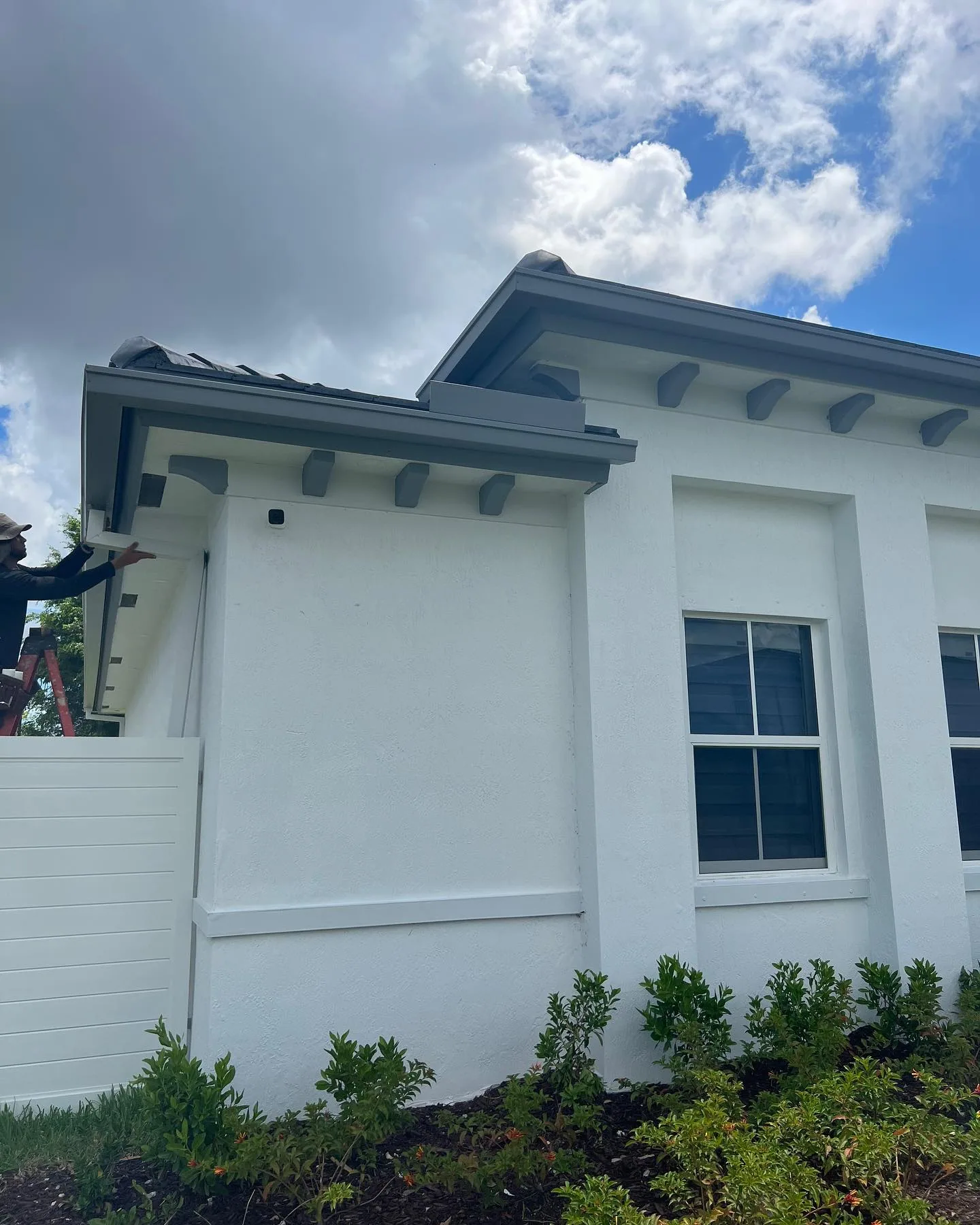
How Gutters Protect Your Foundation and Landscaping
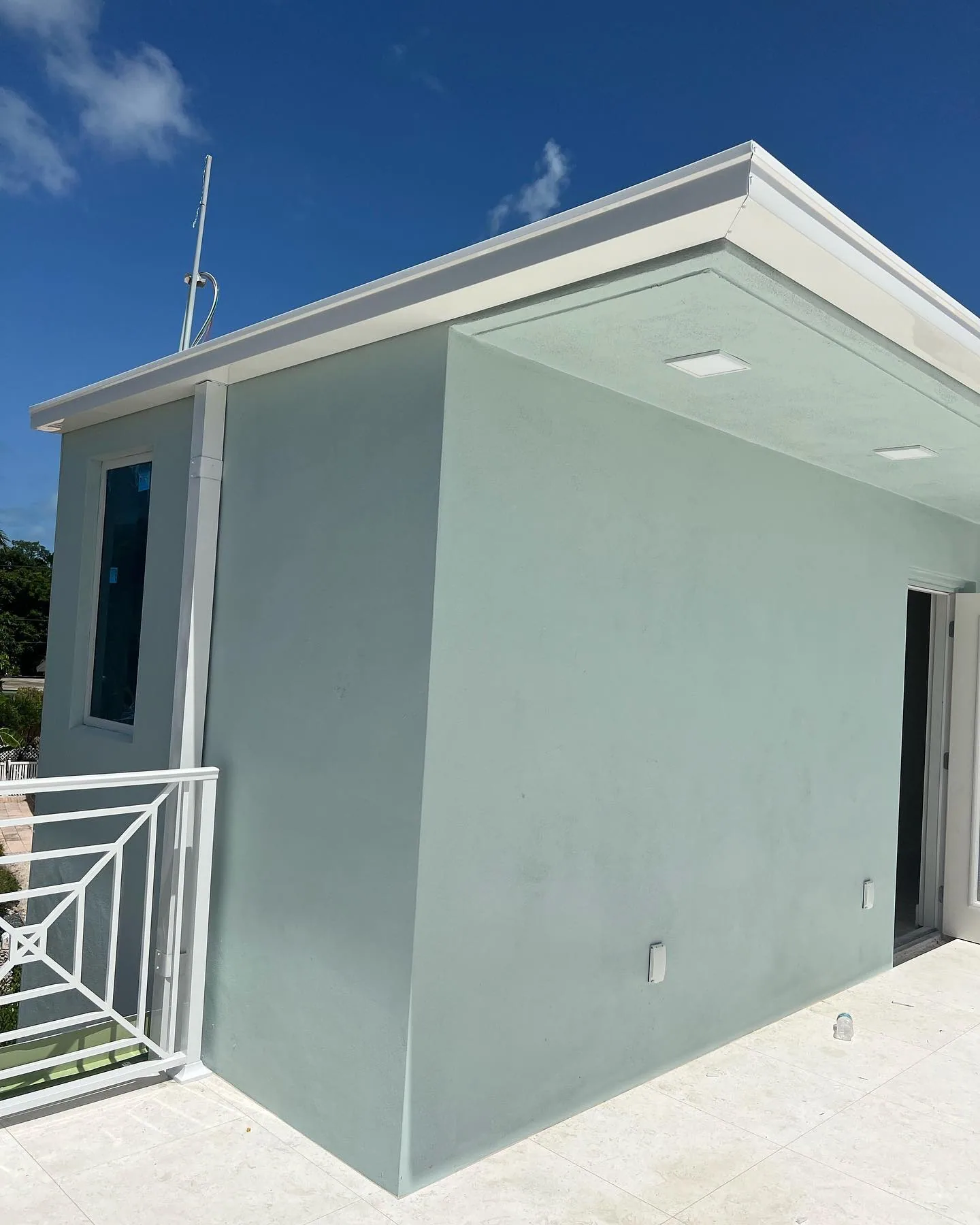
Your roof is a funnel. On an average Southwest Florida home, a single inch of rain dumps hundreds of gallons off the eaves in minutes. Without gutters, all of that water lands in one place: the strip of soil hugging your foundation and flower beds. It does not soak in evenly. It carves channels, pools against the slab, and goes looking for the path of least resistance.
That path is usually your foundation, your fascia, and the landscaping you paid good money to plant. By the time you notice the cracks, the sinking pavers, or the soggy beds, the water has been doing quiet damage for a long time. Gutters are not decoration. They are the cheapest insurance you can buy against the most expensive repairs a home owner faces.
Where the Water Goes Without Gutters
Watch your roofline during a hard summer storm. The water sheets off the edge in a curtain and slams the ground at the drip line, the band of soil directly below the eave. With no gutter to catch and redirect it, that water has only two options: pool or run.
Pooling water sits against the slab and soaks down beside the footing. Running water digs trenches across your yard and floods low beds. Neither is good. Both are preventable.
A properly pitched gutter system intercepts that curtain of water, channels it to downspouts, and carries it several feet away from the house before releasing it. That single change in where the water lands is what protects everything below.
How Roof Runoff Cracks Your Foundation
Florida soil is mostly sand, and sand moves. When roof runoff repeatedly saturates the dirt against your slab, the ground swells, then dries, then swells again with the next storm. That constant expansion and contraction puts uneven pressure on the foundation.
Over a few seasons, that pressure shows up as:
- Hairline cracks in the slab or stem wall that widen over time
- Doors and windows that stick or stop latching square
- Settling at one corner of the home where runoff concentrates
- Water intrusion into the garage or a screened lanai after heavy rain
- Soft, washed-out soil that undermines walkways and driveway edges
The fix is unglamorous but decisive: get the water away from the house. Gutters feed the runoff into downspouts, and the downspouts move it past the foundation zone. The discharge point matters as much as the catch point. A downspout that dumps right at the slab just relocates the problem six inches. You want extensions or splash blocks that carry water well clear of the footing. Proper downspout installation and placement is the part most do-it-yourself jobs get wrong, and it is the part that actually saves your foundation.
Erosion, Mulch Washout, and Drowned Beds
Landscaping is the first casualty of an ungoverned roofline, and the damage is visible long before the foundation cracks show.
Concentrated runoff strips mulch out of beds in a single storm. It exposes roots, compacts soil, and carves bare ruts through grass. Plants that sit in the splash zone get pounded flat or drowned, because the same spot floods every time it rains. You end up replacing mulch and shrubs season after season, fighting a water problem you keep treating as a planting problem.
Good gutters break that cycle. By collecting the runoff and releasing it at controlled points, they let you:
- Keep mulch and topsoil where you placed them
- Protect the root zones of palms, shrubs, and foundation plantings
- Direct discharge toward a rain garden, swale, or drain instead of a flower bed
- Stop the muddy splash-back that stains your stucco and lanai screens
For homeowners who want the water to do something beautiful on its way down, decorative rain chains are a signature option we install in place of a closed downspout in the right spot, guiding flow into a basin or bed by design rather than by accident.
Why SW Florida Rain Demands More Drainage
Gutters that would handle drainage fine in a dry climate get overwhelmed here. Our rainy season delivers torrential, fast-moving downpours, the kind that drop two inches in an hour. A gutter that overflows is a gutter that is not protecting anything, because the water is sheeting over the front lip and landing exactly where it would without a gutter at all.
Volume is the whole reason we push oversized 3"x4" or dual downspouts on most SW Florida homes. A standard downspout simply cannot move tropical rainfall fast enough, so the gutter backs up and overflows at the worst moment. Bigger or doubled outlets clear the water before it can crest the trough.
Then there is the salt air. Coastal homes in Cape Coral and along the water deal with corrosion that inland homes never see. Salt-air pitting eats cheap, thin metal from the inside out. That is why we specify .032-gauge aluminum minimum on coastal work. Thin gutters corrode, sag, and pull loose from the fascia, and once they sag, the pitch is gone and the overflow starts. We also see our share of regional debris loading the system: oak catkins in spring, palm strings, pine needles, and heavy summer pollen all collect in the trough and choke the flow if the system is not built and maintained for it.
What a Protective Gutter System Looks Like
Catching water is easy. Catching it through every hurricane season for years is the hard part, and it comes down to how the system is built.
- Seamless, not sectional. Seamless runs are formed on site to the exact length of your roofline, so there are no mid-run joints to leak as the metal goes through daily thermal expansion and contraction.
- Hidden-hanger systems with screws. Screwed hidden hangers hold far better in wind than the old spike-and-ferrule method, which works loose over time and lets a gutter peel off in a storm.
- Correct pitch. A gutter has to slope toward the outlets, or water stands in the trough, breeds mosquitoes, and overflows the low spots.
- Sound fascia underneath. We inspect the fascia for hidden humidity rot before mounting anything. Hanging a new gutter on soft, rotted wood guarantees it pulls loose.
- Dry-season scheduling. The smart move is to install in the dry season, November through May, and to book before hurricane season starts June 1, so your home is protected before the heavy rain arrives.
Build it that way and the system earns its keep quietly: no overflow, no sagging, no surprise foundation bills.
How CAG Solutions Can Help
CAG Solutions builds seamless gutter systems sized for SW Florida rain and salt air, with proper pitch, screwed hidden hangers, and the oversized downspouts that actually move tropical volume. We start with a free, no-pressure estimate, and Carlos often walks the roofline with you himself to point out where your runoff is going and what it is costing you. Ask us about downspout placement and extensions that carry water clear of your foundation and beds. We are open seven days. Call +1 (239) 350-9997 or reach out through our contact page and get your home protected before the next storm.
Need a hand with your gutters?
CAG Solutions provides free, no-pressure estimates across Cape Coral and Southwest Florida.