Commercial Gutter Maintenance Tips for Lee County Properties
Your commercial property in Lee County is one tropical downpour away from a problem you cannot see from the parking lot. A clogged or undersized gutter system does not announce itself. It hides. Then a July afternoon storm dumps two inches in forty minutes, the gutters overflow, and water sheets down the building face into the soffit, the fascia, and the foundation.
By the time a property manager notices the stain on the ceiling tile or the soft spot in the fascia, the damage has been working for months. Salt air, palm debris, and torrential rain do not wait for your maintenance budget cycle. The good news is that commercial gutter maintenance in Lee County is predictable work. If you know what fails here and when to check it, you stay ahead of the water instead of chasing it.
Why Lee County is harder on commercial gutters
Most gutter advice is written for places that get a steady rain and a mild climate. That is not here. Southwest Florida hits your roofline with a triple threat, and a commercial building has more linear footage exposed to all three.
- Torrential rain. Summer storms drop volume fast. A residential 5-inch gutter chokes on it. Large flat or low-slope commercial roofs concentrate even more water into fewer drainage points.
- Hurricane and storm winds. Gutters that are spiked on, not screwed on, tear loose. Loose gutters become projectiles and leave the roof edge unprotected.
- Corrosive salt air. The closer you are to the coast, the faster thin or coated steel pits and streaks. Salt-air pitting eats fasteners and seams from the inside.
A maintenance plan that ignores any one of these three is incomplete. You can have spotless gutters that still fail in wind, or wind-rated gutters that overflow because nobody cleared the palm strings.
Build an inspection schedule around the seasons
Commercial properties should inspect on a calendar, not on a complaint. Tie your schedule to the Southwest Florida weather pattern and you catch problems before they cost you tenants.
- Late spring, before June 1. This is the most important inspection of the year. Hurricane season opens June 1. Clear everything, check every hanger, confirm downspouts run free. Do not enter storm season with a question mark on the roof.
- Mid and late summer. During the rainy months, walk the property during or right after a hard rain. Watch where water actually overflows. That tells you more than a dry inspection ever will.
- Fall, after the season. Check for storm damage, loosened sections, and bent downspouts.
- Dry season, November through May. This is when you schedule any real repair or replacement work. Crews can stage and work without the daily afternoon storm, and you book before the pre-hurricane rush.
Two professional inspections a year is a reasonable floor for most commercial buildings. Properties under heavy tree cover need more.
Manage the debris that actually clogs SW Florida gutters
The debris here is specific, and it is relentless. Oak catkins drop in spring and pack into a wet mat. Palm strings shed year round and wrap around downspout openings like rope. Pine needles weave into a screen that traps everything behind it. Summer pollen turns into a sludge layer at the bottom of the trough.
For commercial properties, the cleaning challenge is scale. You have more roof, more inside corners where debris collects, and often more trees overhanging more sides of the building.
- Clean at minimum twice a year, and quarterly under oaks, palms, or pines.
- Flush downspouts, do not just scoop the troughs. A clear gutter that drains into a packed downspout still overflows.
- Check the splash zones at grade. Standing water at a downspout outlet means the line below grade may be backing up.
If your crews are spending too much labor on repeat cleaning, that is the signal to talk about gutter guards sized for palm and oak debris. The right guard reduces visits; the wrong one becomes a debris shelf that makes things worse.
What a real commercial inspection checks
Clearing leaves is the easy part. The inspection that prevents building damage looks at the system and the structure behind it.
- Hanger system. Confirm hidden-hanger brackets with screws, not the old spike-and-ferrule. Screws hold in wind. Spikes work loose every thermal expansion cycle until a storm finishes the job.
- Gutter pitch. Water should move to the downspouts, not pond in the middle of a run. Flat or reverse-pitched sections breed corrosion and mosquitoes.
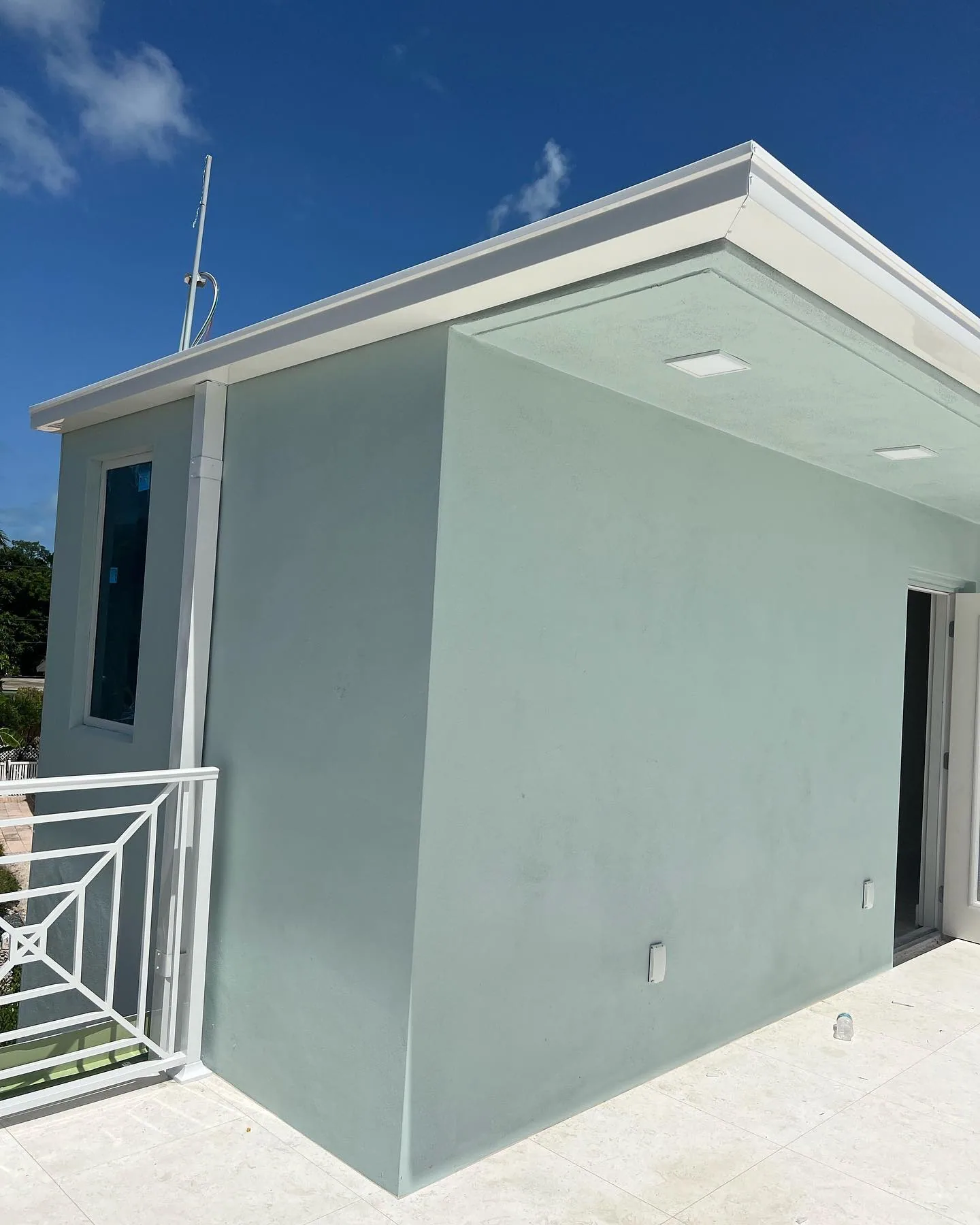
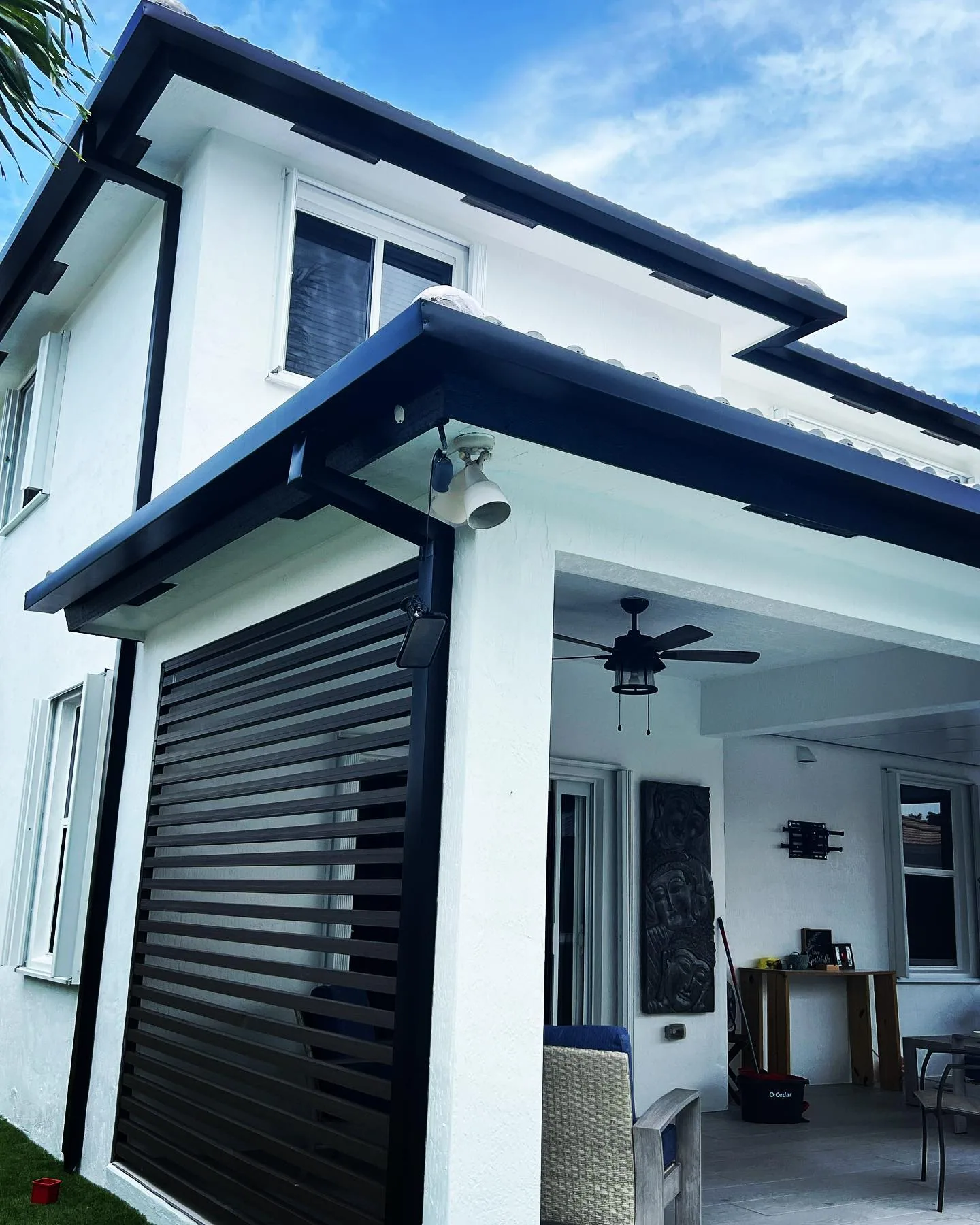
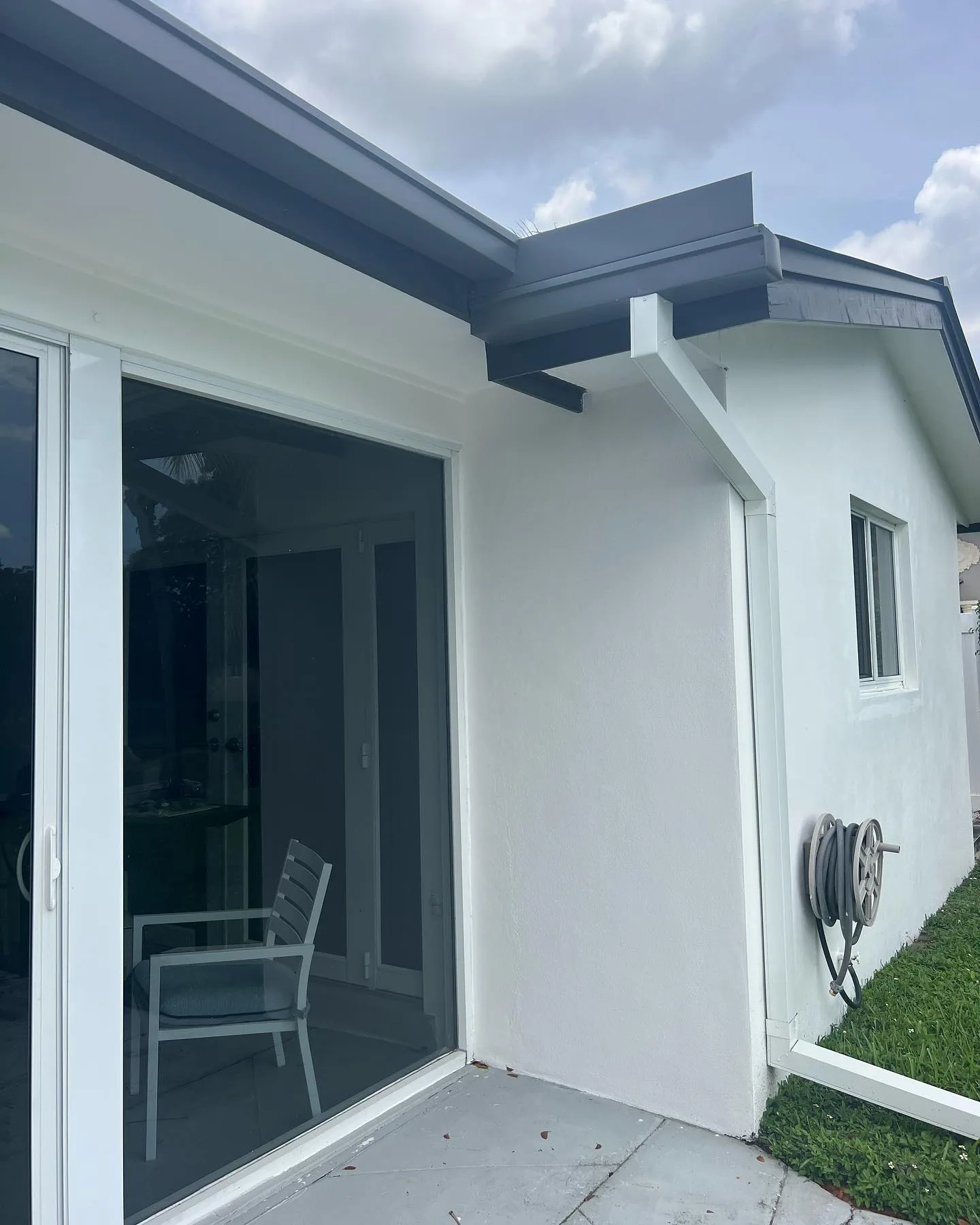
- Seams and corners. These are where leaks start. Seamless gutters remove most of that risk by eliminating the joints along each run.
- Gauge and material. For coastal durability, .032-gauge aluminum is the minimum that holds up to salt air and storm load. Thinner stock dents, oilcans, and pits faster.
- Downspout capacity. Undersized downspouts are the most common overflow cause on commercial buildings. Oversized 3"x4" or dual downspouts move tropical downpour volume that standard sizes cannot.
- Fascia and soffit. Press on the fascia. Soft, dark, or spongy wood means hidden humidity rot. Never re-mount a gutter to rotted fascia, and address the soffit and fascia before it spreads.
Protect the structure, not just the gutter
The gutter is the cheap part. What you are really protecting is the building. When a commercial gutter overflows repeatedly, the water finds the fascia first, then the soffit, then the wall and the foundation. In a humid climate, that wet wood becomes rot, and rot becomes a structural repair that dwarfs any maintenance bill.
This is why pitch, capacity, and drainage at grade matter as much as cleanliness. Move the water off the roof, into properly sized downspouts, and away from the foundation. On properties where appearance matters, decorative rain chains can guide water from select roof points while still moving volume, an option most contractors do not even offer.
Document every inspection. Photos of hanger condition, seam corrosion, and overflow points give you a maintenance history and protect you if a tenant ever raises a water claim.
How CAG Solutions can help
CAG Solutions is a local, owner-led seamless gutter contractor serving Cape Coral, Fort Myers, and properties across Lee County. We build and maintain commercial gutter systems for our climate, using .032-gauge aluminum, hidden-hanger screw systems, and oversized downspouts that handle real Southwest Florida rain. Owner Carlos Garcia often handles estimates personally, and our bilingual crew works seven days a week.
If you manage a property in Lee County and you are not sure when your gutters were last truly inspected, that uncertainty is the risk. Call +1 (239) 350-9997 or request a free, no-pressure estimate and we will tell you straight what your system needs before the next storm tests it.
Need a hand with your gutters?
CAG Solutions provides free, no-pressure estimates across Cape Coral and Southwest Florida.