Water Damage Signs That May Point to Bad Gutters
That brown stain spreading across your ceiling didn't start at the ceiling. It started at the roofline, where water that should have been carried away from your home spilled over the edge instead. In Southwest Florida, a failing gutter doesn't announce itself. It hides behind your soffit and fascia for months, soaking wood you can't see, until one summer downpour reveals the rot all at once.
Here is the hard truth. Most water damage on homes in Cape Coral and Lehigh Acres traces back to gutters that were undersized, poorly pitched, or corroded by salt air. The damage is slow, then sudden. If you learn to read the early signs, you can fix a $400 gutter problem before it becomes a $9,000 fascia, soffit, and drywall problem. Below are the signs we see most often on service calls, and what they actually mean.
Ceiling and wall stains that keep coming back
A water stain that returns after you paint over it is telling you the source is still active. When gutters overflow or leak at the seams, water runs down behind the fascia, follows the framing, and surfaces inside as a yellow-brown ring on a ceiling or an upper wall.
In our climate, this happens fast because the rain comes hard. A single afternoon storm can drop two inches in an hour. If your gutter can't move that volume, it sheets over the lip and finds the path of least resistance, which is often the interior of your home.
Watch for these patterns:
- Stains directly below the roofline, especially at corners where downspouts connect
- Bubbling or peeling interior paint on the top of an exterior wall
- A musty smell in a closet or upstairs room after heavy rain
- Stains that grow after every storm rather than staying the same size
If the stain reappears, the gutter is still failing. Repainting only hides it.
Soft fascia and stained soffit
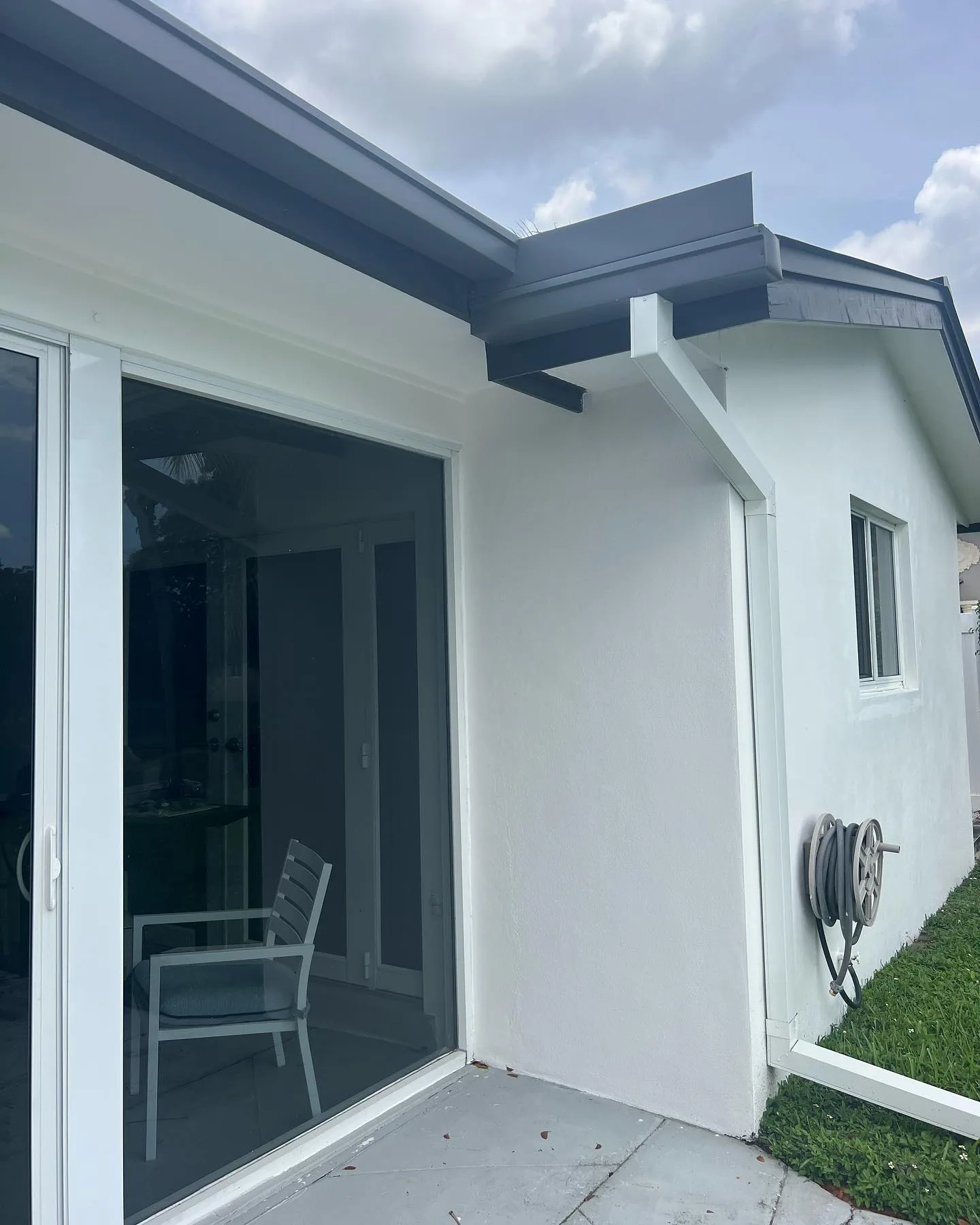
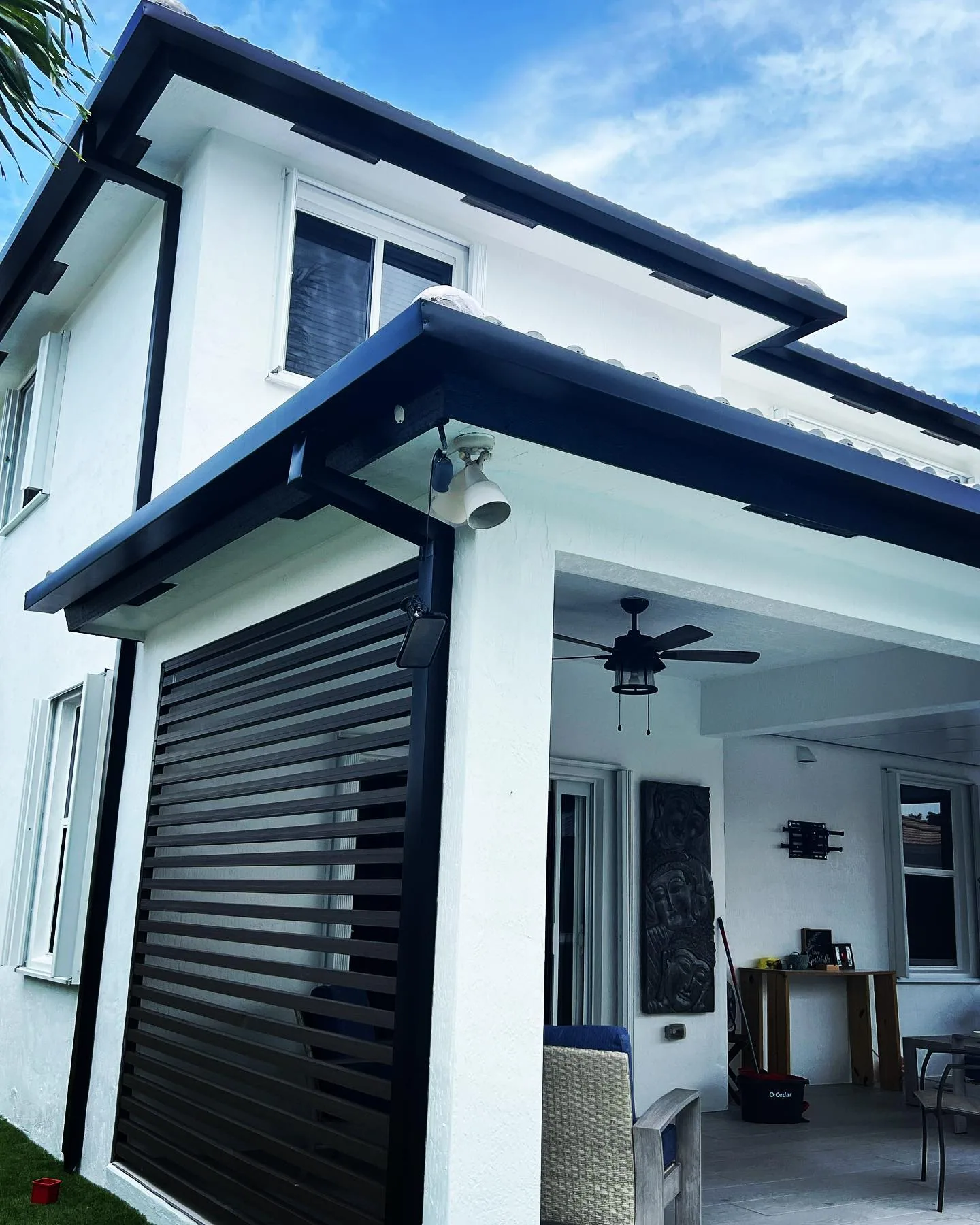
Your fascia is the horizontal board your gutter mounts to. Your soffit is the underside panel that closes off the eave. Both are the first casualties of a bad gutter system, and both are the most expensive to ignore.
When water overflows the back of a gutter, it runs straight down the fascia. Constant moisture in our humidity breeds rot. The board goes soft, the gutter loses its anchor, and the whole run begins to sag and pull away.
Press on your fascia near the gutter. If it gives, dents, or feels spongy, the wood is already compromised. You may also see dark streaks or peeling paint on the soffit, or small gaps where panels have warped. Before any new gutter goes up, the fascia has to be inspected for hidden humidity rot. Mounting a fresh gutter to rotten wood is throwing good money after bad. This is exactly why our crews check the wood first on every gutter repair in Cape Coral we take on.
Pooling water and erosion at the foundation
Gutters exist to carry water away from your home. When they don't, the water lands in a concentrated line right at the base of your walls. Over time, that does real structural harm.
Signs the ground is taking the hit:
- Trenches or eroded channels in the mulch or soil below the roofline
- Splashback staining on the lower siding or stucco
- Standing water near the foundation hours after the rain stops
- Cracks in a driveway or patio slab near the downspout exit
- Mud or silt washed onto walkways after a storm
Much of our region sits on sandy, fast-draining soil, but a downpour overwhelms it quickly. Undersized downspouts are usually the culprit. A standard 2x3 downspout simply cannot keep up with tropical rainfall. We push oversized 3"x4" or dual downspouts precisely so the water leaves the building instead of pooling against it. If you're seeing erosion, the volume is too much for the system you have. Proper downspout installation moves that water where it belongs.
Corrosion, pitting, and rust streaks
Salt air is brutal on cheap gutters. If you live anywhere near the coast, from Cape Coral out toward Sanibel, the airborne salt accelerates corrosion on thin or low-grade metal. Once the protective finish breaks down, water finds the pinholes.
Look for chalky white pitting on aluminum, rust streaks bleeding down the face of the gutter, or flaking at the seams and end caps. These are entry points. A pitted gutter leaks at a hundred small spots you'll never patch one by one.
This is why gauge matters. We install .032-gauge aluminum as the minimum for coastal durability, not the thinner stock big-box installers use to cut costs. Seamless runs also remove the seams that corrode and split first. Thicker metal and fewer joints mean fewer failure points in salt air. If your current gutter is pitting after only a few years, it was never built for this environment.
Overflow from clogs and bad pitch
Water cascading over the front edge of a gutter during a storm is the most visible sign of trouble, and it has two common causes: blockage and bad pitch.
Our debris load is relentless. Oak catkins in spring, palm strings year-round, pine needles, and a heavy coat of summer pollen all pack into a gutter and choke the flow. A clogged gutter holds water like a trough, then dumps it over the side onto your fascia and foundation.
The other cause is pitch. A gutter needs a slight, deliberate slope toward the downspouts so water keeps moving. Spike-and-ferrule systems loosen over time, especially under wind load, and the gutter sags into a low spot that holds standing water. We use hidden-hanger systems with screws instead, which hold their pitch and resist the wind far better. Routine gutter cleaning keeps the debris out, and proper hangers keep the slope true. If yours overflows in even a moderate rain, one of these two things is wrong.
When to act and how to schedule it
Timing matters in Florida. The smart move is to inspect and repair during the dry season, November through May, and to book before hurricane season starts June 1. You do not want to discover a sagging, rotted gutter run in the middle of a July storm with no installers available.
Walk your home after the next good rain. Look at the stains, press the fascia, check the foundation line, and watch how the gutters handle the water. If you see two or more of the signs above, the system is failing and the damage is compounding every storm.
How CAG Solutions can help. We're a local, owner-led seamless gutter contractor serving Cape Coral, Lehigh Acres, Fort Myers, and the surrounding coast. Carlos often handles estimates personally. We inspect the fascia for hidden rot, size your downspouts for real tropical volume, and build with .032 aluminum and hidden hangers made to survive salt air and wind. If you've spotted any of these water damage warning signs on your home in Cape Coral, don't wait for the next storm to make the call for you. Reach out for a free, no-pressure estimate. Call +1 (239) 350-9997 or contact us seven days a week, and we'll tell you straight what your home needs.
Need a hand with your gutters?
CAG Solutions provides free, no-pressure estimates across Cape Coral and Southwest Florida.