
Gutter Cleaning vs. Gutter Guards: What Does Your Home Need?
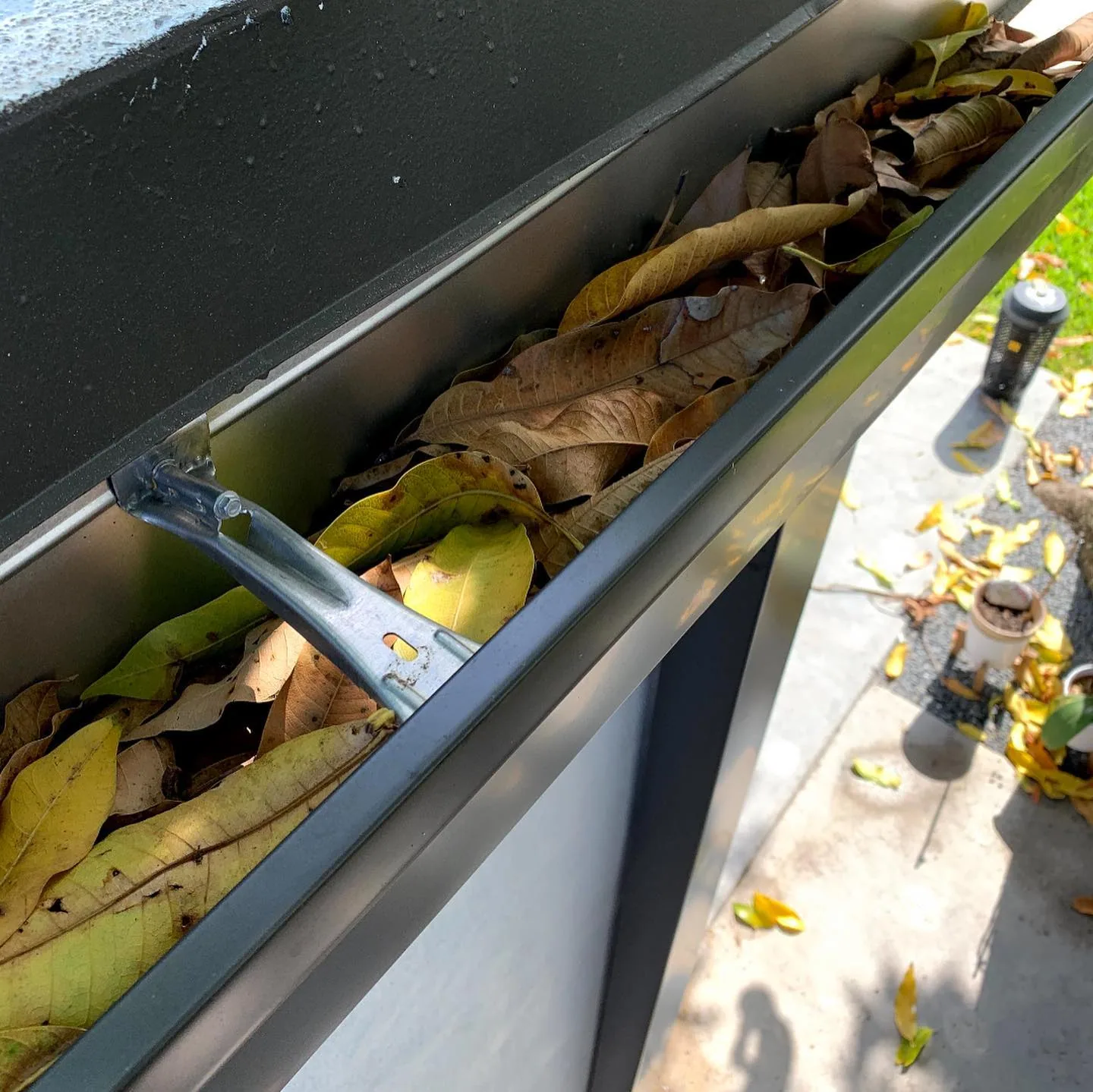
You stood under your eave during the last August downpour and watched water sheet over the front edge of your gutter like a small waterfall. The gutter wasn't broken. It was full. Full of palm strings, oak catkins, and a season's worth of pine needles packed into a wet mat that no longer let water move.
That overflow isn't cosmetic. It runs straight down your fascia, finds the seam where wood meets soffit, and feeds the slow rot that turns a $200 cleaning into a $3,000 repair. So the question every Southwest Florida homeowner eventually asks is the right one: do you keep paying to clean the gutters out, or do you cover them and stop the problem at the source? The honest answer depends on your roof, your trees, and how much salt air your home takes.
Gutter Cleaning vs. Gutter Guards at a Glance
| Factor | Gutter Cleaning | Gutter Guards |
|---|---|---|
| What it is | Recurring removal of debris | One-time install that blocks debris |
| Best for | Fewer trees, budget-minded homes | Heavy palm/oak cover, hard-to-reach roofs |
| Effort over time | 2–4 service visits per year | Occasional checks and a rinse |
| Up-front cost | Low per visit | Higher one-time cost |
| Maintenance | Ongoing | Reduced — but not eliminated |
Two Tools, Two Different Jobs
People treat cleaning and guards like competing products. They're not. One is maintenance. The other is prevention.
Cleaning removes what's already in the trough so water can reach the downspout. Guards keep most of that debris from landing in the trough in the first place. A guard does not eliminate maintenance — anyone who tells you "install it and never touch your gutters again" is selling, not warning. What a quality guard does is change the frequency and the danger of the work. Instead of climbing a ladder four times a year to dig out a packed, heavy clog, you brush a little fine debris off a screen.
Both jobs protect the same things: your soffit and fascia, your foundation, and the pitch of the gutter itself. A clogged run holds standing water, and standing water adds weight that pulls hangers loose and warps your slope.
When Regular Cleaning Is the Right Call
Cleaning alone makes sense for a lot of homes, especially newer ones on open lots with little tree cover.
You're a good candidate for a cleaning-only plan if:
- You have few or no large trees within dropping distance of the roofline.
- Your roof pitch is steep enough that most debris washes off rather than settling.
- Your gutters are properly sized — oversized 3"x4" or dual downspouts that move tropical-downpour volume fast.
- You're disciplined about scheduling. Two cleanings a year is the floor here; four is realistic under heavy canopy.
The trap is letting it slide. In our climate, a neglected trough doesn't just clog — it holds moisture against .032-gauge aluminum and accelerates corrosion from the inside. Pair routine gutter cleaning with a quick check of your hangers and pitch, and a sound system can run for years on maintenance alone. Time the work for the dry season so your gutters are clear and flowing before June 1.
When Gutter Guards Earn Their Keep
Guards pay for themselves on homes where cleaning is constant, dangerous, or both.
Think about the two-story house with a steep roof and oaks overhead. Every cleaning means a tall ladder, an awkward reach, and real fall risk. Multiply that by four visits a year and the math on a guard system changes fast. Guards also help where overflow has already cost you — once fascia has taken water damage, keeping the trough clear stops the cycle from repeating.
Good guards do several things at once:
- Block the bulk of leaves, catkins, and palm debris from packing the trough.
- Keep water moving during the kind of torrential rain that floods an open gutter.
- Reduce standing water, which cuts the corrosion and mosquito problems that come with it.
- Lower how often someone has to be up on a ladder in the first place.
Not every guard is built for this coast. Flimsy plastic inserts warp in the heat and crack from thermal expansion. We fit screen and micro-mesh systems matched to your debris load and your existing trough — and they only perform on gutters mounted with hidden-hanger screws, not the old spike-and-ferrule hardware that backs out in wind. If you want the full breakdown, our gutter guard installation page walks through the options.
The SW Florida Debris Problem Nobody Warns You About
Homeowners moving here from up north expect autumn leaves. What they get is a year-round mix that's harder to manage.
Oak catkins drop in long, stringy clusters every spring and weave into a mat no rinse can shift. Palm strings shed in heavy ropes that wrap downspout openings and choke them. Pine needles slip through cheap screens and stack underneath. Then summer pollen layers over all of it like glue. There is no quiet season for a Cape Coral gutter the way there is for one in Ohio.
That steady load is exactly why a guard's job is different here. It isn't catching one big fall dump — it's holding back a slow, constant feed. And it's why no guard is "maintenance-free" in this market. The catkins and palm strings that don't get into the trough still collect on the screen, and that surface needs a brush-off now and then. A good system makes that a five-minute task instead of an afternoon of digging.
Why Most Cape Coral Homes Need Both
For most homes under our canopy, the smart plan isn't cleaning or guards. It's guards to cut the volume, plus a light cleaning to handle what gets through.
Here's how that looks in practice. Guards stop the heavy debris and the dangerous clogs. A scheduled visit once or twice a year clears the fine grit off the mesh, flushes the downspouts, checks your pitch, and catches a loose hanger before a storm finds it first. That's also the right moment to inspect the fascia behind the gutter for hidden humidity rot — the kind you can't see from the ground until the board is soft.
If your existing gutters are undersized, pitting from salt air, or hung on spikes, guards alone won't fix the root problem. In that case the better money goes into a proper seamless gutter system first, then guards on top. We see this constantly on homes from Lehigh Acres out to the coast — the trough was the weak link all along, and no cover saves a system that was failing underneath.
How CAG Solutions Can Help
The right answer for your home depends on what's actually up there — your trees, your roof pitch, the age and gauge of your gutters, and whether your fascia is sound. We'd rather look before we recommend.
Carlos often does estimates personally, walks your roofline, and tells you straight whether you need gutter guards, a cleaning plan, or a new system underneath first — no pressure, no upsell. Estimates are free, and we're open seven days. Call +1 (239) 350-9997 or request a free estimate, and let's get ahead of hurricane season while the dry weather holds.
Need a hand with your gutters?
CAG Solutions provides free, no-pressure estimates across Cape Coral and Southwest Florida.