What Gutter Size Is Best for Florida Homes? (5" vs 6")
Here is what most homeowners never hear until it is too late: the wrong gutter size does not fail on a normal day. It fails during a July afternoon downpour, when three inches of rain land in an hour and the water sheets over the front edge like a waterfall. That overflow runs straight down your wall, pools at the foundation, and soaks the fascia behind the gutter you paid to protect.
Southwest Florida punishes undersized gutters. Our rain does not come in gentle showers. It comes in walls. So the question is not just "5-inch or 6-inch" — it is "which size can actually move the volume my roof dumps in a tropical storm." Let me walk you through it the way I would on a estimate at your house.
5-Inch vs. 6-Inch Gutters for Florida Homes
| Factor | 5-Inch Gutters | 6-Inch Gutters |
|---|---|---|
| Best for | Small or steep roofs, short runs | Large roofs, big valleys, two-story homes |
| Rain volume handled | Adequate for lighter loads | Handles tropical downpours far better |
| Clog resistance | Clogs faster with palm/oak debris | Wider trough resists clogging |
| Downspout pairing | 2"x3" or 3"x4" | 3"x4" or dual recommended |
| Relative cost | Lower | Slightly higher |
Why Gutter Size Matters More in Florida
Gutter size is really about water volume per minute. A 5-inch K-style gutter holds and moves a certain amount of water. A 6-inch holds roughly 40 percent more. In a dry climate that gap rarely matters. Here it is the difference between a system that drains and one that overflows twice a summer.
Three forces work against your gutters in this region:
- Torrential rain. Sudden, heavy, high-volume. A small gutter simply cannot keep up with the flow rate off a steep or large roof.
- Hurricane and storm winds. Wind drives water sideways and stresses every hanger and seam.
- Corrosive salt air. Near the coast, salt-air pitting eats thin metal over time, and any spot where water sits invites corrosion faster.
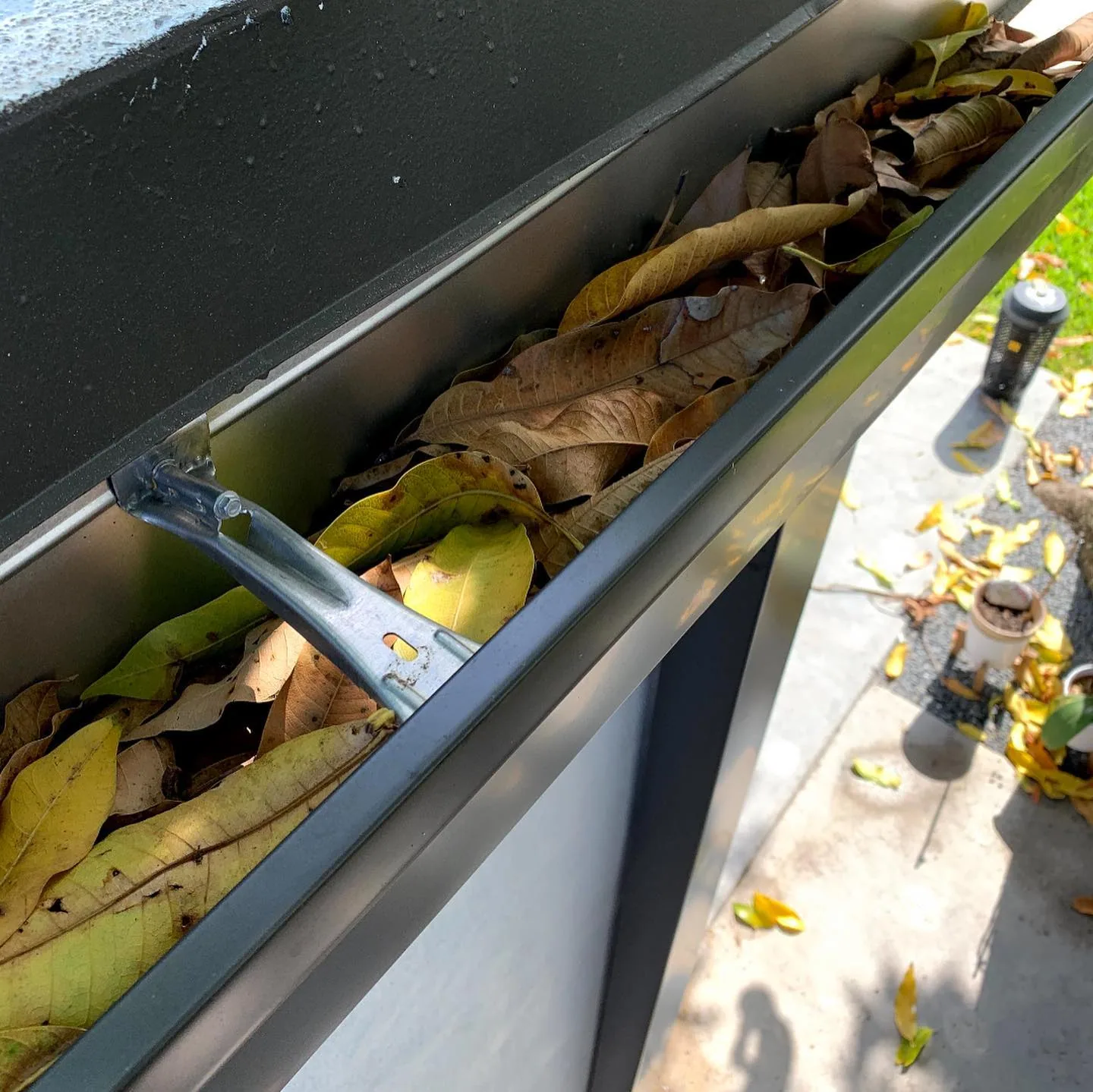
Add our debris — oak catkins in spring, palm strings, pine needles, and thick summer pollen — and a too-small gutter clogs and overflows even sooner. Size is your margin of safety against all of it.
5-Inch Gutters: When They Hold Up
Five-inch K-style is the standard residential gutter across most of the country, and it is not wrong for every Florida home. It works when the conditions are forgiving.
A 5-inch system can be the right call when:
- Your roof is smaller, with shorter slopes feeding each gutter run.
- Your roof pitch is moderate, so water arrives at a manageable rate rather than rushing.
- You have few overhanging oaks or palms dropping debris into the trough.
- You are inland, away from the worst of the salt air.
The catch is the outlet. A 5-inch gutter usually pairs with a 2"x3" downspout, and that small outlet is the real bottleneck. It clogs fast with palm strings and pine needles, and once it clogs, the whole run backs up and overflows. On many homes I will spec a 5-inch trough but insist on oversized downspouts to compensate.
6-Inch Gutters: Built for the Downpour
For most homes near the coast, and for any home with a large or steep roof, 6-inch is what I recommend. The wider trough carries far more water, and just as important, it pairs with a bigger outlet.
Six-inch gutters earn their keep when:
- You have long roof runs or large roof planes dumping into a single gutter line.
- Your pitch is steep, sending water down fast during a downpour.
- You live in Estero, Cape Coral, or anywhere the combination of heavy rain and salt air gives you no room for error.
- You have heavy tree cover and want extra capacity so partial debris does not immediately cause overflow.
The wider trough also handles thermal expansion and sits more forgivingly on the fascia. Yes, 6-inch costs a bit more in material. But the cost of overflow — rotted fascia, stained walls, foundation pooling — is far higher. In our climate, the extra capacity usually pays for itself by preventing one repair.
Why Downspouts Decide the Outcome
Here is the part competitors skip. The gutter trough catches water; the downspout removes it. If the downspout is undersized, the trough fills and overflows no matter how wide it is.
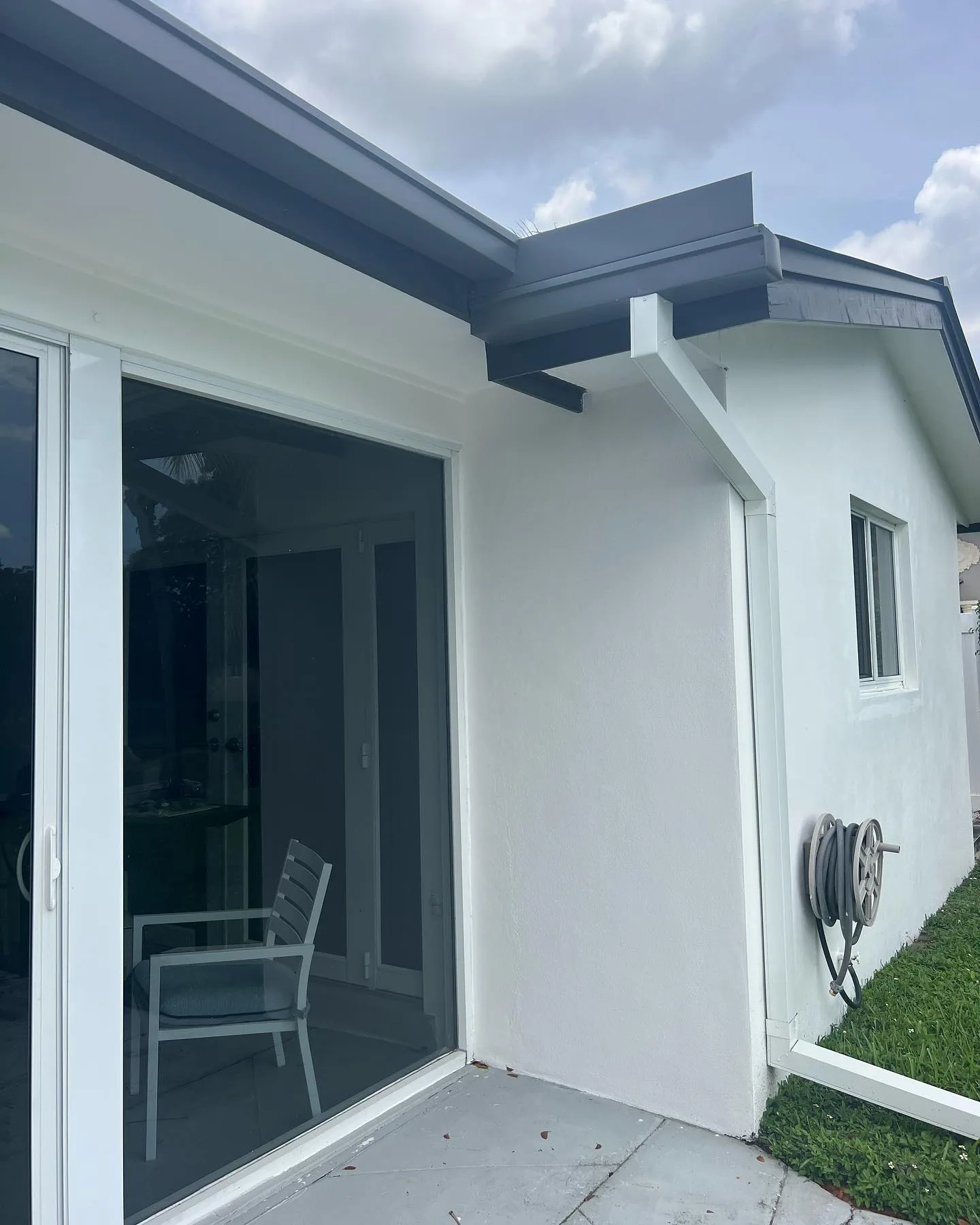
This is why I push oversized 3"x4" downspouts or dual downspouts on most Florida installs. A 3"x4" outlet moves dramatically more water than the standard 2"x3", and it is far less likely to jam with palm strings or oak catkins. On long runs, two downspouts split the load so neither one becomes a choke point.
My rule of thumb for this region:
- Match wide gutters to wide outlets — a 6-inch trough deserves a 3"x4" downspout, not a tiny one.
- Add a second downspout on any long run rather than asking one to do all the work.
- Place outlets where debris naturally collects so cleaning is simple, not buried behind landscaping.
If your current system overflows, the downspout is the first thing I check. Sometimes proper downspout installation fixes the problem without touching the gutters at all.
Gauge and Mounting Beat Size Alone
Size gets the headlines, but two other choices decide whether your gutters survive a decade in salt air.
First, gauge. I will not install thinner than .032-gauge aluminum near the coast. Thin, builder-grade metal pits and corrodes in salt air, and it dents and deforms under wind load. Thicker aluminum holds its shape, resists salt-air pitting longer, and keeps a clean pitch so water actually drains toward the outlets.
Second, mounting. Spike-and-ferrule systems work loose in wind and pull away from the fascia over time. I use hidden-hanger systems with screws that grip the trough and bite into solid wood. That is what keeps a gutter on the house when a storm drives rain and wind against it.
And before any of that goes up, I inspect the fascia. Hidden humidity rot is common here, and mounting heavy gutters to soft, rotted wood guarantees failure. If the board is compromised, it gets addressed first — sometimes alongside soffit and fascia work — because no hanger holds in punky wood.
How to Choose for Your Roof
There is no single answer that fits every house, which is exactly why a quick look at your roof matters more than a rule from a catalog. When I size a system, I look at:
- Roof area draining to each run — larger planes need 6-inch.
- Roof pitch — steeper roofs deliver water faster and favor bigger gutters.
- Proximity to salt air — coastal homes get thicker gauge and more capacity.
- Tree and debris load — heavy oak and palm cover argues for wider troughs and oversized outlets.
One more piece of timing advice: schedule installs in the dry season, November through May, and book before hurricane season starts June 1. You do not want to be sizing new gutters after the first big storm has already flooded your fascia.
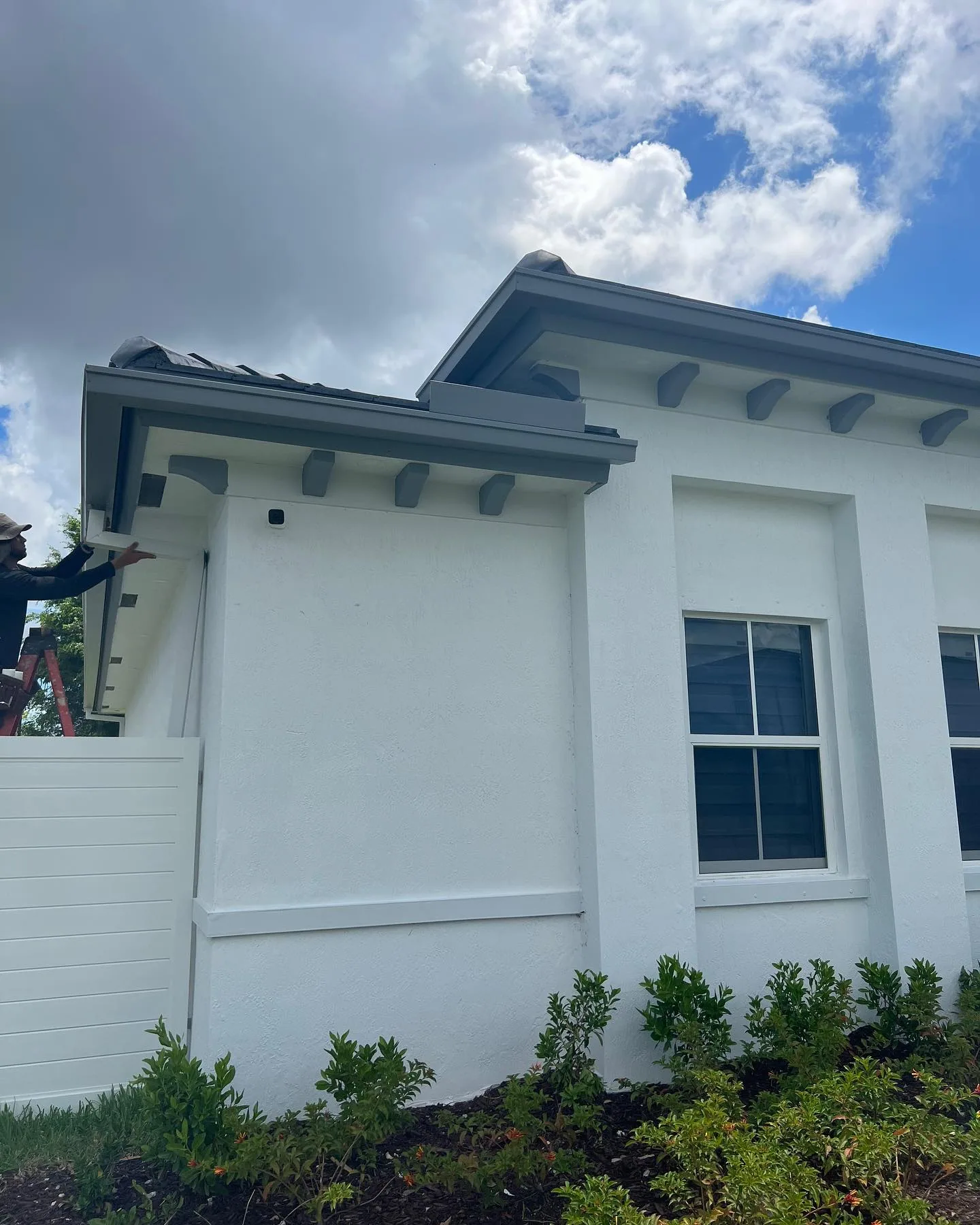
How CAG Solutions can help. Carlos and the crew size every system to the actual roof in front of them — never a guess off a spec sheet. We install seamless gutters in .032 aluminum with hidden-hanger screws and oversized downspouts built for SW Florida rain, and we will tell you honestly whether 5-inch or 6-inch is right for your home. The estimate is free and there is no pressure. Call +1 (239) 350-9997 or reach out through our contact page, and we will get you scheduled before the next downpour finds your weak spot.
Need a hand with your gutters?
CAG Solutions provides free, no-pressure estimates across Cape Coral and Southwest Florida.