How to Prepare Your Gutters for Cape Coral's Rainy Season

Every June, the rain comes back to Cape Coral. Not the polite afternoon sprinkle. The kind of tropical downpour that dumps two inches in an hour and tests every weak point on your roofline. If your gutters are clogged, sagging, or undersized, that water has nowhere to go but over the edge, down your fascia, and into the soil against your foundation.
Here is the hard truth: most gutter failures in Southwest Florida do not happen during the storm. They happen because nobody prepped before the storm. A clogged downspout in May becomes a rotted fascia board in August. The fix is cheap if you do it now and expensive if you wait. This guide walks you through how to get your gutters storm-ready before the rainy season takes hold.
Why Cape Coral's rainy season is brutal on gutters
Cape Coral sits in the path of a triple threat: torrential rain, hurricane-force wind, and corrosive salt air off the Gulf. Most gutter systems built for the rest of the country are not designed for any one of those, let alone all three at once.
Rainy season runs roughly June through October, overlapping with hurricane season. During a single afternoon storm, your gutters may need to move more water than a northern home sees in a week. If the system cannot keep up, water sheets over the front edge, soaks the soffit and fascia, and pools where it does the most damage.
Salt air makes it worse. Thinner aluminum and cheap fasteners pit and corrode faster near the coast. That is why we push .032-gauge aluminum as the minimum for coastal durability. Anything thinner dents under debris load and gives out sooner in this climate.
Clear the debris before the first storm
Your gutters fill up with a specific menu of Florida debris, and most of it lands right before the rain starts. Oak catkins drop in spring. Palm strings shed year-round. Pine needles, summer pollen, and seed pods pile into a dense mat that water cannot pass through.
Before rainy season, clear every run and flush the system. Here is what to check:
- Remove leaves, catkins, palm strings, and seed pods from every gutter run.
- Flush each downspout with a hose to confirm water flows freely all the way out.
- Look for standing water sitting in the gutter after a flush. That signals a low spot or wrong pitch.
- Check splash zones and extensions so water actually exits away from the foundation.
If you cannot safely get on a ladder, do not force it. A professional gutter cleaning takes an hour and costs far less than the fascia repair a clog can cause. We recommend at least one good clearing before June 1, and another mid-season if you have heavy tree cover.
Inspect the hardware, pitch, and fascia
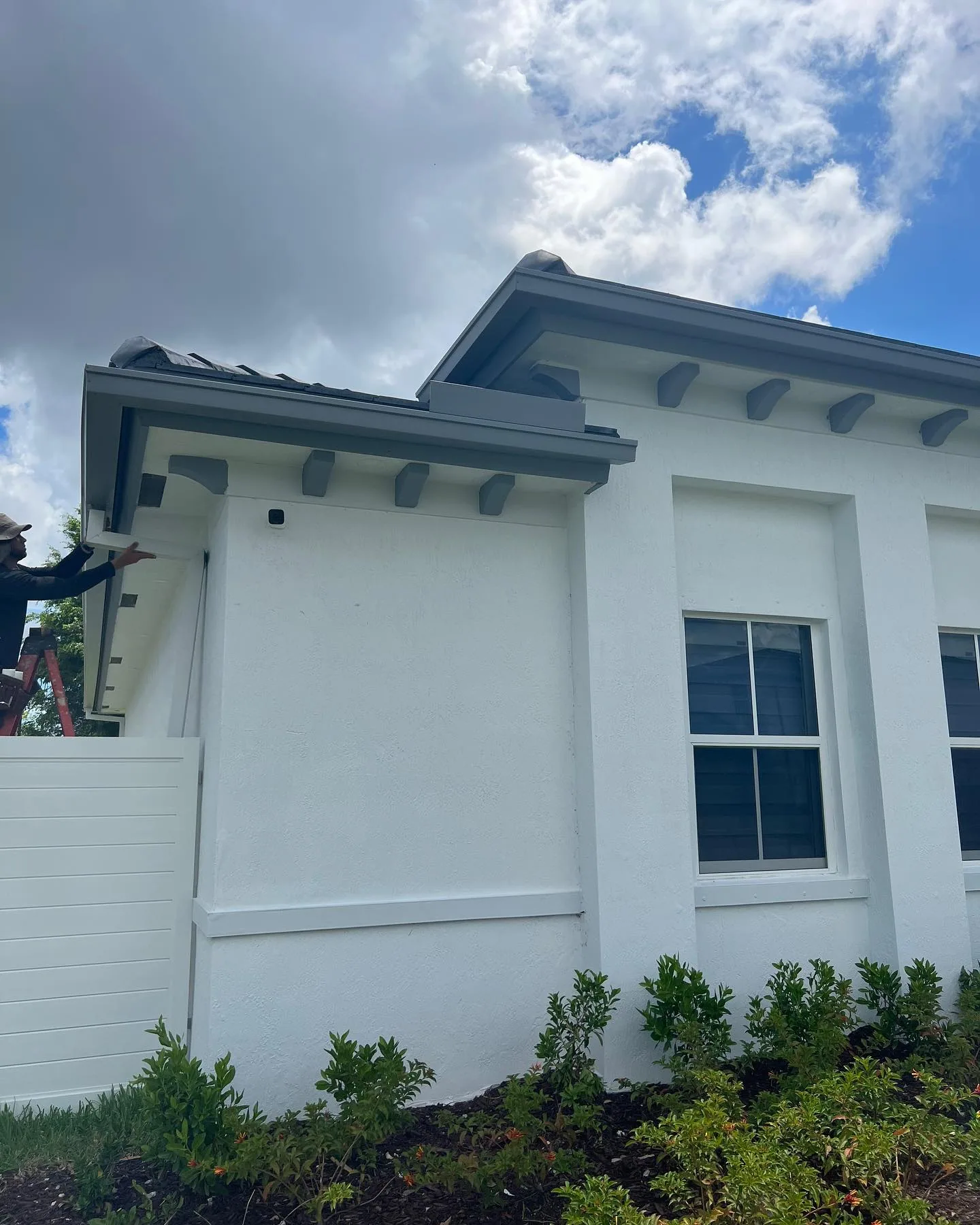
Clean gutters still fail if the system behind them is weak. Walk your roofline and look closely at how everything is mounted.
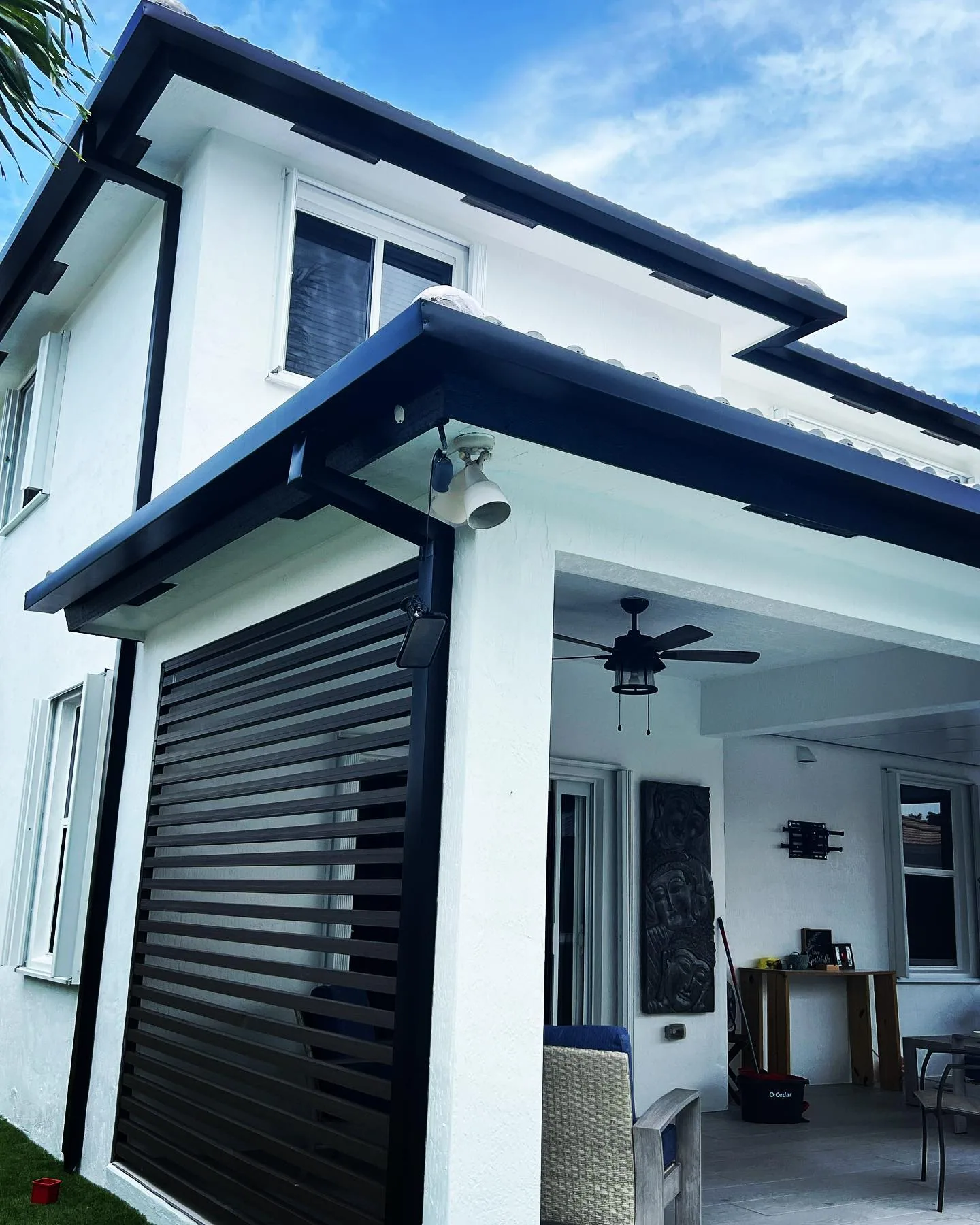
First, the hangers. Older homes around Cape Coral often have spike-and-ferrule systems. Those spikes loosen over time and pull out in high wind. We replace them with hidden-hanger systems secured with screws, which hold far better when a storm starts pushing on the gutter.
Second, the pitch. Gutters need a slight, deliberate slope toward the downspouts. If yours sit dead level or sag in the middle, water pools, breeds mosquitoes, and overflows in a downpour. A sagging run usually means failed hangers or a softening fascia board underneath.
Third, and most overlooked, the fascia itself. Before mounting or remounting anything, inspect the fascia for hidden humidity rot. In our climate, a board can look fine from the ground and be soft as cardboard up close. Mounting heavy, water-loaded gutters to rotted wood is how whole sections tear away in a storm. If you find soft spots, address the soffit and fascia before re-hanging gutters.
Size your downspouts for tropical downpour volume
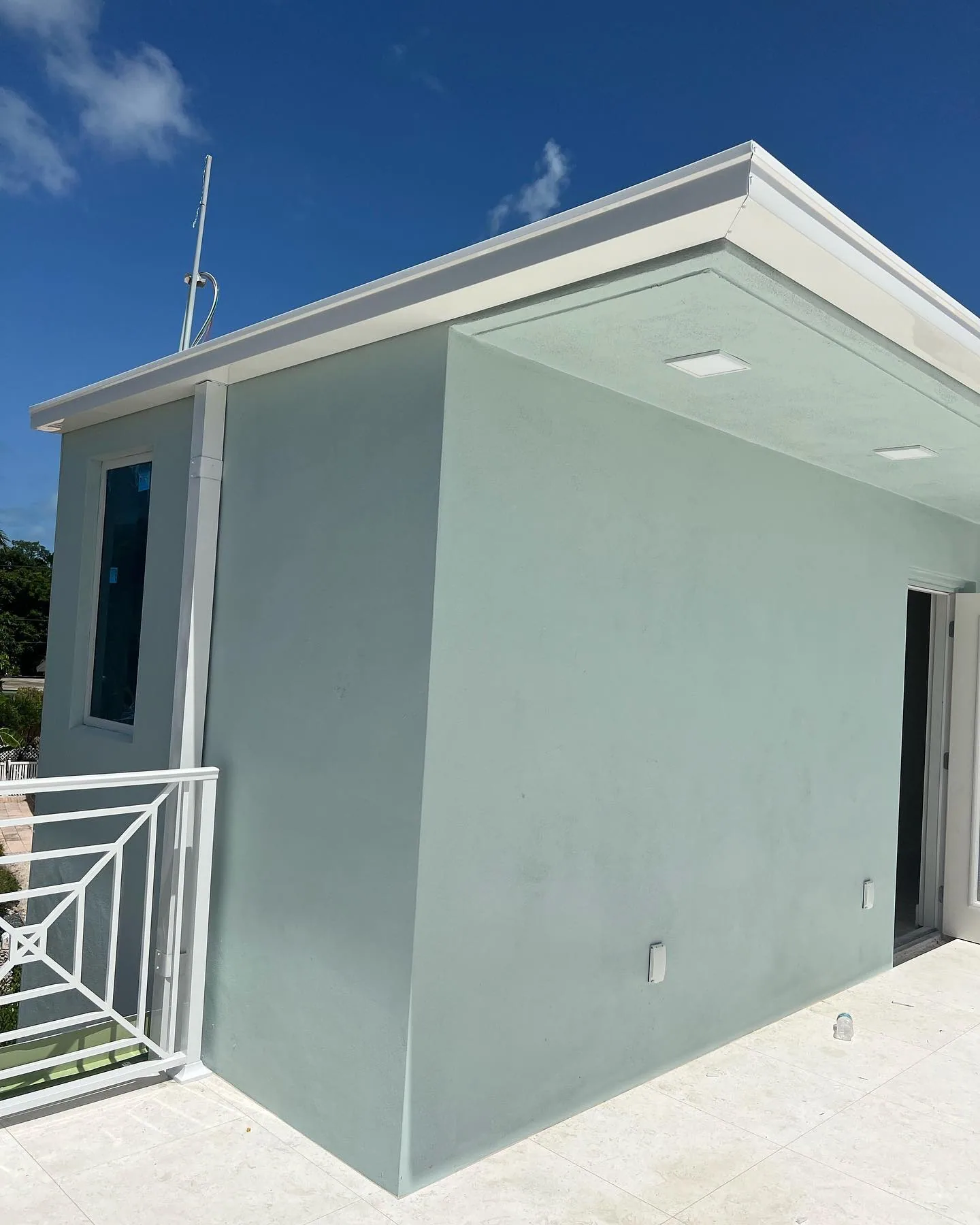
This is where a lot of Cape Coral homes lose the fight. Standard 2"x3" downspouts simply cannot drain the water volume a Florida storm delivers. The gutter fills faster than it can empty, and the overflow starts.
For our rain, we recommend:
- Oversized 3"x4" downspouts to move significantly more water per minute.
- Dual downspouts on long runs or roof valleys that funnel a large catchment area.
- Proper outlet placement so the gutter drains at both ends, not just one.
If your gutters overflow every storm even when they are clean, the problem is almost always undersized or too few downspouts. Upgrading the downspout system is often the single biggest improvement you can make before rainy season. It is the difference between water leaving your roof fast and water backing up over the lip.
Consider gutter guards and rain chains
If you are tired of clearing palm strings twice a season, gutter guards are worth a conversation. A good guard keeps the heavy debris out so the system stays flowing through the worst of the rain. They are not maintenance-free, but they cut the workload dramatically under Florida tree cover. We can walk you through which gutter guard options actually hold up here versus the flimsy ones that collapse under pollen and pine load.
For homeowners who want their drainage to look intentional, we also install decorative rain chains. They guide water down in a controlled, visible stream instead of a closed downspout, and they hold up fine in our climate when paired with the right basin. It is a signature option most gutter contractors around here do not offer.
Schedule any new work during the dry season
Timing matters more than people think. The best window for new gutter installation or major repairs is the dry season, roughly November through May. The work goes faster, crews are not racing storms, and your system is ready before the rain returns.
Here is the calendar that keeps you ahead of trouble:
- Inspect and clean every spring, before June 1.
- Book new installs or major repairs in the dry season.
- Get on the schedule early. Everyone calls at once when the first storm overflows their gutters.
Booking before hurricane season means you are not waiting weeks for a slot while water pours down your fascia. Proactive gutter maintenance is always cheaper than emergency repair.
How CAG Solutions can help
We have repaired too many Cape Coral homes after cheap gutter installs failed in tropical storms, and almost all of it was preventable with the right prep. CAG Solutions offers free, no-pressure estimates seven days a week, and owner Carlos often handles them personally. We will inspect your hangers, pitch, fascia, and downspout sizing, then tell you straight what actually needs attention before the rain. If you are anywhere in Cape Coral and the surrounding area, schedule your rainy-season gutter maintenance with us. Call +1 (239) 350-9997 or reach out through our contact page to get on the schedule before the first storm hits.
Need a hand with your gutters?
CAG Solutions provides free, no-pressure estimates across Cape Coral and Southwest Florida.